
US officials attempted to warn Iran of fears that Israel would assassinate mediators
U.S. Officials Seek to Alert Iran on Israel’s Potential Targeting of Key Negotiators
US officials attempted to warn Iran – Two U.S. officials revealed that efforts were made to inform Iranian authorities of apprehensions regarding Israel’s possible intent to eliminate key intermediaries during ongoing diplomatic discussions. The communication aimed to preempt any targeted attacks that could disrupt the fragile progress of negotiations. While the specifics of the threat remain unclear, the officials emphasized the U.S. concern over Israel’s potential to strike at high-profile Iranian figures involved in peace talks.
Focus on High-Profile Targets
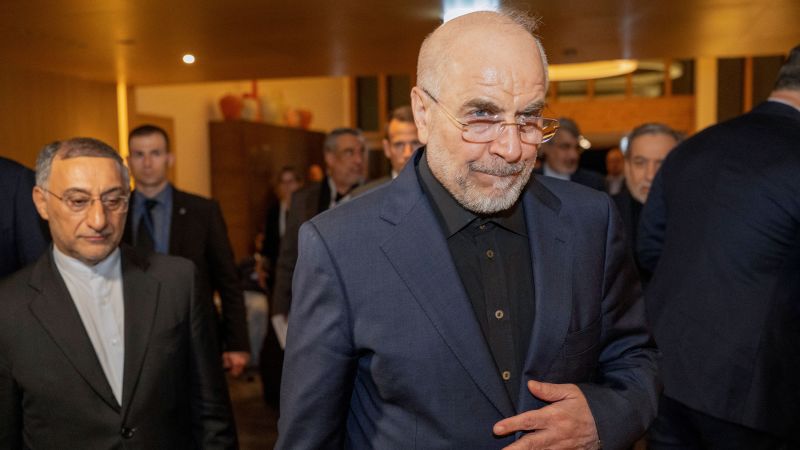
The warnings centered on the risk of assassination against Mohammad Bagher Ghalibaf, the Iranian parliamentary speaker who has been central to the dialogue with Washington, and Abbas Araghchi, the Foreign Minister who has frequently represented Iran in public negotiations. These individuals are seen as crucial to bridging the gap between the two nations, making their safety a priority for U.S. intelligence agencies. The alerts were relayed through intermediaries, according to the officials, underscoring the careful approach taken to avoid direct confrontation.
The New York Times was the first to report on these concerns, sparking further interest in the situation. However, as of Friday, there were no immediate signs that U.S. intelligence had identified a concrete plan for such an attack. This lack of actionable evidence highlights the ongoing uncertainty surrounding the threat. Despite this, the U.S. remains vigilant, monitoring Israel’s actions closely during the talks.
Trump’s Comments on the Threat
President Donald Trump has previously expressed frustration with Israel’s strategy, stating that its efforts to target Iranian leaders have complicated negotiations. In March, he reportedly withheld details about which Iranian officials the U.S. was engaging with, fearing their safety. “You know, it’s a little tough,” he said, “They’ve wiped out everybody.” This remark reflects his broader criticism of Israel’s aggressive tactics, which he believes have undermined the peace process.
“You know, it’s a little tough,” he said. “They’ve wiped out everybody.”
Trump’s remarks also reveal a strategic shift in his approach to the conflict. Initially, he supported Israel’s campaign of assassinations, but as the situation evolved, the administration began favoring diplomacy over military action. This change in tone has led to tensions with Israeli leaders, who view the U.S. as hesitant in its backing of their operations.
Israeli Response to the Reports
In reaction to the initial New York Times report, the Israeli Prime Minister’s Office labeled the story as “fake news,” calling it a “complete fabrication of reality.” The claim suggests that Israel disputes the notion of being a threat to the Iranian negotiators, though it does not deny the possibility of targeting them. A spokeswoman for the Israeli embassy in Washington declined to comment when approached by CNN, leaving the issue open to interpretation.
The ongoing diplomatic relationship between the U.S. and Iran is complicated by differing priorities. While the ceasefire agreement signed in recent months represents a step toward stability, it leaves critical unresolved issues, such as the fate of Iran’s nuclear stockpile, for future discussions. This ambiguity has led to continued hostilities, including Iran’s attacks on ships in the Strait of Hormuz and U.S. retaliatory strikes on Iranian military targets.
Historical Context and Strategic Divergence
Israel’s campaign of assassinations has been a defining feature of its approach to the conflict with Iran. Early in the war, the country targeted scores of high-ranking political and religious leaders, including its supreme leader. The elimination of Ali Larijani, Iran’s top national security official, was particularly significant, as it removed a key figure from the negotiating table. However, as the campaign failed to achieve its goal of regime change, the Trump administration shifted its focus to diplomatic engagement.
This strategic pivot has created friction with Israeli Prime Minister Benjamin Netanyahu, who has been vocal in his support for military operations. Their disagreements have intensified in recent months, with Netanyahu criticizing the U.S. for its willingness to negotiate rather than pursue a more aggressive stance. In a particularly heated June exchange, Trump reportedly used expletives to express his disapproval of a planned Israeli military operation in Lebanon, according to sources familiar with the conversation.
“In one particularly heated exchange in June, Trump used expletives to convey his disapproval of a planned military operation in Lebanon by Israel, according to two people familiar with the conversation.”
Meanwhile, U.S. officials have intensified their monitoring of Israel’s intelligence activities. The Israeli spy network has been expanding its efforts to gather information on both Iranian and American diplomats, a development that has raised concerns within the Trump administration. This heightened surveillance reflects the broader strategic tension between supporting Israel’s military campaigns and fostering a diplomatic resolution.
Despite the ceasefire agreement, the relationship remains volatile. Iran’s continued attacks on U.S. interests, including strikes in the Strait of Hormuz, demonstrate the persistence of hostilities. The U.S. has responded with targeted strikes, underscoring its readiness to take military action if necessary. However, the ongoing negotiations suggest a desire for de-escalation, even as the threat of assassination looms over key figures.
Uncertainty and the Path Forward
The fear of targeted attacks has added a layer of complexity to the talks, with the future of the negotiations hanging in the balance. While the 60-day ceasefire provides a temporary respite, it does not resolve the deeper issues that remain between the two nations. The success of the agreement depends on whether both sides can maintain their commitment to diplomacy amid the lingering threat of violence.
As the U.S. and Iran navigate this delicate situation, the actions of Israel continue to shape the dynamics of the talks. The assassination warnings highlight the precarious nature of the negotiations and the potential for sudden escalation. With Trump and Netanyahu’s differing views on the war’s trajectory, the path to a lasting peace remains uncertain, requiring careful maneuvering and sustained diplomatic efforts.
CNN’s Oren Liebermann contributed to this report, ensuring that the latest developments are accurately documented and widely disseminated. The ongoing efforts to secure peace in the region are a testament to the importance of these negotiations, even as the shadow of potential violence looms large.
