
Extreme heat wave in its final stretch and could fuel storms during July 4 celebrations
July 4th Heat Wave: Final Phase Sparks Storm Risks
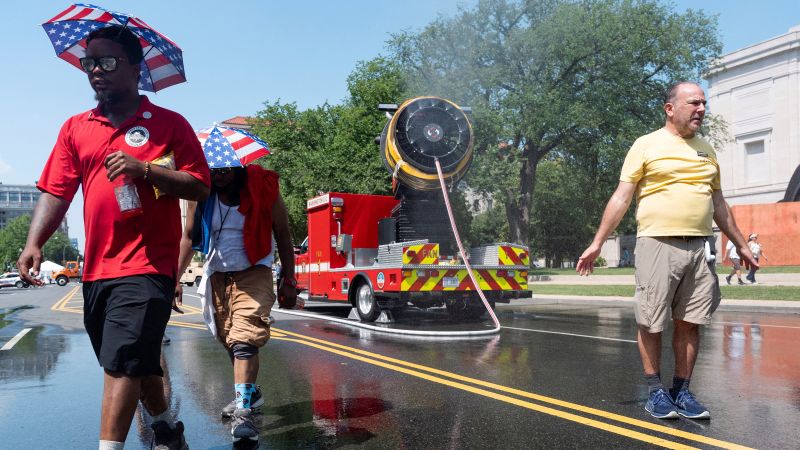
Extreme heat wave in its final – The extreme heat wave in its final phase is intensifying across the eastern United States, casting a shadow over Independence Day celebrations. As communities prepare for sweltering temperatures, this weather pattern could trigger unexpected thunderstorms, particularly in regions like Washington, DC, and Philadelphia. Climate change has amplified the severity of these conditions, with experts warning that the heat dome’s grip may lead to both record-breaking temperatures and weather disruptions. While the heat is expected to ease by Sunday, its lingering impact could challenge outdoor events and public safety measures.
Heat Dome and Climate-Driven Intensity
A heat dome, a high-pressure system that stifles air movement, has intensified the heatwave’s effects. However, the role of climate change in exacerbating these patterns cannot be overlooked. Fossil fuel emissions have contributed to a warming planet, making extreme heat events more frequent and severe. In cities such as Philadelphia and Washington, DC, the combination of high humidity and prolonged temperatures has created a dangerous environment, with heat indices surpassing actual temperatures by significant margins.
Health and Infrastructure Strain
The extreme heat wave in its final stretch has already claimed lives and strained infrastructure. In Bethel Township, Pennsylvania, a 68-year-old man died from heat exhaustion, with the Berks County Coroner’s Office linking the incident to a heart attack. Meanwhile, power outages have spread across the New York metro area, with Con Edison reporting disruptions due to overloading systems. These outages, both precautionary and reactive, highlight how the heat wave is testing the resilience of urban environments.
“The heat exhaustion case underscores the growing risks of extreme heat,” said the Berks County Coroner’s Office.
Event Adjustments and Public Response
As the heatwave peaks, event organizers are scrambling to adapt. The July 4th parade in Washington, DC, has been delayed to the afternoon to avoid the worst of the heat, while the Great American State Fair opens two hours late. Despite these changes, crowds are still gathering, showcasing resilience amid the challenge. Yet, the heatwave’s final phase may force more adjustments, with some activities possibly moving indoors or canceling altogether.
Storms on the Horizon
While the heatwave dominates Saturday, a shift in atmospheric conditions could bring relief in the form of thunderstorms. The National Weather Service predicts that the combination of intense heat and high humidity will create an environment ripe for severe weather. These storms, though sporadic, may deliver damaging wind gusts and lightning, complicating plans for outdoor festivities. The promise of rain could be a double-edged sword, offering cooling but also potential hazards.
“Thunderstorms are likely to develop as the heatwave transitions,” noted the National Weather Service.
Historical Context and Future Projections
Comparing current conditions to the past, the heatwave in its final stretch feels unprecedented. In 1776, Philadelphia recorded a temperature of at least 76 degrees on the day the Declaration of Independence was signed—far milder than today’s forecast of 100-degree highs. Climate scientists warn that such extreme conditions are becoming more common, with global warming pushing the boundaries of what was once considered a rare occurrence. The July 4th forecast serves as a stark reminder of the changing climate landscape.
Weather Variability and Regional Outlook
As the heatwave in its final phase begins to dissipate, meteorologists are closely monitoring the region for signs of cooling. However, the weather remains volatile, with thunderstorms forming in localized areas. The Mid-Atlantic and Northeast regions, already grappling with the heat, may experience sudden shifts in temperature and precipitation. While the heatwave’s peak is behind us, its residual effects will continue to shape the July 4th weather, ensuring that celebrations remain unpredictable.
