
‘I didn’t think it was a foul’: Trump says he asked FIFA president for review of controversial red card
‘I Didn’t Think It Was a Foul’: Trump Says He Requested Review of Controversial Red Card Decision
I didn t think it was – President Donald Trump sparked fresh debate over the fairness of a contentious red card ruling during the FIFA World Cup by claiming he personally sought a review of the decision to suspend Team USA’s star striker, Folarin Balogun. The incident, which occurred during Wednesday’s match, led to widespread scrutiny of the tournament’s disciplinary process, and Trump’s remarks have intensified the discussion about the integrity of officiating. The president’s involvement, according to his own account, was limited to asking FIFA’s head, Gianni Infantino, to reconsider the call, though the intervention raised questions about the influence of political figures on sporting decisions.
Trump’s Claim of a Fair Process
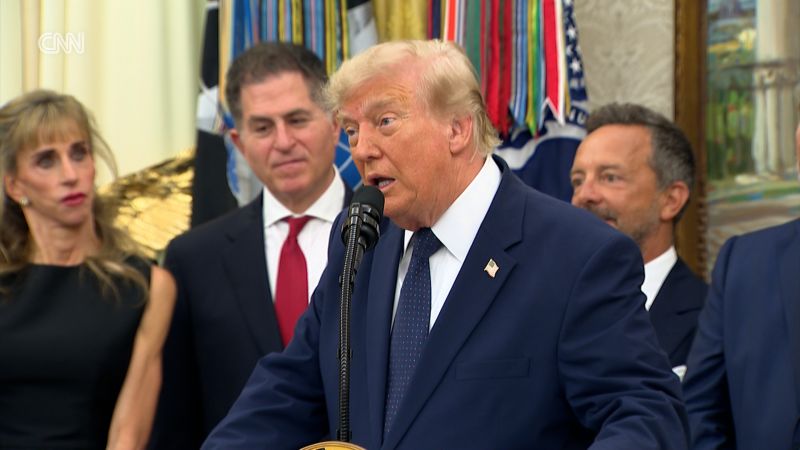
Trump, speaking from the Oval Office, described the incident as a “collide of two players running at full speed” and insisted that the red card was not warranted. “All I did was ask for a review. I didn’t say, ‘You have to do this,’” he stated, emphasizing that he had not dictated the outcome. The president also asserted that he had no knowledge of the full consequences of the decision, noting that he only learned later that a red card meant Balogun would be barred from the following match. “I didn’t know what that meant – I didn’t think it meant much. And then I started hearing that that means you can’t play in the next game,” he added, highlighting a potential gap in his understanding of the rule.
“I didn’t think it was a foul,” Trump said. “He didn’t do anything wrong.”
Trump’s comments mark the first detailed public account of his conversation with Infantino, a relationship he has often touted as close and collaborative. The president maintained that he had not overruled the FIFA Disciplinary Committee, which had initially suspended Balogun for “serious foul play.” “I didn’t tell him what to do, I can’t tell him what to do,” Trump said, defending the decision to let the independent body handle the case. The remarks suggest a belief that the process was fair, even as they invite speculation about the extent of his influence.
FIFA’s Response and the Red Card’s Impact
FIFA revealed on Sunday that Balogun would be eligible to return for the Round of 16 clash against Belgium, a reversal that has sparked questions about the tournament’s consistency. The decision followed a video assistant referee’s intervention, which prompted a reevaluation of the incident. According to the referee’s initial call, the play had been deemed fair, but the use of slow-motion replays — an unusual step in World Cup protocols — led to the red card. These replays showed Balogun’s spikes making contact with the ankle of the Bosnian opponent, prompting the disciplinary action.
“I regularly discuss matters related to the FIFA World Cup with the President of the United States,” Infantino said in a statement. “And on this matter, I did receive a call from President Donald Trump, just as I receive calls from heads of state, government officials, football stakeholders, and business executives from around the world.”
Infantino clarified that the decision to reinstate Balogun was made by FIFA’s independent Disciplinary Committee, not as a result of direct pressure from Trump. “During our conversation, I explained that there was an ongoing legal process involving FIFA’s independent judicial bodies,” he said. “That is how FIFA’s system works, and it is a principle that I will always uphold.” The statement underscores the formal structure of FIFA’s processes, even as it acknowledges Trump’s engagement.
Controversy and Public Reactions
The red card decision has already drawn criticism from various quarters, with New York Mayor Zohran Mamdani among those expressing dissent. Mamdani lamented on his “Morning Pitch” video stream that Balogun had been “cruelly sent off,” a sentiment echoed by others who questioned whether the punishment was justified. Trump’s comments, however, have further fueled the debate, as he called the referee’s integrity into question and encouraged reporters to investigate the official’s past. “The referee was a little bit suspect,” he said, adding that the incident warranted closer examination.
Trump also framed the red card as a potential “big stain” on the World Cup, suggesting the decision could undermine the tournament’s credibility. A U.S. official confirmed that the president had sought to “better understand the reason why a red card was given and why there was a suspension,” though they noted that Trump’s understanding of the rules was incomplete. “I had nothing to do with the decision,” Trump reiterated, emphasizing his role as a concerned observer rather than a direct decision-maker.
Additional Evidence and the Appeal Process
The U.S. government reportedly provided FIFA with “additional evidence” during the appeal process, though the specifics of that evidence remain undisclosed. This move has raised questions about the potential for external influence on the outcome, even as FIFA maintains that its processes are independent. Meanwhile, the Royal Belgium Football Association filed an appeal against the decision to allow Balogun to return for the Round of 16, but FIFA swiftly denied the appeal, asserting that the case had been resolved by the competent bodies.
The incident has also highlighted tensions between on-field decisions and the growing role of technology in modern football. While the video assistant referee is intended to ensure accuracy, the use of slow-motion replays in this case has been criticized as an anomaly. This has led to broader discussions about the balance between human judgment and automated reviews in high-stakes matches. Critics argue that such deviations could create perceptions of bias, especially when influential figures like Trump are involved.
Legacy of the Controversy
Trump’s intervention has placed the World Cup under a microscope, with the red card serving as a focal point for debates about transparency and fairness. His remarks, which were shared with the media, have been widely circulated and analyzed for their implications. The president’s use of a well-known meme — referencing European manager Jose Mourinho’s reluctance to speak — added a humorous yet pointed dimension to his critique. “I prefer really not to speak. If I speak — big trouble. Big trouble. I don’t want to be in big trouble,” he said, captioning the image with a nod to the controversy.
As the World Cup progresses, the incident will likely linger in the public consciousness. For Balogun, the red card was a pivotal moment that tested his resilience and the team’s strategy. For FIFA, it presented a challenge in maintaining the confidence of both fans and officials. The organization’s ability to navigate such controversies will be key to its reputation, especially in the face of high-profile scrutiny. Meanwhile, Trump’s comments serve as a reminder of the intersection between politics and sports, where even a single decision can spark global discourse.
Despite the controversy, FIFA has defended its approach, asserting that the disciplinary committee’s decision was based on objective criteria. However, the episode has also prompted calls for greater transparency in the use of video reviews and the criteria for issuing red cards. As the tournament continues, the outcome of this incident will be watched closely, not just for its impact on the match but for its broader implications on the fairness and integrity of international football.
