
Prince Harry loses privacy case against UK tabloid publisher
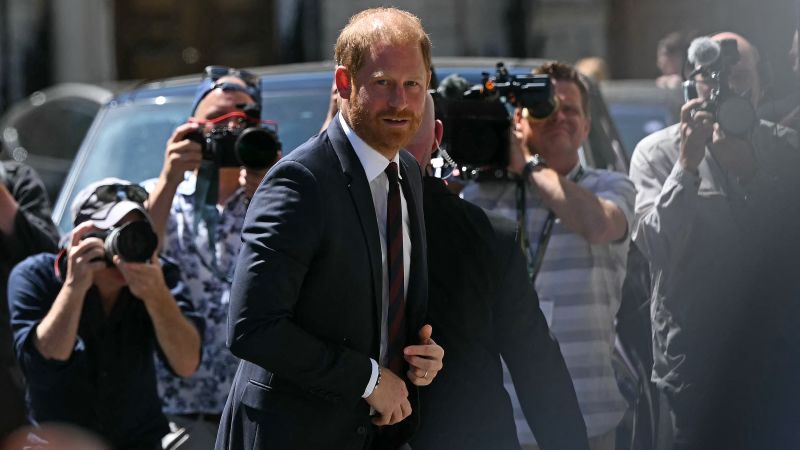
Prince Harry’s Privacy Lawsuit Against UK Tabloid Publisher Ends in Defeat
Prince Harry loses privacy case against – The Duke of Sussex, alongside six other high-profile individuals, faced a significant setback in their legal battle against the publisher of the Daily Mail. On Tuesday, a UK High Court judge ruled in favor of Associated Newspapers Limited (ANL), dismissing all claims of unlawful information gathering. The decision, handed down in the midst of Harry’s return to the UK for a week of public engagements, marks the conclusion of a protracted dispute that had drawn widespread attention to the intersection of privacy and journalism.
The Court’s Ruling: Evidence Over Suspicion
Matthew Nicklin, the judge presiding over the case, emphasized that the claimants’ allegations, while serious, lacked sufficient proof. In a summary of his decision, he stated, “The court rejected the argument that, simply because information was private, and because Associated could not positively explain how it had been sourced, the relevant article must have been unlawfully sourced.” This underscored the legal principle that suspicion alone is not enough to establish wrongdoing; the burden of proof lies with the plaintiff to demonstrate the unlawfulness of the information’s acquisition.
The lawsuit centered on the assertion that ANL had obtained personal details through methods such as voicemail interception, phone tapping, and “blagging”—a term referring to the deceptive retrieval of sensitive records. Despite these allegations, the judge found no concrete evidence to support the claim that the publisher had systematically violated privacy laws. The ruling also highlighted the importance of verifying sources, noting that journalists’ testimonies about the legitimacy of their information were deemed credible by the court.
A Group of Celebrities and Public Figures
Harry’s case was part of a broader coalition that included notable names from the entertainment and political spheres. The group, which sought to challenge the practices of ANL’s publications, comprised singer Elton John and his spouse David Furness, actress Elizabeth Hurley, activist Doreen Lawrence, and former politicians Simon Hughes and Sadie Frost. Each of these individuals had accused the publisher of using unethical methods to gather information for stories published between 1993 and 2011.
ANL responded to the verdict with a statement expressing relief and pride. “This is an overwhelming victory for the Daily Mail and its journalists,” said a spokesperson, adding, “The judgment clearly shows that every single article was legitimately sourced.” The publisher also pledged to address remaining issues, including the recovery of legal expenses incurred during the defense. “We will look to resolve outstanding matters, including the recovery of costs,” the spokesperson noted, describing the litigation as “egregious” in its scope.
Harry’s Return to the UK and Public Appearances
The Duke of Sussex arrived in the UK on Monday evening, marking the start of his week-long engagement schedule. His wife, Meghan, and their children, Prince Archie and Princess Lilibet, opted to remain in the United States for security reasons, a decision that added emotional weight to Harry’s appearance. Shortly after the court’s ruling, he participated in his first public event of the week at the Chatham House think tank in London, where he addressed the media and outlined his perspective on the issue.
Harry’s involvement in the trial was critical, as he provided firsthand testimony about the impact of the tabloid’s coverage on his family. During the lengthy proceedings, which spanned over two months earlier this year, the court heard detailed accounts of the alleged methods used by ANL to obtain information. The duke testified that the media outlets had “made my wife’s life an absolute misery,” a statement that reflected the personal toll of the litigation. However, under cross-examination, he admitted that he had not been able to challenge the 14 stories in question at the time of their publication, citing the royal family’s advice: “Never complain, never explain.”
Legal Costs and Broader Implications
The case, which had the potential to cost up to £50 million (approximately $67 million), highlighted the financial stakes involved in privacy disputes. The claimants’ legal team argued that the publisher’s practices had not only invaded personal privacy but also eroded public trust in the media. Andrew Fremlin-Key, a partner at the international law firm Withers, noted that while ANL emerged financially victorious, the trial was “a very expensive privacy case” with legal costs estimated at £40-50 million.
Harry’s lawsuit against ANL is the third major legal action he has taken against British tabloid publishers in recent years. Previous cases against News Group Newspapers and Mirror Group Newspapers had resulted in apologies, admissions of fault, and compensation. This time, however, the outcome was more definitive, reinforcing the publisher’s stance that its journalists operated with integrity. The case also raised questions about the balance between investigative reporting and individual privacy, particularly in the context of royal families and public figures.
ANL’s Defense and the Royal Family’s Role
Throughout the trial, ANL’s defense hinged on the credibility of its journalists and the legitimacy of their sources. The publisher’s legal team contended that the claimants’ case was “threadbare,” meaning it lacked substantial grounding. They argued that the journalists’ ability to provide a “compelling account of a pattern of legitimate sourcing” was sufficient to counter the allegations. The court appeared to agree, emphasizing that the publisher had consistently demonstrated transparency in its reporting practices.
Harry’s presence in the UK for the trial underscored his commitment to defending his family’s privacy. He had returned to the country earlier this year to present evidence alongside the other claimants, a move that highlighted the personal and professional risks he faced. The duke’s testimony, which included emotional appeals about the stress and public scrutiny his family endured, was a key element in the case. However, the judge’s decision indicated that the court found these arguments less convincing than the publisher’s documentation of its sourcing methods.
Looking Ahead: Invictus Games and Public Perception
The ruling came as Harry began a series of engagements in the UK to promote the 2027 Invictus Games in Birmingham, one year from the date of the verdict. His absence of Meghan and the children, due to security concerns, drew further media attention to the personal aspects of the case. The outcome of the lawsuit may influence future perceptions of the duke’s public persona, as it aligns with his efforts to rebrand himself as a critic of invasive media practices.
As the legal battle concludes, the focus shifts to the broader implications for privacy rights and media accountability. While the court affirmed ANL’s practices, the case has sparked ongoing debates about the ethical boundaries of journalism. For Harry, the loss of this particular lawsuit is a chapter in a larger narrative of his evolving relationship with the media and the public. The outcome also serves as a reminder of the challenges faced by individuals in proving the unlawfulness of information gathering in an era where news outlets often operate with a high degree of autonomy.
