
Farage left fighting a trash can as the UK populist leader’s election gamble backfires
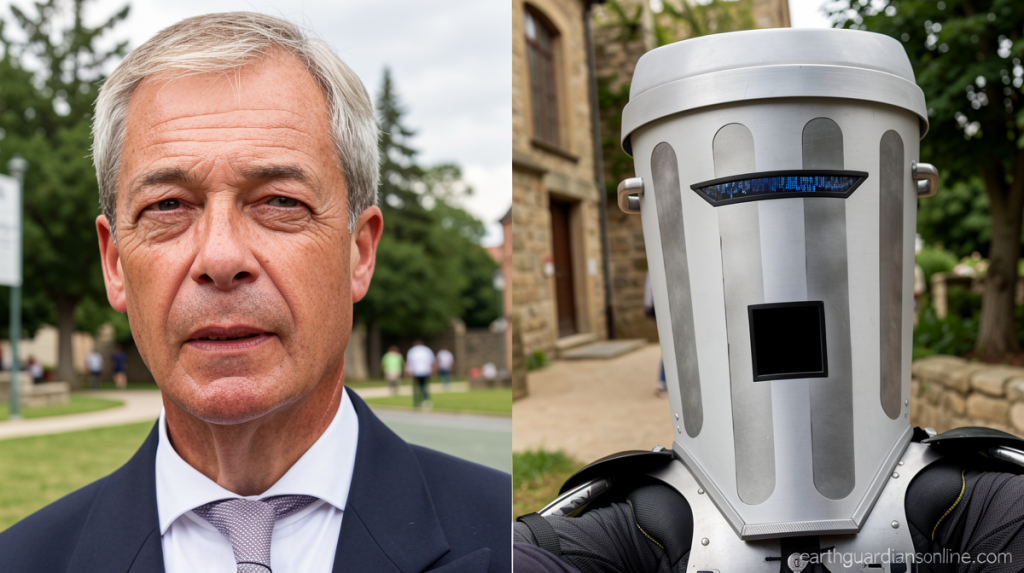
Farage’s Political Gamble Meets an Unlikely Opponent in Trash Can
Farage left fighting a trash can – What began as a bold maneuver by one of Britain’s most recognizable political figures has taken an unexpected turn. Nigel Farage, the charismatic leader of the Reform UK party, stepped down from his parliamentary seat in Clacton-on-Sea, hoping to let voters rather than political elites determine his fate. The timing was meant to be strategic—amid mounting questions about undisclosed financial gifts from affluent supporters, Farage sought to position himself as a man willing to face the electorate directly.
However, the strategy unraveled in an unusual fashion. Rather than welcoming a genuine contest, the country’s major political parties collectively decided to withdraw from the race. This left Farage facing his most improbable challenger yet: a satirical comedian dressed as a garbage bin, known across Britain as Count Binface. The situation has drawn comparisons to a political circus, with some observers noting the irony that the man who helped reshape British politics through Brexit now finds himself competing against a character whose platform includes whimsical proposals like making rule-breaking cyclists ride unicycles.
The Financial Controversy and Strategic Resignation
At the heart of Farage’s decision to trigger a by-election lies a growing scrutiny of his financial disclosures. The Reform UK leader has been accused of failing to properly declare millions of pounds in gifts received from wealthy benefactors. Parliament’s standards watchdog has launched an investigation into these matters, though Farage has consistently maintained that he has done nothing wrong.
“I’ve decided the people of Clacton should be the judges of my actions,” Farage declared at the time of his resignation. “I will fight to win. I will fight to continue the political revolution that Reform has started.”
The resignation came on Tuesday, with Farage framing the move as a democratic gesture. He argued that the traditional political establishment was attempting to discredit him through institutional channels, and that only the constituents of his southeast England constituency could provide a fair verdict on his conduct.
Political Parties Unite in Boycott
The response from Britain’s political mainstream was swift and unified. The Labour Party, Conservative Party, and Liberal Democrats all announced they would not field candidates in the Clacton by-election. This coordinated withdrawal was designed to send a clear message: the controversy surrounding Farage was not worth engaging with on his terms.
British Prime Minister Keir Starmer, who had recently stepped down as Labour leader, characterized the move as a “desperate stunt.” Meanwhile, a spokesperson for Andy Burnham, considered the likely next prime minister, described it as a “gimmick designed to distract from serious allegations about Farage’s funders.”
Finance Minister Rachel Reeves, who formally accepted Farage’s resignation from Parliament, echoed these sentiments. She told social media platform X that the situation was “a farce and a desperate distraction,” adding that while the people of Clacton deserved better, she would not prevent Farage from “spending the summer arguing with a bin.”
Count Binface Steps Into the Spotlight
With the major parties absent, Count Binface emerged as the most prominent challenger. The character, created by scriptwriter and comedian Jon Harvey, has been a fixture in British elections for years. Known online as a “space politician,” Binface represents a long tradition of satirical candidates who use humor to highlight political absurdities.
The comedian, who boasts more than 200,000 followers on X, posted a simple message after Farage’s announcement: “Game on, Nige.” Binface has previously run against three British prime ministers, and his costume has grown increasingly elaborate over time. Some commentators suggest that while he is unlikely to defeat Farage, he could attract a significant protest vote that exceeds his typical margins.
During a Wednesday appearance on BBC radio, Binface turned the tables on the political establishment. He questioned whether the major parties were avoiding him rather than Farage, asking listeners if politicians were “running scared from old Binny” or genuinely believed Farage was executing a “cunning stunt.”
Reform UK Defends the Strategy
Reform UK supporters have been quick to defend their leader’s approach. Zia Yusuf, the party’s home affairs spokesman, criticized the boycotting leaders as “cowardly and transparent,” arguing that the establishment was “on the ropes” and unwilling to face Farage directly after years of attacking him.
Reform UK currently leads most UK opinion polls, and the party has made substantial gains in recent local government elections. Farage, recognized as one of the chief architects of Brexit, continues to command a loyal following that sees his resignation as a principled stand against political elites.
As the by-election approaches, all eyes remain on Clacton-on-Sea. Whether Farage’s gamble will ultimately succeed or backfire depends on how voters interpret the unusual circumstances. One thing is certain: the political landscape has been reshaped in ways no one could have predicted when the Reform UK leader first announced his decision to let the people decide his future.
