
Intel was on the brink of downfall. A twist in the AI race could boost its revival
Intel on the Brink of AI Revival
Intel was on the brink of downfall, yet a pivotal shift in the AI race has reignited hope for its resurgence. In March 2025, Lip-Bu Tan took the helm as CEO, marking a turning point for the semiconductor giant. For years, Intel had struggled to maintain its leadership, facing relentless competition from companies like Nvidia, AMD, and Qualcomm, which had rapidly advanced in innovation and production. However, with TSMC now dominating cutting-edge chip manufacturing, Intel’s foundry found itself at a critical juncture. Tan, a Malaysian-born executive with extensive experience at Cadence Design Systems, brought a renewed emphasis on operational efficiency and customer-driven solutions to the table.
The CPU Renaissance in the AI Revolution
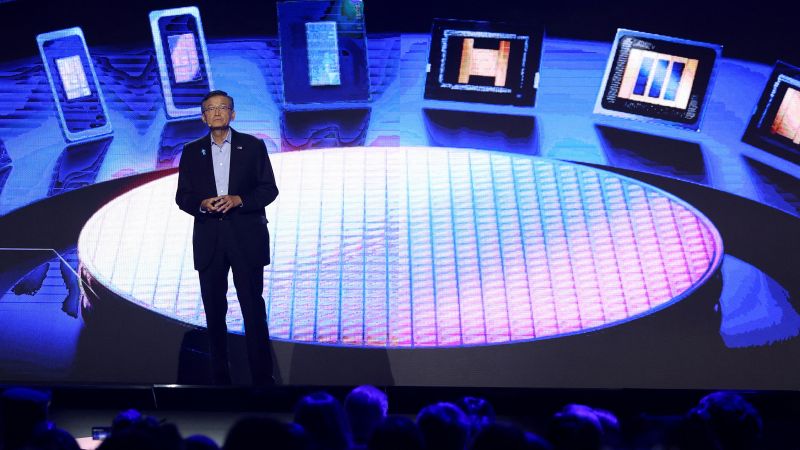
Intel was on the brink of losing its relevance when the AI landscape began to reshape demand. The CPU, once overshadowed by GPUs, has emerged as a vital component in AI inference processes. While GPUs traditionally handled training tasks, the rise of agentic AI—systems that operate independently—has elevated the CPU’s role. At the Computex trade show, Tan highlighted Intel’s strategic repositioning, signaling a pivot toward leveraging its core technology. This move aligns with the growing need for efficient inference engines, as companies like OpenAI and Google integrate AI agents into their workflows.
“The CPU’s revival could save the company,” said Dan Nystedt, a vice president at Asia-based TriOrient. “The majority of Intel’s business is built on CPUs.”
Intel’s Strategic Rebirth: Focus and Adaptation
Tan’s leadership has spurred a comprehensive overhaul at Intel, aiming to restore its competitive edge. The CEO’s approach draws from his tenure at Cadence, where he prioritized streamlined operations and engineering excellence. Intel was on the brink of stagnation when Tan initiated drastic changes, including workforce reductions and the suspension of German and Polish manufacturing plans. These steps were designed to cut costs and sharpen focus on data center and AI advancements. Additionally, Intel has deepened partnerships with firms like Qualcomm and Arm, positioning itself for growth in the evolving tech ecosystem.
“At our heart, Intel is an engineering company,” Tan stated during his Computex keynote. “And that’s what I decided from Day 1 to prioritize.”
The company’s financial restructuring, including the sale of a subsidiary and hiring leaders from rival firms, has injected new energy into its AI initiatives. Analysts suggest that Intel’s renewed emphasis on CPUs could translate into market share gains as agentic AI systems demand reliable, scalable processing power. With Nvidia acknowledging the CPU’s importance, Intel’s strategic pivot has opened doors to collaboration and renewed relevance in the AI era.
Rebuilding Trust: A Leadership Transformation
Intel was on the brink of losing consumer and investor confidence, but Tan’s leadership has begun to mend that. His team has emphasized transparency and agility, addressing past missteps in product development and market positioning. The CEO’s focus on operational efficiency has led to the simplification of corporate hierarchies, fostering a culture of innovation. This restructuring has also allowed Intel to reposition itself as a key player in AI infrastructure, leveraging its legacy in CPU technology. As the AI race intensifies, Intel’s ability to adapt may determine whether it truly rebounds or continues to fade.
“The CPU is now the conductor, and the GPU is the orchestra,” said Jensen Huang, Nvidia’s CEO, during a Computex keynote.
Intel’s journey from the brink of decline to a contender in the AI field underscores the transformative power of strategic foresight. By aligning its strengths with the growing demand for inference engines, the company has carved out a niche in the AI revolution. While challenges remain, the combination of leadership changes, technological focus, and market adaptation positions Intel to reclaim its place in the semiconductor industry. As the AI race continues to evolve, Intel’s revival hinges on its ability to execute this vision effectively.
