
Tehran lambasts US ‘obstruction’ of Iran’s soccer team as players land in Mexico ahead of World Cup
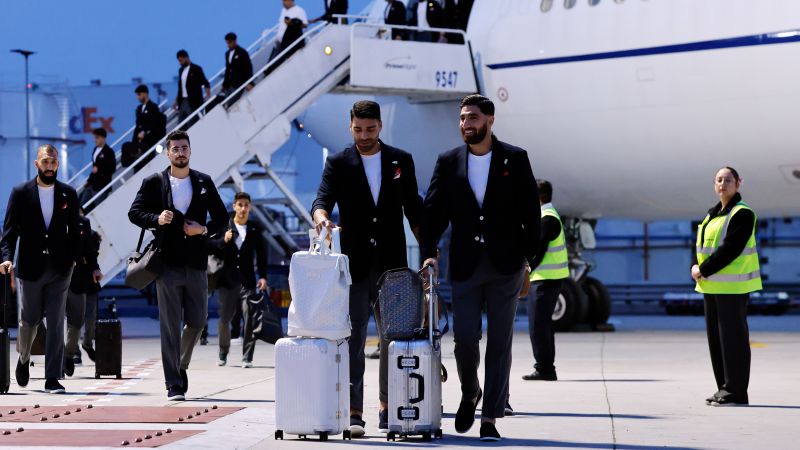
Tehran Accuses US of Obstructing Iran’s World Cup Soccer Team
Tehran lambasts US obstruction of Iran – Tehran has criticized the United States for allegedly blocking Iran’s participation in the upcoming World Cup, as the Iranian national soccer team prepares to compete in Mexico. The team’s arrival in Tijuana, just across the border from San Diego, California, has drawn attention from Iranian media outlets. Football federation president Mehdi Taj accused Washington of imposing visa restrictions that, he claims, have hindered Iran’s ability to host the tournament. The dispute has highlighted growing tensions between the two nations, with Taj suggesting the US is using the event to exert political pressure.
Visa Delays and Political Tensions
Taj pointed to the last-minute issuance of visas as a key issue, arguing that the US is not treating Iran equally. “We do not know how far the Americans’ obstructionism will continue,” he said, emphasizing that the restrictions are part of a broader effort to undermine Iran’s international presence. The US government, however, maintains that the visas are issued promptly and that security concerns justify the measures. “We will not allow the Iranian team to exploit this system for hidden purposes,” a spokesperson stated, reinforcing the administration’s stance on safeguarding national interests.
“The US is targeting the football field to vent frustrations from its political struggles,” said Mehdi Taj, who criticized Washington’s actions as a reflection of “malice” and unequal treatment.
World Cup as a Platform for National Pride
Soccer has long been a symbol of unity in Iran, uniting diverse communities in shared pride. The national team’s qualification for the World Cup has been celebrated as a testament to resilience and determination. Yet, the current situation has shifted the tournament into a political arena, with Iran’s athletes now navigating both sporting and diplomatic challenges. Iranian media has underscored the team’s journey to Mexico, framing their participation as a defiant gesture in the face of US restrictions.
The US and Israel’s geopolitical rivalry with Iran has added layers of scrutiny to the team’s presence. Analysts note that the World Cup has become a stage where nations project influence, with Iran’s athletes bearing the brunt of this rivalry. Despite the visa delays, the team has proceeded with their matches, with Iran’s state media highlighting their commitment to the sport. This has sparked a debate about whether the US is prioritizing political objectives over athletic competition.
Matches and Media Strategy
Iran’s World Cup schedule includes three matches in the US and Mexico, starting with a game against New Zealand in Los Angeles on June 15. The team’s first match will be held one day after their arrival in Tijuana, followed by games against Belgium and Egypt. Iranian state media, IRIB, confirmed that these matches will be broadcast in cinemas, contingent on “necessary approvals.” The logistics of the team’s movement and the timing of their visas have been central to the controversy, with critics accusing the US of creating unnecessary obstacles.
As the tournament unfolds, the focus on Iran’s visa challenges has intensified. The Iranian football federation has raised concerns about the US’s role in delaying the team’s entry, which Taj described as a strategic move to hinder Iran’s progress. While the US has defended its actions as security-driven, the international community remains divided on whether these measures are justified or politically motivated. The World Cup continues to serve as a battleground for soft power, with Iran’s athletes at the center of the narrative.
The dispute underscores the intersection of sports and geopolitics, with Iran’s soccer team becoming a focal point of the broader US-Iran rivalry. As they prepare for their matches, the team carries the weight of national expectations, with their success or setbacks seen as a reflection of the two countries’ relationship. This has sparked a renewed discussion on whether international events should be used to amplify political tensions or if they should remain apolitical spaces for athletic excellence.
