Private clubs cost thousands to get in — and they’re booming

Private Clubs Cost Thousands to Get In — and They’re Booming
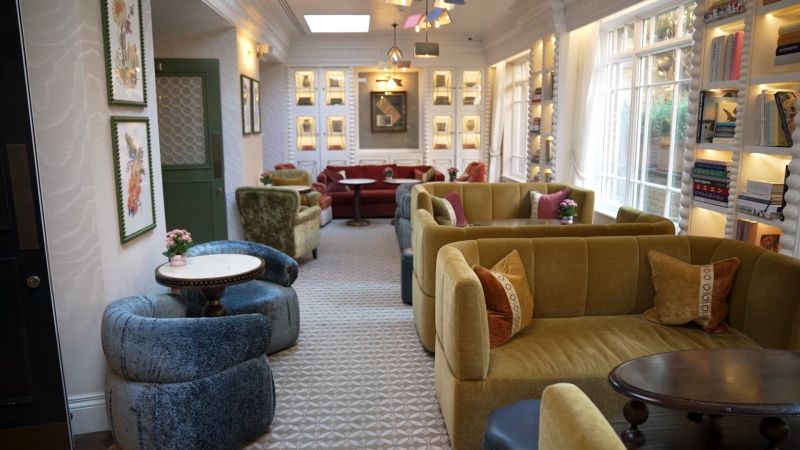
Private clubs cost thousands to get – In the heart of London’s affluent Chelsea district, The Sloane Club stands as a testament to a centuries-old tradition of exclusivity. Founded in 1922 by one of Queen Victoria’s daughters, this members-only establishment has weathered the tides of history, from the aftermath of World War I to the modern-day rise of luxury spaces. Inside, the club’s labyrinthine layout reveals a world of opulence: a hallway opens into a restaurant, which leads to a library, and from there, a bar with six tasseled stools awaits. The adjacent dining room is framed by an oil painting of a blonde woman in elegant attire, watching over the quiet exchanges of its patrons. While the club initially catered to women who had served in the military, it later welcomed men, adapting to the evolving social landscape. After a recent renovation, it now aims to attract a younger demographic, though entry remains tightly controlled.
At the core of this resurgence is a surge in demand for private membership clubs. These venues, which charge steep annual fees for access to curated spaces, have become a symbol of status and sophistication. The Sloane Club is but one example of a trend that has spread across cities, drawing attention from investors and entrepreneurs alike. “We offer a discounted rate for members under 35,” said Neena Jivraj Stevenson, the club’s managing director, during a recent interview. “That’s £1,700 annually, with a reduced joining fee of £450.” For those over 35, the cost increases to at least £2,300 a year, along with a joining fee of £950. Stevenson’s remarks highlight the club’s strategy to balance tradition with modern appeal, even as it maintains its exclusivity.
A Global Phenomenon with Local Epicenters
The explosion of private clubs is not confined to one region. London and New York have emerged as the two primary hubs of this phenomenon, though their dynamics differ. In the UK, the concept traces its roots to the 17th century, with White’s Club, established in 1693, often cited as the oldest. Industry insiders estimate that London now hosts over 130 such clubs, a figure that has grown exponentially in recent years. Matt Hobbs, founder and CEO of Copper Beech, a London-based advisory firm, noted that the past five years have witnessed more club openings than the previous three decades combined. “The surge has been dramatic,” he remarked. “It’s not just about numbers—it’s about the cultural shift toward curated experiences.”
New York, while smaller in scale, has experienced an even more intense revival. Hobbs pointed out that the city has added as many as 10 new clubs in the last couple of years, including Maxime’s, Chez Margux, and the British-owned The Twenty Two. Membership fees for these newer establishments range from approximately $3,000 to $15,000 annually, with some charging initiation fees as high as $200,000. “People are increasingly seeking spaces that feel like a sanctuary,” Hobbs said, emphasizing the emotional and social value of these clubs. “It’s about creating a sense of belonging in a world where everyday life feels overwhelming.”
Why the Pandemic Sparked a Boom
The global pandemic acted as a catalyst for this trend, reshaping how people engage with nightlife. With lockdowns and social distancing measures, traditional venues like bars and pubs faced unprecedented challenges. Jamie Caring, a hospitality consultant in London, told CNN that the industry’s focus has shifted dramatically since 2019. “Before the pandemic, I might have received two inquiries a month about opening a club,” he said. “Now, I get a dozen every month.” Caring attributes this increase to a broader appreciation for exclusivity and the desire for controlled environments. “Investors see clubs as the pinnacle of luxury hospitality,” he explained. “They’re not just places to drink—they’re status symbols.”
According to the Night Time Industries Association (NTIA), London has seen a 16% decline in nightlife venues since the pandemic, yet private clubs have thrived. “High-end spaces are flourishing because their clientele has disposable income,” said Michael Kill, NTIA’s chief executive. “People who once frequented pubs and restaurants for affordable nights out are now drawn to clubs where they can indulge in a more elevated experience.” This shift reflects a growing preference for luxury over affordability, particularly in cities where the cost of living has soared. In New York, the trend is even more pronounced. Andrew Rigie, executive director of the New York City Hospitality Alliance, noted that small neighborhood restaurants and pubs have struggled to stay afloat. “Their customers are more price-sensitive, and operating costs in New York have skyrocketed,” Rigie said. “Private clubs offer a way to escape that pressure.”
Private clubs are also becoming a key component of real estate developments. Caring highlighted that developers now view these spaces as the “jewel in the crown” of mixed-use complexes. “Clubs add prestige and draw attention to an entire project,” he said. “They’re thinking, ‘How can we make this complex more desirable? A private club elevates its image and attracts a wealthy clientele.’” This strategy is not only about aesthetics—it’s about creating a draw for potential buyers and renters. The presence of a club can transform a building into a landmark, blending luxury with functionality.
Exclusivity as a Business Model
For investors, private clubs represent a lucrative opportunity. High membership fees and lengthy waitlists are seen as indicators of enduring demand. “When a club has a waiting list, it’s a sign that people are willing to pay for access,” Kill observed. “That’s a strong signal to investors.” The economic model relies on a mix of high annual dues and optional initiation fees, ensuring that only those who can commit to exclusivity are admitted. In the UK, this approach has proven profitable, with clubs maintaining a steady flow of members despite rising costs.
Yet, the appeal of these clubs extends beyond financial incentives. They offer a sense of community in an increasingly fragmented world. “Members don’t just pay for a space—they pay for a connection,” Hobbs said. “It’s about being part of a select group that shares similar tastes and values.” This idea resonates with many, especially in cities where social interactions have become more transactional. The Sloane Club’s focus on attracting younger members underscores this trend, as the next generation seeks to blend tradition with innovation. “We’re not just preserving history—we’re reimagining it for the future,” Stevenson said, highlighting the club’s efforts to remain relevant.
The growth of private clubs also reflects broader economic and cultural shifts. As inflation and housing costs rise, people are prioritizing experiences over material goods. “It’s a way to feel affluent without actually having to be,” Kill noted. This mindset has driven a wave of investment in luxury spaces, with clubs becoming a symbol of resilience in an uncertain market. From the opulent halls of White’s Club to the sleek interiors of Maxime’s, these establishments are thriving as a response to changing consumer behaviors. Whether it’s the allure of exclusivity or the desire for curated social environments, the private club boom shows no signs of slowing down.
As the trend continues, questions remain about its sustainability. Can these clubs maintain their exclusivity in a world where more people are questioning the value of status symbols? For now, the answer seems to be yes. With demand for unique, high-end experiences on the rise, private clubs are not just surviving—they’re flourishing. “The future of nightlife is being written in the walls of these clubs,” Hobbs said. “They’re where the next chapter of urban culture is taking shape.”