Shein’s dressed for its long-awaited market debut in Hong Kong. But the party may be over

Daftar Isi
Shein Heads to Hong Kong’s Stock Exchange After Years of Delayed Listings
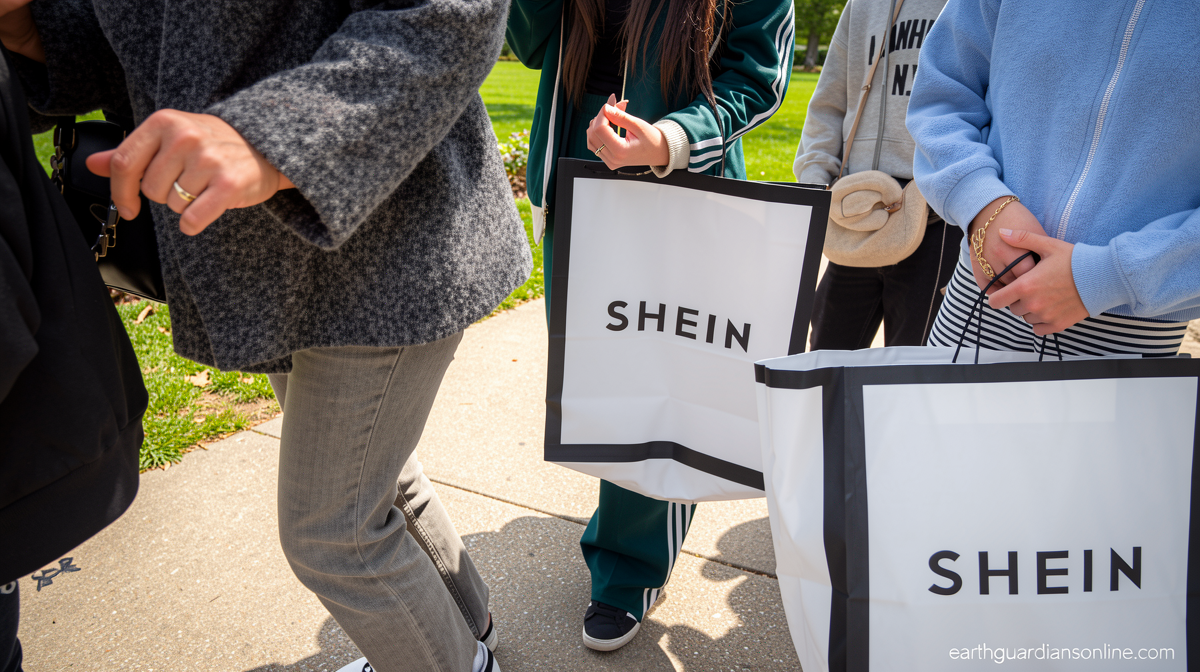
Earthguardiansonline.com – The ultrafast fashion giant that once promised to turn any viral TikTok trend into a $3 crop top within days is finally touching down on a public market — but the landing is far from triumphant. Shein, the Chinese-founded retailer that built a global following by shipping $11 jeans straight from factories in Guangdong to consumers in dozens of countries, will list in Hong Kong on Tuesday following an initial public offering that sought $1.7 billion in fresh capital. The deal values the company at roughly $26 billion, a figure that represents a collapse of more than 70% from the $98.2 billion peak it reached in 2022.
The gap between that 2022 peak and today’s pricing tells the story of a business model colliding with a world that has changed dramatically. Tariff walls have gone up. Competition has sharpened. Geopolitical friction between Washington and Beijing has made every Chinese-linked listing a political event. And the sustainability questions that once seemed manageable now sit squarely in the path of institutional investors who must justify their allocations to boards and regulators.
A Valuation That Tells a Different Story
The numbers in Shein’s prospectus, released in July, paint a picture of a company under genuine strain. Net income fell 39% year over year last year even as revenue continued to grow — a sign that margins are being compressed faster than top-line expansion can compensate. By the first quarter of this year, the company was posting losses of $99 million, a reversal from profitability that alarmed analysts tracking the stock ahead of the offering.
The trigger was largely structural. The United States, Shein’s second-largest market after Europe, eliminated the de minimis exemption that had allowed small parcels to cross the border tariff-free. That exemption was the backbone of Shein’s direct-to-consumer logistics model: tiny packages, shipped individually from Chinese warehouses, arriving at front doors without customs friction. Remove it, and the cost structure that made $3 garments viable simply evaporates. The European Union followed suit last month, scrapping its own parallel exemption and tightening the noose around the same supply-chain playbook.
“It has absolutely missed the best timing for an IPO,” said Jin Lu, senior vice president of The Asia Group consultancy. “Everyone is watching to see whether there’s still room for growth, and how much room there is. And competition, if anything, has intensified.”
From Disruptor to Third-Place Brand
Founded in China in 2012, Shein built its empire on two pillars: a tightly integrated Chinese production base capable of spinning up new designs within days, and an aggressive social-media marketing machine aimed squarely at teenagers and young adults. The result was a brand that, by last year’s sales figures, ranked as the third-largest global apparel company behind Nike and Adidas, with Zara and H&M trailing just behind it, according to GlobalData. The company is expected to hold that position through this year.
“Shein took the fast fashion model, which is frequent release of new products, and just put it on steroids,” said Louise Deglise-Favre, lead apparel analyst at market intelligence firm GlobalData. “The way that they’ve been really disruptive is because they’re so fast – Any small trend that popped up on social media, like TikTok or Instagram, they were able to supply a demand instantly.”
That speed once made incumbents look slow. Zara’s two-week design-to-rack cycle, once considered revolutionary, paled next to Shein’s ability to move from a trending hashtag to a stocked warehouse in under a week. But the competitive landscape has shifted. Other ultrafast players have replicated the playbook, and the tariff changes have stripped away the cost advantage that made the model uniquely profitable for a Chinese-based operator.
The Xinjiang Question and Western Scrutiny
Beneath the commercial pressures sits a political one that has followed Shein since its rise. The company has faced repeated allegations that its supply chain draws on cotton produced in China’s Xinjiang region, home to the Uyghur minority, under conditions involving underpaid and forced labor. A Congressional Commission concluded in 2023 that there are “credible allegations of the company’s use of underpaid and forced labor” in the region, in violation of US law. Beijing has rejected those claims.
Shein has consistently denied using forced labor anywhere in its supply chain and has previously stated it does not source cotton from Xinjiang or from China more broadly. Yet at a UK parliamentary hearing early last year, the company’s legal counsel repeatedly sidestepped direct questions about whether Xinjiang cotton enters its supply chain. The prospectus filed for the Hong Kong listing also made no mention of risks tied to the Xinjiang controversy — an omission that drew attention from investors and watchdogs alike.
Caught Between Washington and Beijing
The geopolitical squeeze is not one-directional. Shein spent years trying to distance itself from its Chinese origins, relocating its headquarters to Singapore in 2022 ahead of an attempted US listing and opening overseas production facilities. Yet it never secured approval from Beijing for either its New York or London listing attempts, forcing withdrawals from both cities. The episode underscored how even non-technology Chinese firms now navigate a landscape in which state permission over capital-market access is as consequential as any commercial metric.
For Hong Kong’s exchange, the listing represents a test of whether the city can still attract marquee names from mainland-linked industries at a time when global capital is pricing in geopolitical risk at a premium. For Shein’s shareholders and the millions of consumers who once queued for its lowest-priced drops, the question is simpler: can a business model built on frictionless cross-border micro-shipments survive in a world that has decided to put friction back in?
Related Reading
Frequently Asked Questions
What is Shein s dressed for its long?
Shein s dressed for its long is the main topic of this guide. The article explains the context, practical details, and next steps readers should understand.
Why does Shein s dressed for its long matter?
Shein s dressed for its long matters because readers are looking for a useful answer, not just a short summary. Good content should match search intent and help them decide what to do next.