Everyone hates data centers. Lawyers love them

Data Center Boom Turns Into a Legal Gold Rush
Earthguardiansonline.com – For years, data centers were among the easiest projects for developers to get approved in growing cities. They looked like office buildings, generated relatively little traffic and were often welcomed as a source of investment. That calculation has changed as the facilities behind the artificial intelligence boom have grown larger, more resource-intensive and far more visible to nearby residents.
The result is a rapidly expanding fight over land use, water, electricity and noise — and a surge of legal work for attorneys on every side.
Jason Morris, a land-use lawyer in the Phoenix area, once spent most of his time helping housing, office and industrial projects navigate regulation and neighborhood opposition. Data center work was only an occasional part of his practice. Now it accounts for roughly 70% of his time, compared with about 10% in the past.
“These cases are my single most difficult. Every legal tool is being used,” he said.
Phoenix became a major data center market as demand accelerated for computing power used by AI systems. Earlier projects could move ahead with limited public controversy. But hyperscale facilities designed for AI workloads are substantially bigger than the data centers that came before them, and their need for electricity and water has heightened local concerns.
Arguments over proposed facilities now play out in neighborhood Facebook groups, municipal meetings and political advertising tied to midterm elections. At the same time, data center construction has become a major force in economic investment, drawing enormous sums into new buildings, power systems and related infrastructure.
Opposition Produces New Legal Battles
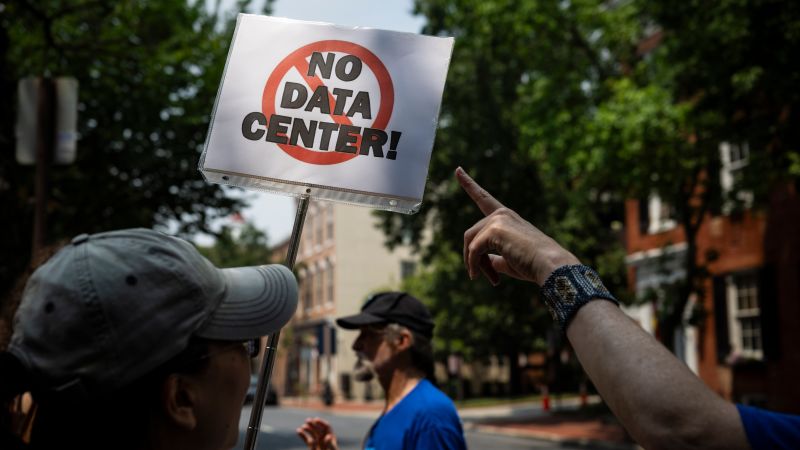
Residents, advocacy groups and plaintiffs’ lawyers have increasingly turned to the courts and local rules to challenge data center development. More than 300 jurisdictions in 44 states have adopted moratoriums targeting data centers, creating another obstacle for companies seeking sites for new facilities.
Morris represents developers, operators and technology companies in disputes involving permitting, water use and the sound produced by large facilities. Cooling equipment and backup generators have become central issues in lawsuits brought by nearby homeowners, while regulators face pressure to scrutinize projects more closely before approving them.
Communities are weighing a difficult set of choices. Data centers can bring construction activity and investment, but their power requirements can be immense. In water-constrained areas, questions about consumption can become especially sensitive. The facilities may also operate continuously, making noise concerns more persistent for people living nearby.
For developers, legal challenges can delay projects that are expensive to build and tied to urgent demand for computing capacity. For local officials, the conflict requires balancing growth, infrastructure limits and quality-of-life concerns without relying on the assumptions that made older data center proposals relatively simple to approve.
Major Firms Build Specialized Practices
The complexity of those disputes has created a valuable market for legal services. Large firms including Latham & Watkins, Perkins Coie and WilmerHale are highlighting data center services for clients. Companies are also competing for partners who have handled the complicated mix of real estate, energy, environmental and regulatory questions involved in these projects.
“When you start to see law firms large and small putting data centers on their websites, it tells you everything you need to know about the potential for business,” Morris said.
Many large firms have established data center or digital-infrastructure teams that combine lawyers with experience in energy, real estate and regulation. A Bloomberg Law survey released in June found that about one-third of large law firms had a data-center-focused team or practice group.
Energy lawyers are particularly sought after because data centers require huge volumes of electricity. During the Biden administration, clean-energy projects were a dominant concern for much of the energy sector. Data center development has more recently become the larger focus for many practitioners.
Tyler O’Connor, an energy litigator at Crowell & Moring in Washington, DC, advises developers on energy infrastructure and compliance matters. He said the rise of data centers is influencing legal work well beyond the companies directly building the facilities.
“Even when we’re not working for those clients, almost all of the work we do now is informed by the emergence of data centers,” he said.
Nuisance Claims Target Noise and Property Values
Lawyers who handle mass torts and class actions are also entering the field. Some have used social media to offer assistance to residents near data centers, while lawsuits increasingly characterize the facilities as a nuisance to surrounding neighborhoods.
Laura Sheets, a Detroit attorney, recently filed one of the nation’s earliest nuisance cases against a Michigan data center operator. She said residents began reaching out as facilities appeared in more communities.
“When these facilities started popping up everywhere, we were contacted by people who were upset,” Sheets said.
Sheets has filed four nuisance complaints involving data centers in four states and is preparing additional cases. The suits contend that continuous sound from cooling systems and generators significantly disrupts neighbors’ ability to use and enjoy their homes, the standard at the center of a private-nuisance claim. They also argue that nearby facilities can reduce property values.
These cases rely on a familiar strategy used in disputes involving major industrial operations. Michael Pollack, a land-use law professor at the Cardozo School of Law, said courts are likely to apply existing environmental and land-use principles to data centers rather than create an entirely new legal framework for them.
The growing disputes may not guarantee a permanent boom for lawyers. If litigation and municipal restrictions meaningfully slow construction, the data center industry could seek federal legislation that limits the ability of local governments to block new projects. Such a move could reshape the balance of power between communities, regulators and developers.
For now, however, the scramble to build AI infrastructure is producing an equally intense scramble over where it can be built, how it will operate and who must live beside it. In that conflict, lawyers have become indispensable participants — representing the companies racing to expand, the cities reviewing their proposals and the residents determined to challenge them.
Related Reading
Frequently Asked Questions
What is Everyone hates data centers Lawyers love?
Everyone hates data centers Lawyers love is the main topic of this guide. The article explains the context, practical details, and next steps readers should understand.
Why does Everyone hates data centers Lawyers love matter?
Everyone hates data centers Lawyers love matters because readers are looking for a useful answer, not just a short summary. Good content should match search intent and help them decide what to do next.