Young adults under 21 traded $5 billion on Kalshi this year, amid prediction market frenzy

Daftar Isi
Under-21 Traders Pour $5.4 Billion Into Kalshi Prediction Markets, Exposing a Regulatory Gap
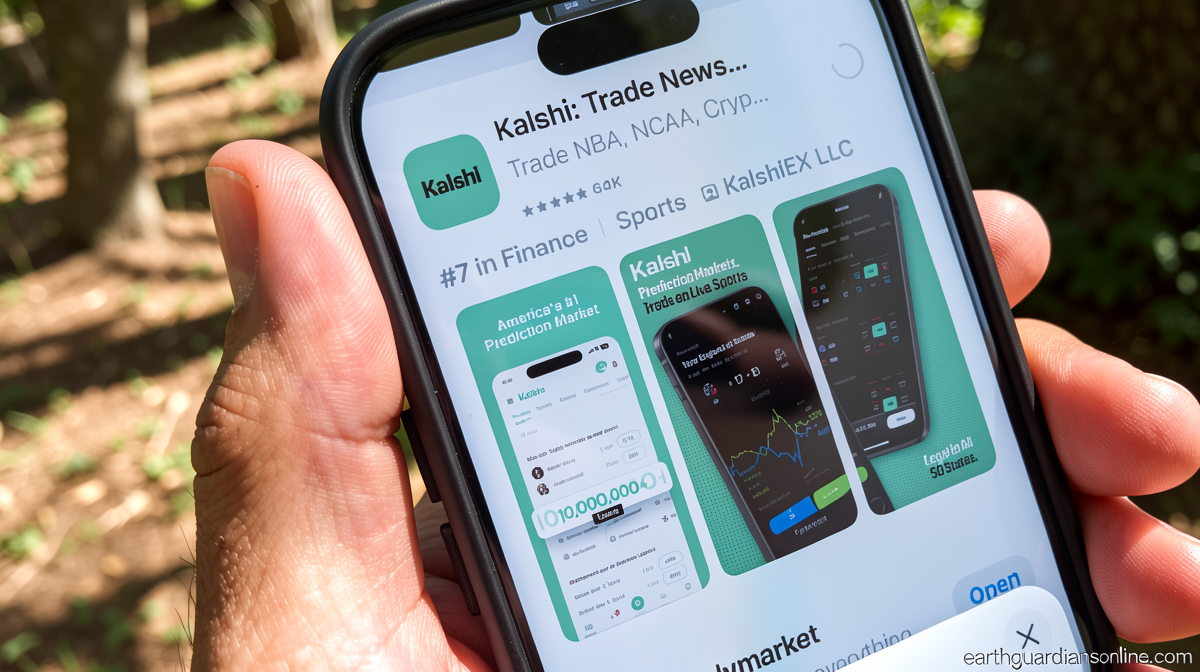
Earthguardiansonline.com – Americans aged 18 through 21 have placed an estimated $5.4 billion in trades on the Kalshi prediction platform so far this year, a figure that underscores how quickly a federally regulated financial venue has become a de facto betting floor for a demographic that most state gambling laws still exclude. The sum, drawn from a fresh analysis of publicly available trading data, represents a substantial slice of Kalshi’s total activity and has sharpened an ongoing debate over whether prediction exchanges should be treated as gambling products or as legitimate financial instruments.
How Prediction Markets Differ From Traditional Gambling
Prediction platforms let participants wager on outcomes ranging from election results and sports scores to cultural events and even daily weather readings. Their popularity surged dramatically over the past year, drawing millions of new users who previously had no exposure to event-based wagering. The critical structural distinction is regulatory: because these venues operate under federal oversight as commodity exchanges, they are open to anyone who has reached the age of majority at 18. State-run casinos, racetracks, and sportsbooks, by contrast, generally require participants to be 21 or older.
That age gap has drawn scrutiny from consumer-protection groups, addiction specialists, and members of Congress, who argue the arrangement creates a backdoor through which young adults can access sports betting in states where the legal floor is 21. Critics contend the loophole puts personal savings and mental well-being at risk for a cohort still navigating college tuition, entry-level wages, and early career instability.
Sports and Parlays Dominate Young-User Activity
Within Kalshi’s trading categories, sports events and parlay-style bundles — all-or-nothing combinations of multiple wagers that carry outsized risk — account for roughly 80 percent of total platform volume. The analysis found that users in the 18-to-21 bracket placed an estimated $3.9 billion in those two categories alone this year, a number projected to climb as the autumn football schedule ramps up.
“Normally you’d have a big summer lull, but the World Cup changed that completely,” said Jonathan Michaels, who operates a gaming-industry consulting firm. “Prediction markets will also see record numbers this fall with the football season, and that’ll certainly trickle down into college-age students.”
The seasonal acceleration matters because college football and the NBA regular season overlap precisely with the period when 18-to-21-year-olds are most active on their phones and most exposed to peer-driven wagering culture.
Scale of the Platform and Young-User Share
Kalshi has processed more than $171 billion in cumulative trading volume year-to-date as of Thursday, per data made available by Paradigm, a major institutional investor in the company. A Kalshi spokesperson confirmed to reporters this week that the 18-to-21 cohort currently represents 3.14 percent of overall trading volume. The spokesperson declined to break out exact dollar figures for that age band and did not elaborate further.
The company has previously highlighted internal guardrails aimed at younger participants, including configurable deposit caps and automated alerts triggered when trading patterns suggest risky behavior. Kalshi also contributed $2 million to the National Council on Problem Gambling to fund research and intervention programs targeting unhealthy wagering habits.
The Regulatory Battleground
With the endorsement of the current administration, prediction exchanges operate as federally chartered financial markets overseen by the Commodity Futures Trading Commission. In that capacity, they are exempt from state gaming statutes and state tax regimes that govern casinos and sportsbooks. The arrangement, however, is under active legal challenge. Forty-four state attorneys general, dozens of tribal governments, and major casino-industry stakeholders have joined litigation seeking to reclassify prediction trading as gaming subject to state licensing and taxation.
The American Gaming Association, the principal lobbying arm of the casino sector, has specifically cited Kalshi’s young-user trading figures in its long-running campaign to strip sports events from prediction platforms. The association views those sports contracts as unlicensed sportsbook operations in disguise.
“Most parents and grandparents don’t realize that the ‘prediction markets’ are offering a backdoor into sports-betting in jurisdictions where the legal betting age is 21,” AGA president Bill Miller said. “This means their freshman son or daughter is prohibited from entering legal sportsbooks, but now they can just pull out their phone and use Kalshi to bet on football.”
Counterarguments and Industry Responses
Proponents of the current framework note that 18-year-olds already hold legal standing to trade equities on major exchanges and to take positions in other CFTC-regulated derivatives that can be far more volatile than a single-game prediction contract. Under that logic, the age-18 threshold is consistent with broader financial-market norms.
Some operators have nonetheless chosen to self-impose a higher floor. Fanatics, the sports-merchandising conglomerate, launched a prediction product last year restricted to users 21 and older. A company spokesperson previously told reporters, “We believe 21+ is the right age for any type of real-money activities.” The NCAA, NFL, NBA, PGA Tour, and several other professional and collegiate leagues subsequently petitioned the CFTC to raise the minimum trading age across all prediction exchanges. The agency has so far rebuffed those requests and is finalizing rulemaking that preserves the 18-plus standard.
A newer entrant, Novig, received CFTC approval in June and opened its platform this month with a voluntary 21-plus policy. The company has already logged $450 million in trades and announced a partnership with the New York Mets.
“We listened to the concerns of the NCAA and other professional sports leagues,” Novig CEO Jacob Fortinsky said. “We want to be a good partner to”
What the Numbers Mean for Young Adults and Policymakers
The $5.4 billion figure is not merely a curiosity; it signals that a meaningful share of Gen-Z financial activity is now flowing through instruments that most state legislatures never intended to regulate as gambling. For a college student in a state where the betting age is 21, the practical effect is that a federally chartered app on a smartphone can substitute for a licensed sportsbook, complete with parlay structures that carry some of the highest house edges in commercial wagering.
Whether Congress, state legislatures, or the courts ultimately close the gap remains uncertain. What is clear is that the volume of young-user trading will continue to grow through the fall sports season, giving regulators and consumer advocates a concrete dataset with which to argue their respective positions. The question is no longer whether under-21 Americans will trade on prediction markets; it is whether the legal framework will catch up before the next championship weekend.
Related Reading
Frequently Asked Questions
What is Young adults under 21 traded 5 billion?
Young adults under 21 traded 5 billion is the main topic of this guide. The article explains the context, practical details, and next steps readers should understand.
Why does Young adults under 21 traded 5 billion matter?
Young adults under 21 traded 5 billion matters because readers are looking for a useful answer, not just a short summary. Good content should match search intent and help them decide what to do next.