
Uber and Wayve team up to launch driverless cars in London this summer
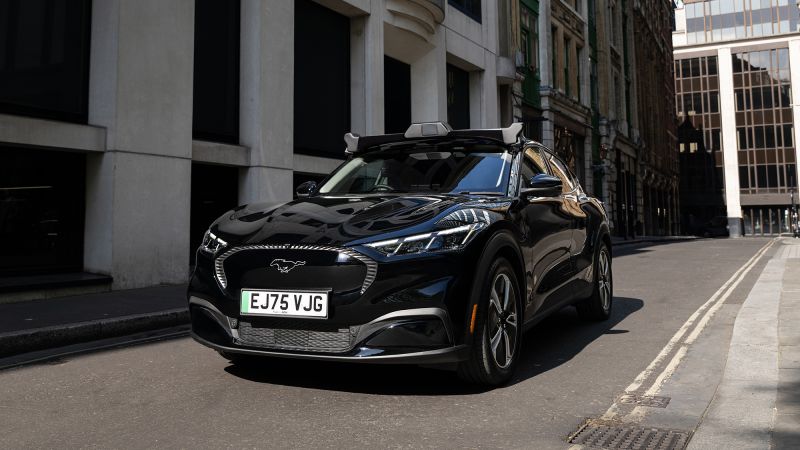
Uber and Wayve Collaborate to Introduce Autonomous Vehicles in London
Uber and Wayve team up to launch – London is set to become the first British city to offer public access to self-driving cars, marking a significant milestone in the evolution of artificial intelligence in transportation. This initiative, spearheaded by the UK-based company Wayve, will introduce autonomous vehicles powered by advanced AI systems to one of the world’s most densely trafficked urban environments. The rollout, scheduled for later this summer, represents the beginning of Wayve’s international expansion, with plans to deploy robotaxis in over a dozen cities globally, including Tokyo in the coming months.
Wayve’s vice president of operations, Kaity Fischer, expressed enthusiasm about the upcoming launch, emphasizing its potential to reshape mobility in London. “We’re thrilled to begin this phase and engage the public with our technology,” she stated in a Monday interview with CNN. The company has been refining its autonomous driving systems on the city’s complex roads since 2018, and the public debut will initially involve a smaller number of vehicles compared to the scale of future deployments. Fischer noted that this cautious approach aims to balance innovation with reliability, ensuring that safety remains a priority throughout the transition.
The Role of Supervised Testing in Building Trust
During the early stages of the rollout, Wayve’s self-driving cars will operate under the supervision of trained Uber drivers. This hybrid model allows for real-time oversight while gradually proving the technology’s safety and effectiveness. “It enables us to create a solid safety case, so that when we eliminate human drivers, we have a proven track record,” Fischer explained. The gradual phase-out of supervisors is not bound by a strict timeline, she added, underscoring that the focus remains on minimizing risks before full autonomy is achieved.
Despite the optimism, the rapid adoption of self-driving vehicles has drawn increased attention, particularly after recent reports of safety incidents involving Waymo taxis in the U.S. A CNN investigation highlighted cases where autonomous cars failed to stop at red lights or collided with oncoming traffic. However, Fischer defended the technology, arguing that AI-driven systems offer advantages over human drivers. “The data supports the case for safer streets,” she said. She pointed out that autonomous vehicles lack human errors such as fatigue or distraction, and their sensors provide a more precise understanding of their surroundings.
“Our technology equips vehicles with a ‘robot brain’ that can learn from and interact with real-world environments,”
Wayve’s website describes its AI as a core component of its vehicles, allowing them to adapt to dynamic conditions. This capability is part of the broader field of “Embodied AI,” where machine learning models are embedded directly into physical systems like cars. The concept has gained traction as advancements in AI and cloud computing have accelerated the development of autonomous technologies. Fischer reflected on the journey of the company, noting that when Wayve was founded in 2017, few anticipated that AI would become a standard feature in automobiles. “Now, more companies are embracing this approach,” she said, highlighting the growing interest in AI-integrated mobility solutions.
Comparing Urban Environments: London’s Unique Challenges
While the U.S. has seen a rapid expansion of autonomous vehicles, London presents a distinct set of challenges for self-driving systems. The city’s narrow streets, unpredictable pedestrian behavior, and heavy traffic congestion require robust AI algorithms to navigate efficiently. Wayve’s technology has been tested extensively in this environment, and the company claims its systems are capable of handling such complexities. Fischer acknowledged the importance of real-world testing, stating that the lessons learned in London will inform future deployments in other cities.
Autonomous vehicles are expected to address some of the inefficiencies in London’s transportation network. With a population exceeding 8 million and one of the highest rates of traffic congestion in Europe, the integration of self-driving cars could reduce accidents and optimize route planning. However, the success of this initiative will depend on public acceptance, which Fischer believes can be fostered through transparency and incremental implementation. “By introducing the technology gradually, we give people the chance to experience its benefits firsthand,” she said.
Legal and Technological Foundations for the Rollout
The UK government has played a pivotal role in enabling this innovation, providing a clear regulatory framework for autonomous vehicles. Under the Automated Passenger Services initiative, Wayve’s operations align with legal guidelines that prioritize safety and accountability. Fischer praised the government’s commitment to AI development, citing its substantial investments in the field. “The UK has been a leader in fostering AI innovation,” she remarked, noting that this support has accelerated the commercialization of autonomous technologies.
Wayve’s approach to integrating AI into vehicles sets it apart from competitors who often retrofit autonomous systems onto existing models. Instead, the company designs its technology from the ground up, embedding it into vehicles during the manufacturing process. This strategy ensures seamless compatibility and enhances the reliability of the AI systems. “Our solution is built into the car’s structure, which allows for more efficient performance,” Fischer explained. The combination of AI and cloud computing has enabled real-time data processing, enabling the vehicles to adapt to changing conditions and improve over time.
As the rollout progresses, Wayve aims to demonstrate how autonomous vehicles can coexist with traditional transportation systems. The company’s partnership with Uber adds a layer of accessibility, leveraging the ride-hailing giant’s existing infrastructure to reach a broader audience. This collaboration also highlights the growing trend of partnerships between tech startups and established companies to bring autonomous solutions to market. “Uber’s network provides the ideal platform to test and refine our technology,” Fischer said.
While the technology is still in its early stages, the potential for autonomous vehicles to revolutionize urban mobility is evident. London’s trial could serve as a blueprint for other cities, offering insights into the challenges and opportunities of AI-driven transportation. Fischer remains confident in the future of self-driving cars, stating that the transition is not only feasible but necessary for the next generation of mobility. “We’re not just introducing a new service—we’re paving the way for smarter, more efficient urban transportation,” she concluded.
With the launch of Wayve’s robotaxis in London, the city joins a growing list of global locations testing autonomous technologies. The success of this initiative could influence regulatory policies and public perception in other regions, potentially accelerating the adoption of AI-powered vehicles worldwide. As the technology matures, the focus will shift from experimentation to scaling, ensuring that autonomous cars become a trusted part of daily life. The journey toward full driverless operations is just beginning, but the groundwork laid in London could have far-reaching implications for the future of transportation.
