
An explosive appeal from Trump over E. Jean Carroll sexual abuse verdict stalls at the Supreme Court
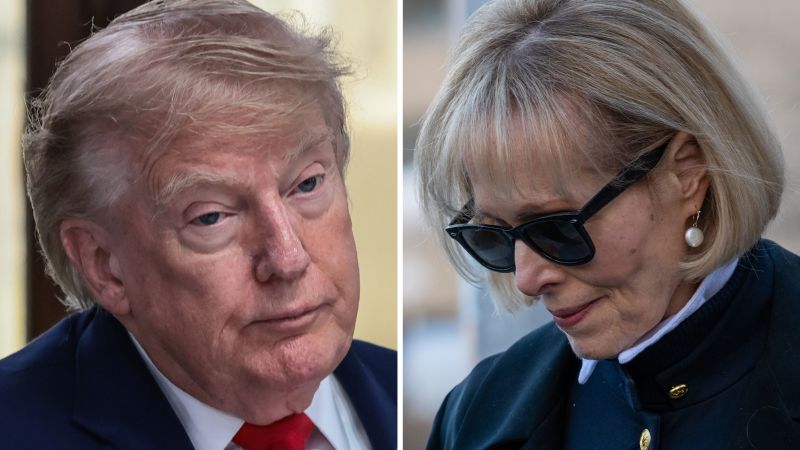
Supreme Court Halt on Trump’s Appeal in E. Jean Carroll Sexual Abuse Case
An explosive appeal from Trump over – On February 27, the Supreme Court justices convened in a closed session, facing a high-stakes case involving President Donald Trump, who sought to reverse a federal jury’s conclusion that he sexually abused and defamed E. Jean Carroll, a magazine columnist. However, the case took an unexpected turn when it was abruptly removed from the court’s schedule just a day prior, sparking speculation about the reasons behind the delay. Trump’s appeal, initially filed in November 2025, had already undergone 15 reschedulings in the current term, making it the second most frequently adjusted case, according to a CNN analysis. The delays have drawn scrutiny, with legal experts questioning whether the court’s handling of the matter reflects a strategic pause or an internal debate over its merits.
While the Supreme Court rarely explains its procedural delays, the extended timeline of Trump’s appeal has raised eyebrows. The justices may be waiting for additional appeals related to the same dispute, or one or more members might be drafting an opinion. Either scenario could account for the repeated postponements, which have allowed Trump to avoid immediate consequences for the $5 million verdict a New York jury awarded Carroll in 2022. That award, which stemmed from a trial over allegations of sexual assault and defamation, was the first of two cases against the former president, with a second, more substantial judgment of $83 million following in 2025. The nation’s top court has also launched a criminal investigation into Carroll, further complicating the legal landscape.
Steve Vladeck, a Georgetown Law professor and CNN Supreme Court analyst, highlighted the unusual nature of the court’s handling of the case. “The oddity here isn’t just that the court has rescheduled one of the Carroll cases 15 times, it’s the absence of a persuasive justification for it having done so,” he said. Vladeck suggested that the delays might be due to the court’s anticipation of upcoming appeals, even though the legal issues in those cases differ. He also noted the possibility of the justices showing “special solicitude” for Trump, despite the fact that the allegations in this case occurred during his time as a private citizen, not while in office.
The case’s complexity arises from two separate lawsuits filed by Carroll against Trump. The 2022 suit, which led to the $5 million verdict, alleged that Trump sexually assaulted her in a New York department store in the mid-1990s and defamed her by claiming she fabricated the story for personal gain. The 2019 case, which resulted in a $83 million judgment, focused on defamation and battery, with the evidence from the 2022 trial potentially influencing its outcome. Notably, the 2022 case went to trial first, allowing the jury to weigh the evidence before the 2019 case was heard months later. This order has left legal analysts wondering whether the court is prioritizing cases based on their financial stakes or political significance.
Trump’s legal team has consistently argued that the trial judge, Lewis Kaplan, made critical errors. They claimed that allowing testimony from two women who alleged sexual assault in past incidents skewed the jury’s perception of the case. Additionally, the inclusion of the “Access Hollywood tape,” a 2005 recording where Trump boasted about grabbing women by the pussy, was seen as a decisive factor in the verdict. The tape’s content, as captured in the audio, included Trump’s claim: “You know I’m automatically attracted to beautiful — I just start kissing them. It’s like a magnet. Just kiss. I don’t even wait. And when you’re a star, they let you do it. You can do anything, … Grab them by the pussy. You can do anything.” Kaplan, however, defended the tape’s relevance, stating it strengthened the jury’s understanding of Trump’s pattern of behavior.
The 2nd U.S. Circuit Court of Appeals recently affirmed the $5 million verdict, finding no errors in the trial judge’s decisions. Trump’s attorneys, however, have continued to challenge the ruling, arguing that the court’s repeated rescheduling of the case undermines its credibility. In a January filing, they contended that the delays have diverted Trump’s attention from his executive responsibilities, casting doubt on his ability to govern effectively during a pivotal period in his presidency. “This mistreatment of…” they wrote, though the sentence is cut off, the argument underscores their belief that the case is a distraction from national priorities.
Carroll’s lawsuit, which dates back over three decades, has become a focal point in the ongoing legal battles between the former president and his accusers. The 2022 trial, which was the first to be heard, resulted in a $5 million verdict, while the 2019 case, which followed, yielded a far larger judgment. With interest factored in, Trump now owes Carroll more than $100 million in total. The two cases, though distinct in their legal arguments, are part of a broader narrative that has drawn public and political attention. Critics argue that the prolonged delays in the Supreme Court have allowed the narrative to shift, with Trump’s legal team gaining time to present their case while the victim’s story risks fading from the public eye.
The case has also become a symbol of the intersection between personal conduct and political power. While Trump’s defense emphasizes his pre-presidential actions, the jury’s verdict in 2022 was directly tied to his behavior during his time as a public figure. The inclusion of the Access Hollywood tape in the trial underscored this connection, linking past remarks to the alleged sexual assault. Despite these points, Trump’s attorneys have consistently maintained that the evidence presented was biased, and that the judge’s decisions in the case were flawed. The court’s reluctance to explain its rescheduling has only heightened the perception that the case is being treated with particular care, whether for political reasons or to ensure a thorough examination of the legal questions at hand.
As the Supreme Court prepares to address the appeal, the case remains a lightning rod for debate over the role of the judiciary in high-profile political disputes. The delayed proceedings have allowed Trump’s legal team to refine their arguments, while Carroll’s team has had time to consolidate their evidence. The court’s decision on this appeal could set a precedent for how similar cases are handled in the future, particularly those involving public figures and allegations of misconduct. With the nation watching closely, the outcome may have far-reaching implications for both Trump’s legacy and the legal standards applied to cases of sexual abuse and defamation.
