
Appeals court deals biggest setback yet to Trump DOJ’s demands for confidential voter roll data
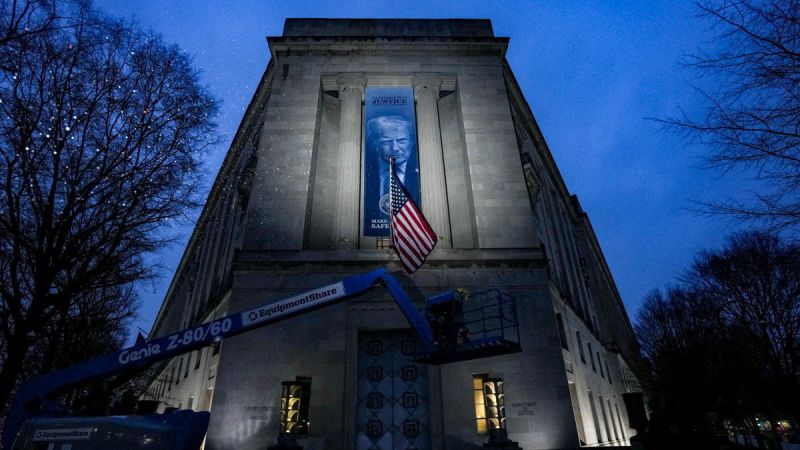
Appeals Court Dealt Major Blow to Trump DOJ’s Push for Confidential Voter Roll Data
Appeals court deals biggest setback yet – On Wednesday, a federal appeals court ruled against the Justice Department’s attempt to force Michigan to release confidential voter registration information, marking a significant victory for the state and a notable hurdle for the Trump administration’s broader campaign to scrutinize unredacted election records. The 6th U.S. Circuit Court of Appeals concluded that Michigan was not required to provide the data—including sensitive details such as social security numbers and driver’s license identifiers—to the department. This decision comes as the first major appellate ruling in the ongoing legal battle over federal access to state voter rolls, potentially setting the stage for a Supreme Court showdown.
Legal Challenge and Judicial Reactions
The dispute centers on the Justice Department’s interpretation of a 1960 civil rights law, which they argue grants the authority to demand voter records for audits. However, the 6th Circuit panel found that the law does not extend to aggregated voter files created internally by states. The ruling aligns with several lower courts that have previously rejected similar requests, signaling growing judicial resistance to the administration’s efforts.
“Back then, the government used this power to ensure that everyone who had the right to vote could freely exercise that right,” wrote Circuit Judge Andre Mathis. “But today, the government invokes Title III for an inverse purpose—to ensure that some people have not voted.”
Mathis, writing for the majority, emphasized that the law’s original intent was to combat voter suppression, not to investigate potential fraud. The court’s opinion was joined by Circuit Judge R. Guy Cole, Jr., underscoring the consensus among the panel on this issue. The ruling also highlighted that the Justice Department had not met other legal requirements to justify the data request, further weakening their case.
With this decision, the number of judges at the district court level who have ruled against the administration’s strategy now stands at nine. While the Trump DOJ has continued to press its case, the appeals court’s intervention adds a new layer of complexity to their legal arguments. The outcome could influence how the administration approaches similar requests in other states, especially as the Supreme Court remains a likely destination for the issue.
Broader Implications for Election Oversight
The case is part of a wider effort by the Trump administration to assert federal control over state election processes. This initiative, driven by longstanding claims that the 2020 election was unfairly influenced, has targeted multiple aspects of voter registration and verification. Recently, a judge in Washington, D.C., blocked the use of a federal citizenship data system for purging voter rolls, while a Boston federal court added to the list of decisions challenging a 2025 executive order on election rules.
Justice Department attorneys have presented varied justifications for their data requests, shifting between claims of fraud prevention and election integrity. However, the latest strategy involves cross-referencing state voter rolls with the Department of Homeland Security’s database to identify discrepancies. Critics argue this approach risks overreaching, as the data system has a history of generating false positives, particularly in cases involving naturalized citizens.
The Michigan case illustrates the tension between federal oversight and state autonomy in elections. The state’s voter registration files, which were compiled and maintained internally by officials, are not considered “in possession” of third parties under the 1960 law. As Michigan Secretary of State Jocelyn Benson noted in the court’s opinion, the state did not acquire the data from an external source but instead developed it independently. This distinction is crucial, as it challenges the DOJ’s claim that the law applies broadly to all voter information.
While the majority of the 6th Circuit panel agreed with Michigan, Circuit Judge John B. Nalbandian expressed dissent, arguing that the law should be interpreted more broadly to include all voting-related records. His opinion highlights the ideological divide within the court and raises questions about the future of the administration’s legal strategy. The dissent could be pivotal if the Supreme Court takes up the case, as it might offer alternative interpretations that could support the DOJ’s position.
Context and Legal Precedent
The 1960 Civil Rights Act, which forms the basis of the DOJ’s argument, was designed to eliminate barriers to voting, particularly in the Jim Crow South. Title III of the law specifically empowers the attorney general to investigate and address voter discrimination. Yet, the Trump administration has redefined its use, seeking to leverage the law for auditing purposes rather than combating exclusionary practices.
Michigan’s case is notable for its focus on the scope of the law’s application. The 6th Circuit’s decision reinforces the idea that the law’s provisions are limited to records directly acquired by election officials, not those compiled internally. This interpretation contrasts with the DOJ’s broader view, which includes data aggregated by state governments. The ruling also underscores the importance of judicial scrutiny in defining the limits of federal authority in elections.
As the legal battle unfolds, the implications for other states remain uncertain. The DOJ’s lawsuit against 30 states has already faced challenges from various courts, and Michigan’s case could serve as a precedent. If the appeals court’s reasoning is accepted, it might restrict the DOJ’s ability to demand unredacted voter data nationwide, forcing them to rely on alternative methods for verifying eligibility. This could have lasting effects on how federal and state election officials collaborate in the future.
Legal experts have pointed to the ruling as a critical development in the fight against expansive federal oversight. The decision reflects a growing consensus that the Trump administration’s approach risks undermining trust in state election systems. By rejecting the DOJ’s claim, the court has affirmed the importance of state control over voter data, even as the federal government seeks to ensure election accuracy through audits.
Looking ahead, the Supreme Court may play a decisive role in resolving the dispute. The justices could weigh in on whether the 1960 law is being misapplied to justify invasive data collection. In the meantime, the administration’s efforts to compare voter rolls with federal databases continue, with the potential to impact millions of voters. The ruling in Michigan, however, provides a clear warning: the law’s original purpose must not be overshadowed by its new, expanded use in the context of political disputes.
As the legal landscape evolves, the balance between federal authority and state autonomy in elections remains a central issue. The 6th Circuit’s decision is a significant step in this direction, highlighting the judiciary’s role in safeguarding the integrity of both the law and the electoral process. With the Supreme Court now a potential focal point, the outcome of this case could shape the future of election oversight in the United States.
