
Breaking down Democrats’ chances to beat Ken Paxton in Texas
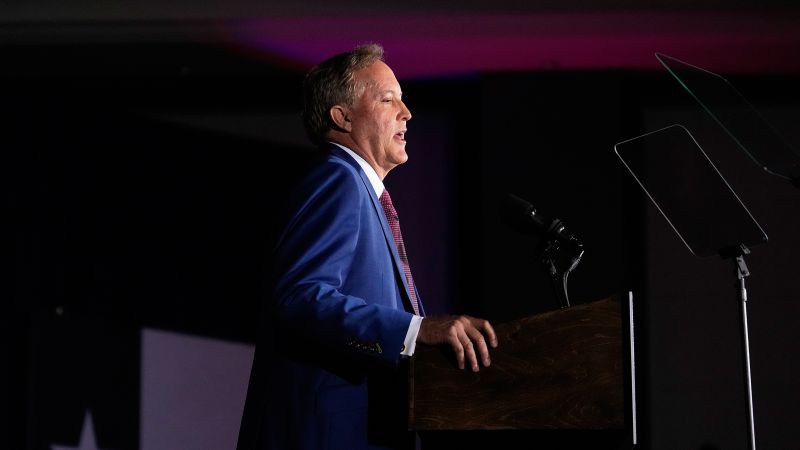
Breaking Down Democrats’ Chances to Beat Ken Paxton in Texas
down Democrats chances to beat Ken Paxton – The question of whether Texas Democrats can finally end their long-standing pattern of losing statewide races has lingered for decades. For years, the answer has seemed predictable: No. Yet in 2026, the landscape appears different. The Democratic Party has secured a key opponent in the state’s U.S. Senate race: Ken Paxton, the Republican Attorney General. Paxton’s path to the general election was paved by a late endorsement from former President Donald Trump, who narrowly secured a runoff victory against Sen. John Cornyn. This shift has raised hopes for Democrats, who are now positioned to challenge Paxton in a race that could reshape the political dynamics of the Lone Star State.
The State of Democratic Ambitions in Texas
Texas has long been a stronghold for Republicans, with Democrats struggling to gain traction in statewide elections. Since 1994, no Democratic candidate has claimed victory in a major race, and the Senate has seen no Democratic win since 1988. However, the 2026 contest offers a unique opportunity. With Paxton as the Republican nominee, the Democratic hopeful, James Talarico, may have found a challenger more vulnerable than his predecessors. This scenario has led analysts to reconsider the odds of a Democratic upset, particularly as national trends favor the party’s candidates.
Analyses indicate that Democrats’ prospects are as strong as they’ve been in recent memory. The national “generic ballot” survey, which measures voter sentiment toward the parties in general elections, has consistently shown a favorable shift toward Democrats. Recent polls even suggest a double-digit lead for the Democratic contender, a significant change from previous cycles. Additionally, the erosion of former President Donald Trump’s approval ratings has created a more hospitable environment for Democrats. His influence, once a dominant force in Texas politics, has waned, especially among Latino voters, who have increasingly turned toward the Democratic Party in recent years.
Ken Paxton: A Challenging Republican Candidate
Paxton’s campaign has faced scrutiny for its internal struggles. The GOP primary battle was contentious, with critics noting his underperformance compared to other statewide candidates like Gov. Greg Abbott. In 2022, Paxton secured victory with a narrow 9-point margin, while other Republicans in the same race won by larger margins. This has raised concerns about his ability to unify the Republican base and rally support in a high-stakes general election.
Moreover, Paxton’s reputation as a divisive figure within the party has been a liability. His controversial stances on issues such as the role of the American flag and his advocacy for reduced meat consumption have sparked debates. While he claimed to run a “non-meat” campaign in 2022, the term has been interpreted as a critique of traditional dietary habits, potentially alienating conservative voters. These remarks, though seemingly minor, could carry weight in a state where cultural values often influence electoral outcomes.
James Talarico: A Democratic Hopeful with Mixed Signals
James Talarico’s candidacy has been a topic of discussion among Democrats. His openness about his Christian faith and alignment with progressive values have been seen as strengths, particularly in attracting voters who prioritize religious identity. However, his platform also includes remarks that some view as “woke,” such as his assertion that there are six biological sexes and his acknowledgment of nonbinary gender identities. These statements, while forward-thinking, have drawn criticism from conservative groups who perceive them as a departure from traditional beliefs.
Despite these potential hurdles, Talarico’s campaign has found favor in certain demographics. Polls suggest he resonates with younger voters and those who support social progressivism. The University of Texas/Texas Politics Project poll, for instance, showed Talarico leading Paxton by eight points among registered voters, a margin that reflects his appeal in a state where demographic shifts are reshaping political loyalties. Yet, his performance among independent voters remains a key area of focus, as they often serve as swing voters in closely contested races.
Polls and the Political Climate
The current polling data paints a cautiously optimistic picture for Democrats. While the race is still tight, Talarico’s lead among registered voters in the April University of Texas/Texas Politics Project poll highlights his potential. However, this lead is not universal. In contrast, the Republican gubernatorial race between Greg Abbott and his opponent saw a much larger margin, with Abbott leading by six points. The disparity underscores the complexity of the 2026 Senate race, where both parties face distinct challenges.
Another recent poll from Texas Southern University/YouGov revealed a near-tie between Talarico and Paxton among registered voters, 45%-45%. This result, while encouraging for Democrats, also indicates that the race is far from decided. The data suggests that while Talarico has momentum, Paxton’s experience and establishment connections may still give him an edge in certain regions. For example, his performance in the 2022 state elections, where he outperformed other Republicans, hints at a strategy that could carry over into this contest.
Yet, the broader political climate has shifted in favor of Democrats. The national generic ballot trend, which has favored the Democratic Party, is particularly relevant in Texas, where the state’s population is becoming more diverse. Latino voters, who have historically leaned Republican, are now a critical Democratic constituency. This shift is partly attributed to Trump’s declining support, which has left the Republican Party in a weaker position. If Talarico can leverage this trend, his chances may improve significantly.
Key Challenges and Strategic Considerations
For Democrats, the most pressing challenge is whether Talarico can overcome the cultural divide. His remarks on gender identity and the American flag have been interpreted in different ways, depending on the audience. While some see them as progressive, others view them as a risk to alienate conservative voters. This dilemma is reminiscent of the challenges faced by Kamala Harris in previous elections, highlighting the need for Talarico to balance his message without losing key demographic support.
On the other hand, Republicans must navigate their own issues. Ted Cruz, a prominent GOP senator, has warned that the Democratic nominee could be a formidable opponent. “It is easy to say it’s Texas, it’s red, we’re going to win — and I believe we are going to win,” Cruz stated in a recent podcast. “But I also think the Democrat nominee James Talarico is a dangerous candidate.” This sentiment reflects the urgency with which Republicans are approaching the race, recognizing that Paxton’s vulnerability could be exploited if the Democratic campaign gains traction.
The upcoming Senate race is more than a contest for a single seat; it’s a test of whether Democrats can capitalize on changing political tides. If they succeed, it could signal a broader shift in Texas’s electoral landscape, challenging the dominance of the Republican Party. However, the path to victory remains uncertain, as both candidates bring unique strengths and weaknesses to the table. The final outcome will depend on how well Talarico can unify his base and how effectively Paxton can rebuild his campaign after a contentious primary.
The Path Forward
As the election approaches, the focus will remain on voter engagement and messaging. Talarico’s ability to connect with religious voters and his appeal to younger demographics will be crucial. Meanwhile, Paxton’s experience and connections to the Republican establishment may help him weather the storm. The political climate in Texas, however, is increasingly favorable to Democrats, and the data suggests that this race could be a turning point for the party. Whether the Democratic candidate can translate this momentum into a statewide victory will be the defining question of the 2026 election.
