Can Trump actually change Lake Ontario to ‘Lake America’? Here’s what to know

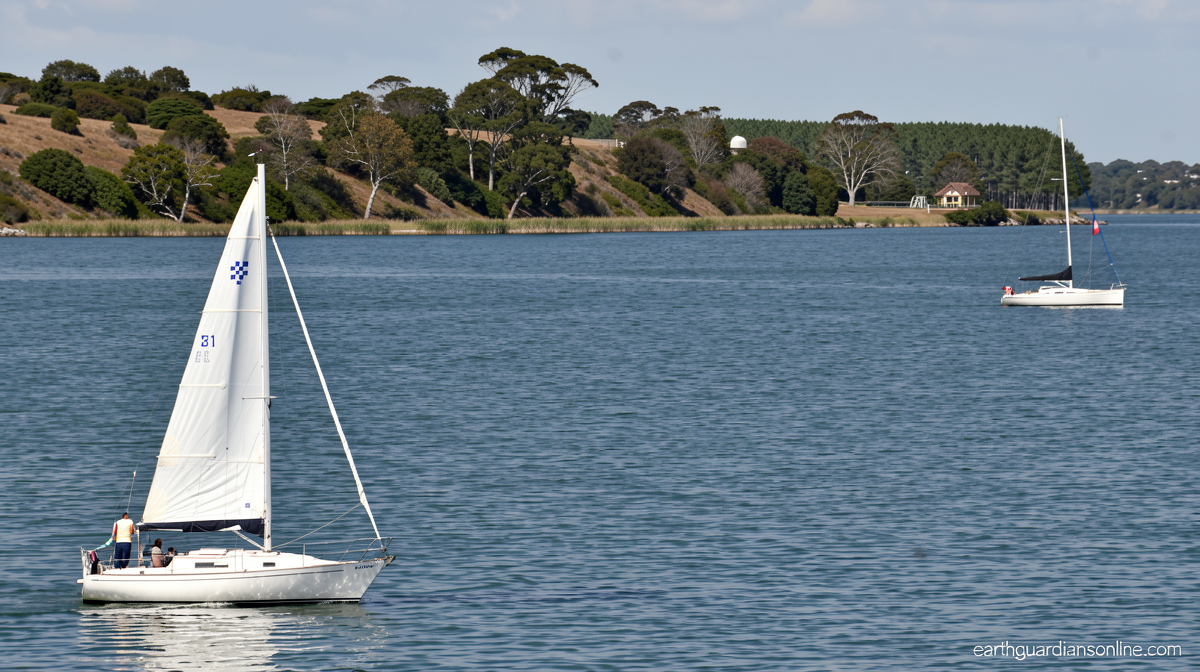
Can Trump Actually Change Lake Ontario’s Name?
Earthguardiansonline.com – Can Trump actually change Lake Ontario’s name? That question dominated headlines Thursday after President Donald Trump signed an executive order directing every federal agency to replace “Lake Ontario” with “Lake America” on official maps, contracts, and public communications. The order arrived amid a sharply escalating trade confrontation with Canada, the United States’ largest trading partner, after bilateral talks collapsed the prior week and both governments layered on steep retaliatory tariffs.
The directive tasks Interior Secretary Doug Burgum and the Board on Geographic Names with completing the rebranding within 30 days. That work includes updating the Geographic Names Information System and removing “all references to Lake Ontario, consistent with applicable law” from federal records. Trump also ordered the Board to circulate guidance so that every agency map, interagency document, and public-facing communication reflects the new designation without delay.
A Naming Move Layered on a Trade War
The timing is deliberate. Over the weekend before the order, Trump enacted 50 percent tariffs on roughly $20 billion in Canadian imports. Ottawa answered swiftly with its own tariff hikes on a range of American goods, and formal negotiations appear suspended. The lake renaming landed as a symbolic pressure point stacked atop the economic standoff.
It is not the president’s first geographic rebrand. On his first day back in office, Trump signed an order renaming the Gulf of Mexico. The pattern points to nomenclature being wielded as a tool of political signaling rather than cartographic necessity.
“‘Lake of America’ was something I’ve been thinking about for a long time,” Trump said Thursday in the Oval Office, standing beside a map titled “Making the Great Lakes Even Greater.” “We have a gulf and we have a lake. Now, all we need is an ocean. So, maybe we’ll have to change the name of the Atlantic and/or the Pacific. Maybe we’ll change them both.”
What the Order Can and Cannot Do
The executive order governs how the U.S. federal government labels geographic features. It does not, and legally cannot, compel Canada, international shipping authorities, or any other sovereign entity to adopt the new name. Lake Ontario is jointly administered under the Boundary Waters Treaty, a compact enacted in the early twentieth century to prevent and resolve disputes over shared waters. Because of that treaty framework, the renaming applies exclusively to American federal documents and maps, anchored in a U.S. statute mandating uniformity in geographic nomenclature and orthography.
Former federal prosecutor Alyse Adamson characterized the practical effect bluntly: the change will have “zero impact” on anyone outside U.S. jurisdiction. Legal analyst Elliot Williams urged readers to reframe the issue entirely.
“We have to stop thinking of it as a name change of the body of water, and simply a change in how the United States refers to it. The US can’t compel the rest of the world to refer … to a body of water by America’s chosen name.”
Tim Naftali, a senior research scholar at Columbia University and a presidential historian, noted that the earlier Gulf of Mexico renaming has gone largely untested because Congress has remained under Republican control. He added that any federal reference to the Great Lake will shift, but the broader geopolitical effect is nil. “Certainly not on Canada and the rest of the world,” he said.
Political Fallout and the 2026 Midterm Calculus
While a Republican-majority Congress is unlikely to challenge the order, Democrats are positioning for key House and Senate seats that could hand them a congressional majority during the final two years of Trump’s second term. The House Democrats official X account responded Thursday with a pointed one-liner:
“It’s too expensive to live and Donald Trump is renaming lakes.”
The quip underscores how the renaming has become a cultural flashpoint, collapsing a complex trade dispute into a single image of presidential overreach.
Implementation: What Changes in the Next Few Days
Trump declared the order effective immediately upon signing. Geological Survey Director Ned Mamula confirmed, in a message the White House posted on social media, that the agency had already designated the new name across all official USGS electronic documents. Printed materials, Mamula added, would be updated over the following several days. Federal agencies, contractors, and interagency communications would follow the Board’s guidance once issued.
Frequently Asked Questions
Does Canada have to accept the new name? No. The executive order binds only U.S. federal agencies. Canada, international shipping bodies, and other sovereign entities are under no obligation to adopt “Lake America,” and the Boundary Waters Treaty framework keeps the lake’s international designation unchanged.
When will the name appear on maps and documents? The order gives Interior Secretary Burgum and the Board on Geographic Names 30 days to complete the transition. USGS electronic documents were updated immediately; printed materials and interagency communications will follow over the coming days.
Can Congress reverse the order? A Republican-majority Congress is unlikely to act, but Democrats are targeting seats that could give them a majority in the final two years of the term, at which point a legislative challenge becomes possible.
Is this legally different from the Gulf of Mexico renaming? Structurally, no. Both orders direct federal agencies to adopt a new name for a shared water body. The Gulf renaming has gone untested in court because Congress has not challenged it; the Lake America order faces the same political shield for now.