
Former Olympic canoeist indicted for allegedly damaging Reflecting Pool
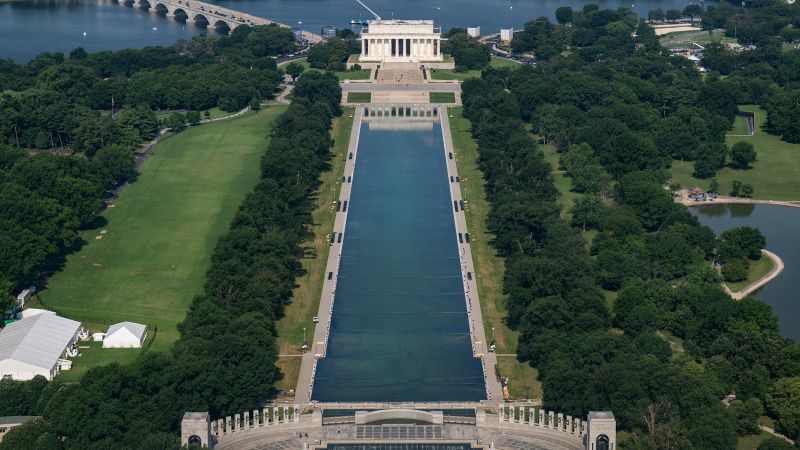
Former Olympic Canoeist Faces Felony Charges for Damage to Reflecting Pool
Former Olympic canoeist indicted for allegedly – David Hearn, a retired Olympic canoeist, has been formally charged by a grand jury in the Washington, DC Superior Court with a felony related to the alleged destruction of the Lincoln Memorial Reflecting Pool. The indictment, released on Thursday, accuses Hearn of intentionally damaging the pool’s lining material, a claim that has sparked debate over the administration’s approach to addressing the issue. According to the charges, the grand jury determined that Hearn “maliciously did injure, break and destroy certain property, that is, the lining material of the Lincoln Memorial Reflecting Pool.”
The Incident and the Charges
Hearn’s arrest occurred last month when he reached into the Reflecting Pool, which had recently reopened after a high-profile renovation led by President Donald Trump. The act of touching the pool’s partially detached blue lining prompted the involvement of federal authorities. A National Park Service worker had initially warned Hearn not to enter the water, but he was ultimately handcuffed by Park Police. The felony charge, which carries a potential maximum sentence of 10 years in prison, is a notable step in the administration’s effort to frame the incident as a deliberate act of vandalism.
The indictment marks a significant development in the controversy surrounding the pool’s condition. Shortly after its renovation, the pool faced scrutiny due to peeling paint and algae growth, which Trump had publicly criticized. His administration has since escalated the narrative, labeling the damage as a serious crime. The charge against Hearn is part of a broader pattern, as the US Attorney’s office is investigating multiple cases, some of which could be classified as lesser offenses.
American Concerns and Legal Defense
“Davey Hearn is innocent. These charges are outrageous and should be alarming to every American. This indictment reflects the Administration’s effort to shift blame for their own failures,” said Norm Eisen, Hearn’s attorney.
Eisen accused the Trump administration of using the incident to divert attention from its own missteps, particularly the costly renovation that had already drawn criticism. He emphasized that Hearn was simply curious about the pool’s condition, not intent on causing harm. “On the eve of our nation’s Independence Day, Americans should be deeply concerned by the misuse of government power against an ordinary citizen based on a concocted narrative,” Eisen added.
The US Attorney for the District of Columbia, Jeanine Pirro, defended the decision to charge Hearn as a felony. During a news conference, she described the incident as a “violent” act, stating that Hearn had torn up approximately two square feet of the pool’s lining. Pirro also noted Hearn’s demeanor during the arrest, labeling him as belligerent and disrespectful toward federal officers. “This is a case with tremendous evidence and the evidence dictates where we land,” she said, though she was reluctant to provide further details beyond the testimony of witnesses on-site.
Pirro’s comments have fueled speculation about the political motivations behind the charges. When asked if the decision to file a felony was influenced by Trump’s public threats, she insisted that the case was grounded in solid evidence. “We have about a half a dozen other cases. Some of them will be misdemeanors, and some of them could be less, like a violation,” Pirro explained. However, she remained vague about the specifics of the additional cases, leaving room for further analysis.
The Renovation Controversy
The Reflecting Pool, a beloved landmark in Washington, DC, had been the focus of intense public discussion following its costly renovation. Completed just days before the Independence Day celebrations, the project was intended to restore the iconic site to its former glory. Yet, shortly after its reopening, reports emerged of issues such as peeling paint and algae accumulation. Trump had amplified these concerns, accusing vandals of causing extensive damage and warning that those responsible could face long prison terms.
Hearn’s actions, while seemingly minor, have been used to exemplify the administration’s stance on maintaining public order. The indictment highlights the pool’s status as a national monument, underscoring the gravity of the alleged offense. However, critics argue that the government has not provided conclusive proof of the damage’s extent, particularly regarding the claim of a “lengthy gash” caused by a sharp instrument. Trump’s estimates of the damage have varied, with his public statements sometimes contradicting the evidence presented by officials.
The incident has raised questions about the balance between accountability and political strategy. While Hearn’s arrest and indictment are clear, the narrative surrounding the case has evolved to align with the administration’s broader agenda. The pool’s renovation, which cost millions, was a symbol of Trump’s commitment to infrastructure and national pride. Yet, the damage to its lining has become a focal point for criticism, with some viewing it as an excuse to target individuals.
Public Reaction and Ongoing Investigations
As the case gains traction, public sentiment has split along ideological lines. Supporters of the administration see the charges as a necessary step to hold individuals accountable for undermining a national treasure. Opponents, however, argue that the indictment is a politically motivated move, leveraging a minor incident to justify harsh penalties.
Despite the felony charge against Hearn, the US Attorney’s office has indicated that other cases are under review. These include instances of alleged misconduct at the pool, though the severity of each case remains unclear. Pirro’s office has not yet disclosed the details of these investigations, leaving the public to speculate about their potential impact.
The controversy has also sparked discussions about the role of government in preserving public spaces. The Reflecting Pool, which has been a site of historical significance and public gatherings, is now at the center of a legal and political debate. Hearn’s case is being closely watched, with analysts suggesting it may set a precedent for how similar incidents are handled in the future.
As the legal proceedings unfold, the focus remains on whether Hearn’s actions were intentional or accidental. The National Park Service has yet to confirm the extent of the damage, and the evidence presented so far includes witness accounts and photographs. Meanwhile, the administration continues to emphasize the importance of protecting national monuments, framing Hearn’s case as a warning to others who might take similar risks.
CNN’s Casey Gannon contributed to this report, which has been updated with new developments. The case underscores the intersection of personal curiosity and political accountability, highlighting how a single act can become a symbol of larger debates about governance and public perception.
Legacy of the Reflecting Pool
For decades, the Reflecting Pool has been a place of reflection and remembrance, especially for visitors seeking solace near the Lincoln Memorial. Its renovation was meant to ensure its longevity and enhance its appearance for national celebrations. However, the controversy over its condition has cast a shadow over its significance. Hearn’s alleged damage, though minor in scale, has become a rallying point for those who question the administration’s response to public criticism.
As the legal battle continues, the case may serve as a reminder of the power of symbolism in political discourse. Whether Hearn is ultimately found guilty or not, his indictment has already sparked a conversation about the line between civic duty and government overreach. The pool, once a pristine monument, now stands as a testament to the complexities of public policy and individual accountability.
The episode also raises broader questions about the use of law to address public grievances. While the administration has framed Hearn’s actions as a deliberate act of vandalism, the lack of concrete evidence has led to calls for transparency. The outcome of this case could influence how similar incidents are perceived and addressed in the years to come.
