
How the Supreme Court expanded Trump’s power
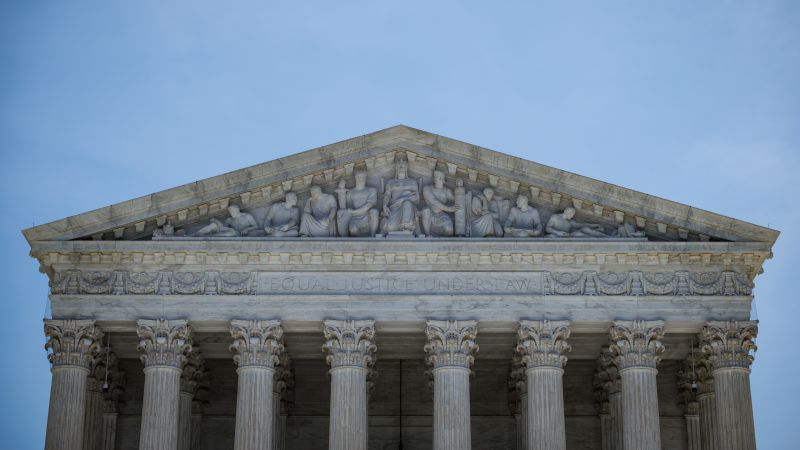
Supreme Court Term Reflects Shifting Dynamics in Trump’s Legal Battles
How the Supreme Court expanded Trump – President Donald Trump’s public stance toward the Supreme Court underwent a notable transformation during the 2025-2026 term, marked by a blend of praise and criticism. While he had previously lambasted the justices as a political entity, his recent remarks suggested a more conciliatory approach. In a social media post this week, Trump stated that the “Republican Party was treated very fairly by the United States Supreme Court,” signaling a potential thaw in their relationship after years of scrutiny. This shift comes as the Court, operating under its 6-3 conservative majority, navigated a series of contentious cases that tested its alignment with Trump’s policies and its independence from partisan influence.
The Court’s term was defined by a mix of outcomes, with Trump experiencing both victories and setbacks. Among its most pivotal decisions was the 6-3 ruling in Trump v. Slaughter, which significantly bolstered the president’s ability to dismiss top officials at independent federal agencies. The ruling overturned a 1935 legal precedent, the Humphrey’s Executor Rule, that had long limited executive power in such matters. Trump hailed the decision as “the biggest and most consequential” of the term, emphasizing its return of authority to the presidency. This case, however, was not the only one that reshaped the political landscape.
“This decision gives tremendous additional power back to the presidency, where it belongs,” Trump wrote on social media, underscoring his belief in the Court’s support for presidential control.
Despite these wins, Trump faced substantial losses in other areas. The Court’s 6-3 decision on birthright citizenship, for instance, upheld a longstanding legal principle that grants automatic U.S. citizenship to children born to undocumented immigrants. This ruling, which Trump had previously criticized as a “disaster,” was a direct blow to his immigration agenda. Similarly, the justices ruled against his emergency tariffs on steel and aluminum, which he had described as a “victory for the American people.” These decisions highlight the Court’s role as both an arbiter of policy and a check on executive overreach.
While the president’s direct legal challenges were met with mixed results, the Court’s broader rulings often mirrored his ideological priorities. A 6-3 decision in April effectively weakened the Voting Rights Act of 1965, removing key protections for minority voters in states with histories of discrimination. This move aligned with Trump’s rhetoric on states’ rights and federal overreach. Additionally, the Court struck down limits on political party spending in coordination with candidates, a development that could amplify campaign finance efforts in favor of his allies. Even decisions that did not directly involve Trump, such as the allowance of transgender students to compete in girls’ sports, were framed as victories for his agenda, reflecting the influence of his appointees on the bench.
Throughout the term, the Court’s conservative majority consistently demonstrated a unified approach to issues that resonated with Trump’s vision of governance. One such area was the expansion of executive authority, particularly in immigration. The justices allowed the administration to end temporary humanitarian relief for over a million individuals seeking asylum in the U.S., effectively prioritizing expedited deportations. This decision, while not involving Trump personally, was viewed as a significant endorsement of his policies by the Court’s ideological alignment.
Trump’s relationship with the Court has been complex. Early in his presidency, he frequently criticized the justices for their perceived bias, even labeling the court as a “weaponized and unjust political organization” in a March post. Yet, he also engaged in efforts to build rapport, inviting the justices to a White House banquet featuring King Charles III of Britain in April. These gestures, coupled with public praise for several conservative justices who attended the swearing-in of Fed Chairman Kevin Warsh, suggest a strategic attempt to balance criticism with camaraderie.
Chief Justice John Roberts, a key figure in the Court’s conservative bloc, has often emphasized the institution’s role as an impartial arbiter. In a May address to a judicial conference, he remarked, “People think we’re making policy decisions. I think they view us as truly political actors, which I don’t think is an accurate understanding of what we do.” This statement contrasts with the Court’s record during the term, where its decisions increasingly reflected the ideological divide between its conservative majority and liberal dissenters. Of the 58 merits cases the Court ruled on, over half were decided along ideological lines, a stark increase from the previous term.
Notably, the frequency of 6-3 splits has raised questions about the Court’s perceived neutrality in an era of heightened political polarization. This pattern was evident in cases ranging from redistricting disputes to the regulation of social media. For example, the justices upheld state laws that enable partisan gerrymandering, a move that could solidify Republican control in legislative elections. Similarly, they reinforced the right of employers to discriminate based on gender identity in certain contexts, another decision that resonated with Trump’s views on individual freedoms and federal intervention.
Yet, the Court’s term also revealed moments of unity. In several cases, the justices demonstrated a cohesive front in defending executive authority and limiting federal oversight. This was particularly true in the area of independent agency leadership, where the ruling in Trump v. Slaughter provided a legal foundation for Trump’s claim that the presidency should have unfettered power to remove officials from agencies like the Environmental Protection Agency or the Consumer Financial Protection Bureau. The decision not only expanded his ability to shape policy but also diminished Congress’s capacity to act as a check on presidential decisions.
While the Court’s outcomes have been instrumental in advancing Trump’s agenda, they have also sparked debate about the judiciary’s role in American democracy. Critics argue that the 6-3 majority’s consistent alignment with Trump’s policies has eroded public trust in the Court’s impartiality. Conversely, supporters contend that the justices have been steadfast in upholding constitutional principles and expanding individual rights. As the term concludes, Trump’s mixed assessment of the Court underscores the complexities of his legal strategy and the evolving dynamics of power between the executive and judicial branches.
The term’s legacy will likely be defined by its impact on the balance of power in the U.S. government. By overturning longstanding precedents and reinforcing policies that favor executive and conservative interests, the Court has played a crucial role in shaping the political landscape. For Trump, the outcomes were a testament to the effectiveness of his appointments and the justices’ willingness to prioritize his vision of governance. However, the Court’s continued reliance on ideological divisions has left many questioning whether it can maintain its self-proclaimed image of impartiality in an increasingly partisan environment.
As the Supreme Court prepares to hand down its final decisions, the interplay between its rulings and Trump’s political ambitions remains a focal point. The 6-3 decisions, while not unanimous, have collectively advanced his priorities and altered the trajectory of American law. Whether this marks a permanent shift or a temporary alignment will depend on future cases and the evolving political climate, but for now, the Court’s term has solidified its role as both a supporter and a challenger to the executive branch’s influence.
