
Rubio’s spin on the Iran MOU sounds different from Trump and Vance
Rubio’s spin on the Iran MOU sounds different from Trump and Vance
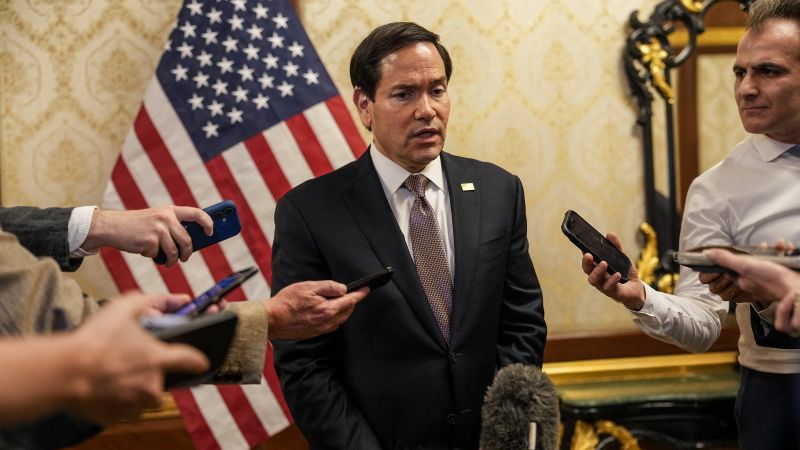
Rubio s spin on the Iran – For over a week, Secretary of State Marco Rubio remained notably silent on a developing agreement with Iran, a topic that typically aligns with his expertise in foreign policy. This quietness prompted speculation that the Florida senator, along with other conservative hardliners, might harbor reservations about the deal. However, Rubio has since stepped forward with a distinct perspective, diverging from the views of President Donald Trump and Vice President JD Vance. During recent engagements with Middle Eastern allies, Rubio has not only softened his previous critiques but has also shifted the narrative surrounding the memorandum of understanding (MOU) and the broader Middle East peace process.
Rubio’s Tone Contrasts with Trump’s Optimism
While Trump and Vance have framed the agreement as a potential breakthrough, Rubio has emphasized the challenges posed by Iran’s leadership. In Bahrain, he reiterated his longstanding characterization of Iran’s rulers, stating, “The Iranian system is led by clerics – radical clerics. That’s what it’s always been led by. And that’s what it continues to be led by.” This remark underscores his skepticism about Iran’s commitment to reform, a stance that contrasts sharply with Trump’s recent dismissal of the notion that Iran’s leaders are “radicalized.”
“We’re dealing with people that I think are very rational people,” Trump said at the G7 summit in France. “They were nice to deal with. They were strong people, smart people. … But they’re not radicalized, and they’re, you know, looking to help their country.”
Trump’s comments, which came a week prior to Rubio’s latest remarks, highlighted his belief in Iran’s capacity to change course. Vance, who has actively promoted the MOU as a diplomatic achievement, echoed this sentiment. “This is a very interesting thing about these negotiations – is you see people, both the hard-liners, but also the more political people, saying our relationship with the United States over the past 47 years has been a mistake. Let’s turn over a new leaf,” Vance said.
Rubio, however, has taken a more cautious approach, acknowledging that the MOU’s effectiveness hinges on Iran’s willingness to alter its trajectory. “We’re not going to do anything that undermines the security of our allies – our longstanding allies in the region,” he stated in Kuwait. This assertion reflects his alignment with Middle Eastern nations wary of Iran’s missile capabilities and its role in supporting militant groups.
Key Discrepancies in the MOU’s Scope
A significant point of divergence lies in the terms of the MOU itself. Notably absent from the agreement is a commitment to ending Iran’s missile program, a goal that was central to the Trump administration’s initial approach. Despite this omission, Rubio suggested that the document might still signal progress in this area. “A careful reading of the MOU demonstrates that Iran’s support for proxy groups like Hezbollah and Hamas is now part of a mutual commitment to avoid hostile actions,” he argued, citing the agreement’s clause on refraining from force against one another.
Rubio’s interpretation of the MOU’s implications has sparked debate. While he frames the deal as a step toward stability, some analysts argue that the agreement lacks concrete measures to address Iran’s long-standing threats. State Department spokesperson Tommy Pigott defended the administration’s consistency, asserting that “Secretary Rubio and the entire administration is 100% in lockstep behind President Trump.” Pigott attributed the MOU’s success to Trump’s leadership, which he claimed has led to “the highest level talks in decades” between the US, Lebanon, and Israel, enhancing global security.
“The president has taken unprecedented action to prevent the Iranian regime from obtaining a nuclear weapon,” Pigott said. “And because of his leadership, the governments of Lebanon and Israel are holding the highest level talks in decades. The US and the entire world is safer because of these efforts.”
Yet, Trump’s recent statements suggest a more flexible stance on Iran’s missile program. During a press briefing last week, he stated, “They have to have some, because other people have some,” implying that the program’s expansion is acceptable as long as it remains within proportion. “Missiles aren’t the problem,” Trump added, “because they don’t blow up the planet.” This shift has raised questions about the administration’s priorities, particularly in light of Rubio’s emphasis on Iran’s missile threat.
The MOU’s silence on Iran’s support for proxy groups like Hezbollah and Hamas has also drawn scrutiny. Rubio, speaking with regional allies, underscored the importance of ensuring Iran does not continue its backing of these organizations. “The agreement’s statement that Iran, the US, and their allies will avoid hostile actions against each other applies directly to their support for militant groups,” he explained, framing the deal as a multifaceted commitment. However, critics argue that the language of the MOU remains vague, leaving room for Iran to maintain its influence in the region.
These differing approaches have created a nuanced picture of the administration’s strategy. While Trump and Vance have focused on diplomacy and the possibility of Iran’s reform, Rubio has prioritized security and the tangible threats posed by the regime’s actions. This divergence reflects broader ideological splits within the Trump team, with Rubio appearing to balance pragmatism and principle. As the 2028 election cycle looms, the contrast between their positions may also shape public perception of their leadership styles.
The Road Ahead and Strategic Implications
Rubio’s evolving stance raises questions about the administration’s ability to maintain a unified front. While he acknowledges the potential for change, his comments suggest a readiness to hold Iran accountable for its behavior. “Time will tell what the Iranians’ true intentions are,” he conceded, but his emphasis on security underscores a growing concern that the MOU may not be sufficient to address the root causes of regional tensions.
Meanwhile, Trump’s willingness to downplay Iran’s radicalism has left some allies uneasy. In Kuwait, Rubio’s remarks were met with cautious optimism, as Middle Eastern leaders continue to grapple with the threat of Iran’s missile arsenal. The senator’s alignment with these concerns highlights a strategic adjustment in the administration’s messaging, perhaps to better resonate with regional partners. Yet, the MOU’s absence of clear commitments on missile programs and proxy support remains a point of contention.
As the agreement takes shape, the debate over its effectiveness will likely intensify. While Trump and Vance have framed it as a diplomatic triumph, Rubio’s focus on tangible security outcomes reveals a more measured perspective. The MOU’s success may depend on its ability to satisfy both the administration’s political goals and the pragmatic needs of its allies. In the coming weeks, the contrast between these approaches will serve as a critical test of the administration’s cohesion and its capacity to navigate complex geopolitical challenges.
Ultimately, the Iran MOU represents a moment of strategic compromise, with Rubio’s voice adding a layer of caution to the deal. His emphasis on Iran’s clerical leadership and its ongoing aggression signals a preference for strong enforcement over soft diplomacy. Whether this stance will endure or shift in the face of political dynamics remains to be seen. For now, the document stands as a testament to the administration’s ability to adapt, even as internal debates continue over the best path forward.
