
Trump’s fixation on election overhaul bill derails GOP agenda on Capitol Hill
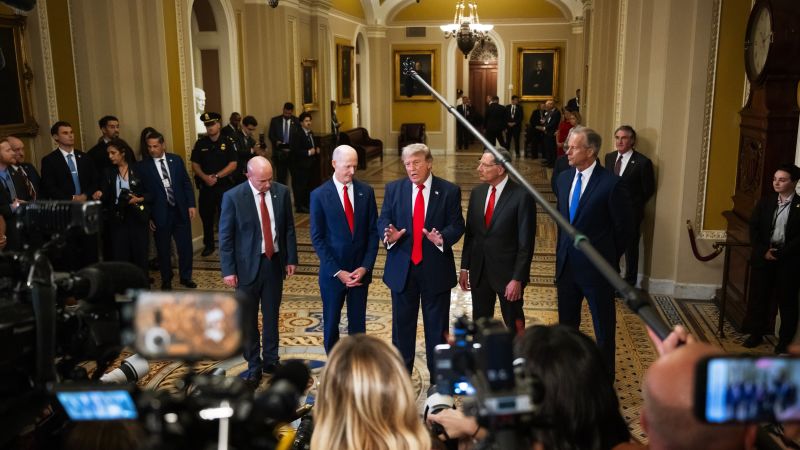
Trump’s Fixation on Election Overhaul Bill Derails GOP Agenda on Capitol Hill
Trump s fixation on election overhaul – Capitol Hill has been plunged into disarray as President Donald Trump’s relentless push for an election reform bill has thrown the Republican Party into chaos. The dispute, centered on the so-called “SAVE America Act,” has stalled critical legislation, creating a rift within the GOP that threatens their ability to maintain control in the upcoming midterm elections. Speaker Mike Johnson, the chamber’s leader, was forced to send his members home early on Thursday after a heated rebellion against the bill on the House floor. With no resolution in sight, sources indicate Johnson may have to cancel plans for the following week as well, raising concerns about the party’s legislative momentum.
The Political Consequences of the Feud
The feud, which has raged for weeks, has exposed deep divisions among Republicans. Trump’s insistence on advancing the SAVE Act—aimed at tightening voting rules through measures like voter ID requirements and proof-of-citizenship mandates—has become a central point of contention. While the bill itself is a key component of his broader strategy to ensure election outcomes align with his political goals, it has disrupted the party’s ability to prioritize other pressing issues. The rebellion on the floor has forced Johnson to adopt a defensive stance, with his leadership team privately acknowledging the difficulty of reconciling Trump’s demands with the party’s current standing.
“I’m flying home a day early because we couldn’t get our act together,” Rep. Troy Nehls said as he left the Capitol. His frustration underscores the growing sense of urgency among Republicans who feel their agenda is being overshadowed by the president’s obsession with electoral changes.
Another prominent GOP member, outgoing Rep. Thomas Massie, has taken a more pointed approach in criticizing the conflict. “The problem is not the election. We won the damn elections. The problem is, we’re wasting our opportunity that the voters gave us,” Massie declared. “And the Republicans are going to pay for that in November. It’ll be an absolute shellacking if they don’t wake up.” His comments highlight the fear among party members that their focus on Trump’s priorities could cost them dearly in the midterms.
The SAVE Act and Congressional Gridlock
The SAVE America Act, a centerpiece of Trump’s campaign to reshape election processes, has failed to gain sufficient support within the Republican ranks. Despite its importance to the president, the bill lacks the necessary votes to reach Trump’s desk. This has created a standoff where the party’s leadership is left scrambling to salvage the situation. Johnson’s team, according to insiders, sees no clear path forward, and the crisis continues to escalate as members of Congress grow increasingly exasperated.
Trump’s approach has been both aggressive and strategic. After a prolonged meeting with Johnson at the White House on Thursday, he publicly called on his MAGA allies to abandon their opposition and support the bill. “No more grandstanding, please!” Trump wrote on Truth Social, signaling a shift in tone. However, his message has not yet quelled the rebellion, with some lawmakers demanding concessions that GOP leaders are reluctant to provide.
“Congress has work to do, and that’s what we are going to do,” Johnson said after the meeting, emphasizing unity despite the turmoil. “We always do.” Yet, the statement barely softened the discontent among his rank-and-file members, who are now questioning whether the leadership’s efforts will be enough to prevent a midterms disaster.
While Trump’s plea for cooperation is notable, it has not yet resolved the underlying tensions. Rep. Anna Paulina Luna of Florida, a vocal critic of the SAVE Act, has already made it clear that she will not support the bill unless it is tied to a must-pass defense bill. This demand has further complicated the situation, as GOP leaders resist attaching the election overhaul to other legislation. The party’s most vulnerable members, however, are growing increasingly anxious, fearing that the drama will continue to erode their credibility in the eyes of voters.
Broader Impact on Bipartisan Efforts
The crisis has not only affected the SAVE Act but has also derailed several other legislative initiatives. Trump’s refusal to sign a bipartisan housing bill, which aimed to address rising home prices and improve affordability, has left lawmakers in dismay. “We had bipartisan legislation to address head-on the central issue facing folks across the country now, affordability,” Rep. Kevin Kiley, an independent from California who recently left the GOP, said. “And now it’s for the moment been torpedoed, and for what reason? No good reason. So, yeah, that’s annoying to say the least.”
Similarly, Trump’s rejection of a compromise with Democrats to renew a key national security tool has frustrated lawmakers on both sides of the aisle. These setbacks have compounded the challenges facing the Republican leadership, who are now navigating a complex web of internal and external pressures. The recent House floor shutdown, orchestrated by MAGA loyalists, has further highlighted the disruption caused by the president’s priorities, preventing votes on defense policy, appropriations, and veterans’ healthcare.
Leadership’s Dilemma and the Path Forward
As the dust settles, GOP leaders are left to decide how to balance Trump’s demands with their own political survival. While some believe the president will eventually sign the housing bill after the recent revolt, others remain skeptical. “We’re not sure if Trump’s plea will work,” one congressional aide said, noting that the president’s influence is waning among certain factions within the party.
The SAVE Act remains a lightning rod for conflict, with its provisions seen as both essential and divisive. Critics argue that the bill’s focus on voter ID requirements could alienate moderate voters, while supporters insist it is necessary to prevent fraud. The debate has also sparked discussions about the role of the Republican Party in the upcoming elections, with some members questioning whether they should prioritize Trump’s agenda or their own.
Despite these challenges, Johnson remains optimistic about the situation. “He wants to ensure that we stop any blockade in the House,” he said, framing the disagreement as a temporary hurdle rather than a fundamental split. However, his confidence is being tested as more lawmakers voice their frustrations. Rep. Mike Simpson, a senior Republican who rarely criticizes leadership, admitted his irritation with the rebels’ actions: “I’m a little pissed off.”
The unfolding drama on Capitol Hill serves as a stark reminder of the precarious state of the Republican Party. With narrow majorities and a rapidly shifting political landscape, the leadership must find a way to reconcile Trump’s vision with the practical needs of governing. Failure to do so could result in a significant loss of momentum, leaving the party vulnerable in the critical months ahead. As the SAVE Act remains at the center of this turmoil, the question is whether Congress can emerge from the chaos with a cohesive strategy—or if the conflict will continue to divide them.
Looking Ahead: A Test of Unity
The next few days will be crucial in determining whether the GOP can salvage its agenda. Trump’s ability to sway his allies and the leadership’s willingness to compromise will be key factors. If the rebels can be convinced to back off, the SAVE Act might finally pass, but at what cost? For now, the Capitol remains a battleground, with the fate of the Republican Party hanging in the balance.
