
Venezuela’s deadly ‘doublet’ earthquakes may have been a single big one. Here’s why it matters
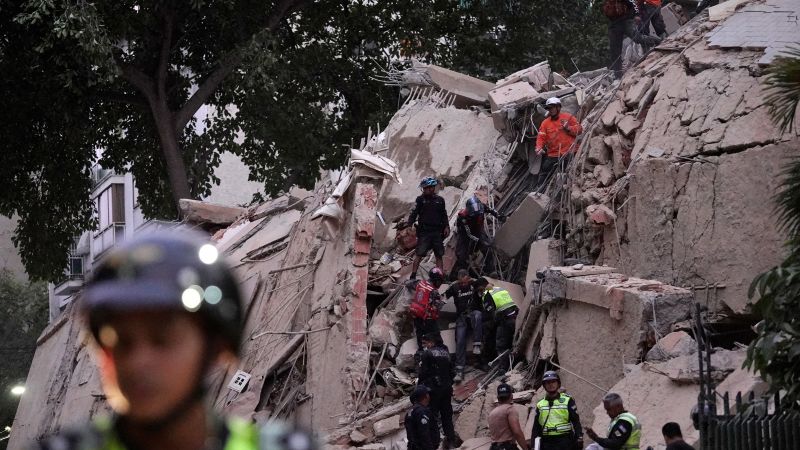
Venezuela’s Deadly Doublet Earthquakes: One or Two?
Venezuela s deadly doublet earthquakes may have – Venezuela’s deadly doublet earthquakes may have been a single major event, raising questions about seismic classification. On June 25, 2026, the country experienced two powerful tremors within 39 seconds, resulting in over 100 deaths and widespread destruction. The U.S. Geological Survey (USGS) initially labeled them as separate quakes, but scientists are now debating whether the pair was part of a larger, unified rupture. This uncertainty has significant implications for how we understand seismic risks in the region.
Understanding the Doublet Phenomenon
A doublet earthquake occurs when two major quakes with similar magnitudes strike close together in time and space. Raul Perez-Lopez, a geoscientist at Spain’s Geological and Mining Institute, explained that such events can be more damaging than isolated tremors due to their concentrated energy. In this case, a 7.2-magnitude quake was followed by a 7.5-magnitude shock just 39 seconds later, prompting experts to examine whether the two were distinct or linked. The short interval between the quakes complicates analysis, as it blurs the line between a doublet and a single, larger earthquake.
“Doublet earthquakes are particularly destructive because their energy is concentrated over a shorter period, amplifying the impact on the affected area,” Perez-Lopez stated. “Unlike a single quake or its aftershocks, a doublet implies two separate releases of seismic energy.”
Seismic Analysis and Regional Implications
While the USGS initially reported the quakes as separate, some researchers argue they might have been a single event with two pulses. This theory challenges traditional methods of classifying seismic activity. Judith Hubbard, a geoscientist at Cornell University, noted that the data is still ambiguous, making it hard to determine whether the quakes were two distinct faults or part of a single rupture. The distinction is crucial for assessing the region’s vulnerability to future events.
“It’s going to take several days or longer for seismologists to fully piece together what happened,” Hubbard added. “Even then, they might not have a definitive answer about whether it was one or two earthquakes.”
Historical Quakes and Vulnerability
Venezuela’s northern region has a history of significant earthquakes, though they are rare. Over the past century, only seven quakes of magnitude 6 or greater have been recorded. The 2026 doublet, with magnitudes 7.2 and 7.5, stands out as one of the most severe in recent decades. This highlights the area’s susceptibility to large-scale seismic activity and the need for improved monitoring systems. The recent event also serves as a reminder of the region’s geological risks.
Tectonic Activity and Fault Mechanisms
The quakes originated along the boundary where the Caribbean and South American tectonic plates meet. These plates move at a rate of approximately 20 millimeters per year, creating tension that can lead to sudden energy release. Northern Venezuela, located in a seismically active zone, is particularly prone to such interactions. The 7.5-magnitude quake could be a secondary pulse of a magnitude-7.6 rupture, according to Hubbard, which would alter the way scientists model seismic behavior in the area.
Analysts are now closely monitoring aftershocks near Caracas to determine if the quakes were part of a single process. The rapid succession of events suggests that the fault system may have released energy in a more complex sequence than previously thought. This finding could reshape how we assess earthquake risks and prepare for future occurrences.
Geological Factors and Impact
Venezuela’s underground sediments may have amplified the seismic waves, intensifying the damage to infrastructure. This geological feature, combined with ground subsidence, contributed to the collapse of buildings and the disruption of utilities. Power outages further hindered real-time data collection, delaying the confirmation of whether the quakes were a doublet or a single event. The region’s limited seismic monitoring infrastructure also makes it challenging to capture precise details during such events.
