
Supreme Court puts off fight over who can sue to enforce what’s left of the Voting Rights Act
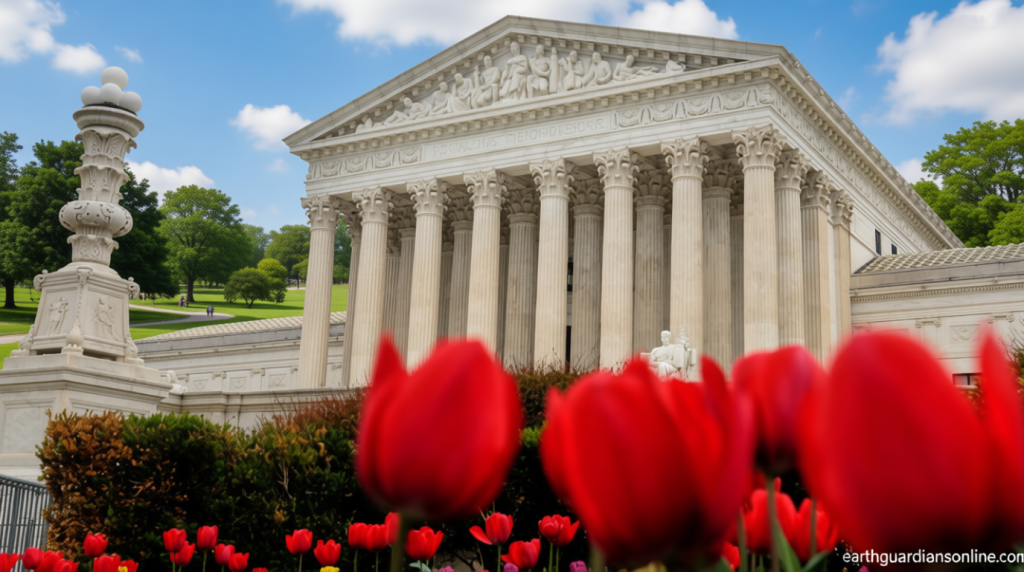
Supreme Court Delays Voting Rights Act Enforcement Battle
Supreme Court puts off fight over – The Supreme Court has postponed a critical decision on the legal ability to challenge voting practices under the Voting Rights Act, sending the issue back to lower courts for further consideration. This delay means the question of who can sue to enforce the law’s remaining protections remains unresolved, creating uncertainty in how the act will be applied moving forward. The conservative majority’s decision to avoid a definitive ruling underscores a broader shift in interpreting the law’s enforcement mechanisms, potentially limiting its effectiveness in combating racial discrimination in electoral systems.
Liberal Justices Push for Clarity on Voter Standing
Justice Ketanji Brown Jackson, a vocal advocate for expanding voting rights, dissented from the court’s decision to delay the matter. She emphasized that the ruling could weaken the act’s reach by allowing individual voters to challenge discriminatory maps through their own legal actions. Jackson’s argument highlights the growing divide between the court’s conservative bloc and its liberal counterparts, as the latter insists on making the Voting Rights Act more accessible to everyday citizens rather than restricting it to federal oversight.
“The court should have resolved this issue promptly to ensure that private citizens can hold election officials accountable,” Jackson stated in her dissent.
Two Jurisdictions Test the Act’s Enforcement Limits
The cases in question originated from separate jurisdictions, each testing the act’s enforceability in distinct ways. In one case, voters in Mississippi challenged their state’s electoral boundaries, while another involved a federal agency’s interpretation of the law. A lower court had previously ruled in favor of individual plaintiffs, but the 8th U.S. Circuit Court of Appeals offered an opposing view, asserting that only the Justice Department could initiate enforcement actions. This split in rulings has created a legal stalemate, with the Supreme Court now determining the path forward.
The justices’ decision to defer judgment reflects a broader strategy to shape the law’s application through a slower, more deliberative process. While the ruling does not outright eliminate the possibility of private lawsuits, it raises the bar for proving that a redistricting plan violates the Voting Rights Act, making it harder for voters to assert their rights under the law. This approach could have long-term implications for the act’s ability to serve as a powerful tool for ensuring fair representation.
Trump’s Policies Influence the Court’s Approach
The current legal climate has been shaped by the Trump administration’s stance on the Voting Rights Act. During his presidency, the Justice Department supported arguments that narrowed the law’s scope, aligning with the Supreme Court’s recent trend of limiting its enforcement power. This alignment has allowed the conservative majority to maintain a consistent interpretation of the act, even as its provisions continue to face challenges in state and federal courts.
Historically, private citizens have played a key role in enforcing the VRA, a practice that has been upheld for decades. However, the Supreme Court’s decision to put off the fight signals a potential shift in that tradition. With the Justice Department now more involved in setting the legal standard, the act’s effectiveness may depend on federal enforcement rather than grassroots activism. This development could reshape the landscape of voting rights litigation in the years to come.
Legal Ambiguity and the Path Forward
The Supreme Court’s delay introduces a period of legal uncertainty, with lower courts now tasked to interpret the law’s enforcement framework. This ambiguity leaves the door open for future challenges, as the justices have not yet settled on a clear standard for determining who has standing to sue. The decision also sets the stage for potential clashes between state legislatures and federal oversight, as the law’s remaining provisions face ongoing scrutiny.
As the cases move to lower courts, the focus keyword “Supreme Court puts off fight” will be central to understanding the evolving legal landscape. The ruling may ultimately determine whether the Voting Rights Act remains a robust tool for protecting minority voters or becomes increasingly dependent on federal agencies. With the law’s future now in the hands of these courts, the broader implications for voting access and electoral fairness will take shape in the coming months.
