
The Supreme Court gave Republicans another congressional win. But its ruling means much more.
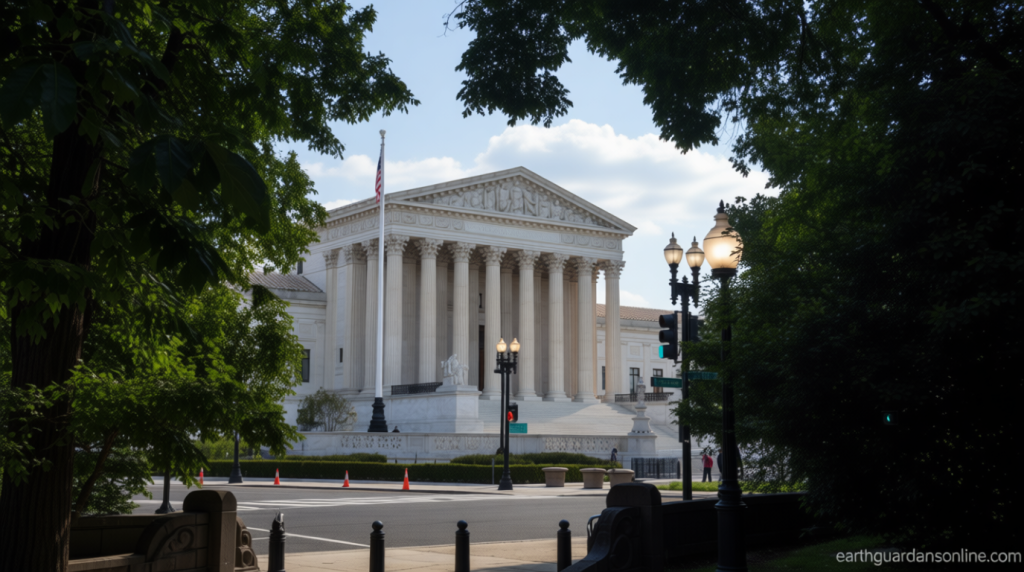
Supreme Court’s Ruling in Alabama Redistricting Case Sparks Concern Over Voting Rights Erosion
The Supreme Court gave Republicans another – On Tuesday night, the US Supreme Court delivered a decisive blow to Alabama’s congressional map, which had long been challenged for systematically disadvantaging Black voters. The conservative majority, in a 6-3 decision, sided with the state’s lawmakers, allowing a redistricting plan that effectively removes a Black Democratic seat from the House of Representatives. This marks a significant victory for Republicans, but the ruling extends far beyond the borders of Alabama, signaling a broader shift in how voting rights are protected—or, more accurately, how they are being undermined.
A Conservative Judicial Overturn
The court’s action came after a series of legal battles that had spanned years. Alabama had previously sought to justify its congressional map as a fair representation of its population, despite evidence suggesting it was designed to limit Black voter influence. In 2023, the Supreme Court had ruled against the state, affirming a lower court’s finding that its redistricting plan intentionally diluted Black voting power. However, the recent decision reverses that earlier judgment, aligning with a more lenient interpretation of the Voting Rights Act.
“We reach this conclusion with great reluctance and dismay and even greater restraint — only after another exhaustive analysis of an extensive record, as the Supreme Court’s remand order and its precedent instructs us,” the panel wrote in its May 26 ruling.
The unsigned opinion released late Tuesday evening emphasized that states now have broad discretion to shape electoral maps without being held to strict accountability. According to the court, judges must assume legislators acted in good faith, even when evidence points to racial bias. This approach has been central to the court’s strategy over the past decade, as it steadily chips away at the legal framework that safeguards minority representation.
Historical Context and Strategic Litigation
Alabama’s congressional map, which concentrated Black voters in a single district, had been criticized for creating a systemic disadvantage. The state’s population is roughly 27% Black, yet the current map ensures only one Black district, while the others are majority white. A special federal district court had previously mandated a second Black district to address this imbalance, a decision that was upheld in 2023. However, Alabama’s legislature has long resisted such measures, employing tactics to delay or weaken the implementation of the ruling.
Despite the lower court’s detailed analysis, which spanned 78 pages and concluded that the state’s plan was intentionally discriminatory, the Supreme Court majority found fault with the judges’ approach. They argued the court had overstepped by presuming the legislature acted with racial intent rather than focusing on the good faith of lawmakers. This reasoning has been a hallmark of the current judicial philosophy, prioritizing legislative autonomy over protections against discriminatory practices.
Broader Implications for Voting Rights
The ruling in Alabama is part of a larger trend. Earlier this year, the Supreme Court’s decision in Louisiana v. Callais weakened the 1965 Voting Rights Act, creating a ripple effect across Southern states. That case, decided on April 29, allowed states to redraw districts with fewer constraints, contributing to widespread confusion as midterm elections approach. Alabama’s case further solidifies this pattern, suggesting that the court is actively dismantling mechanisms that ensure equitable representation.
With the new decision, Alabama’s legislators are poised to implement a map that favors their political agenda. The state had already taken steps to expedite this process, proposing August primaries if the Supreme Court approved their plan. This move is expected to reduce the number of Black Democrats in Congress by one, leaving six Republicans to represent the state next year. The court’s reversal has thus not only reshaped Alabama’s electoral landscape but also reinforced a strategy that benefits the Republican Party in states with racially divided populations.
Partisan Dynamics and Legal Precedent
The Alabama case highlights the partisan nature of the Supreme Court’s recent decisions. The 6-3 majority, which includes justices appointed by former President Donald Trump, has consistently prioritized state control over federal oversight of voting rights. This shift has been accompanied by a pattern of overturning long-standing precedents, such as the “equal protection” standard that previously required courts to scrutinize maps for racial discrimination.
While the lower court had meticulously examined the evidence, the Supreme Court’s reversal suggests a preference for expedited rulings over thorough analysis. The decision was made without the usual process of full briefing or oral arguments, raising concerns about the court’s willingness to engage in exhaustive review. Critics argue this approach allows states to manipulate electoral boundaries with minimal judicial oversight, further entrenching disparities in political representation.
Resistance and Resilience in the Face of Judicial Shifts
Alabama’s lawmakers had anticipated the Supreme Court’s stance, leveraging their influence to push for a map that aligns with their interests. The state’s redistricting efforts have been characterized by strategic litigation, including appeals to the Supreme Court to weaken the mandate for a second Black district. Despite the lower court’s assertion that the legislature was aware of the discriminatory impact of their plan, the Supreme Court majority dismissed this, emphasizing the need for legislative goodwill.
The decision also underscores the court’s growing influence in shaping the nation’s electoral system. With the Voting Rights Act’s core provisions now under threat, states like Alabama are emboldened to adopt maps that maximize their political power. This trend has already sparked redistricting turmoil in several Southern states, as lawmakers race to reshape boundaries before the midterms. The Alabama ruling is likely to accelerate this process, adding to the uncertainty surrounding fair representation.
Legacy of the Decision and Future Challenges
The Supreme Court’s reversal of the Alabama case carries profound implications for voting rights. It signals a willingness to prioritize states’ rights over minority protections, even when the evidence of discrimination is clear. The court’s unsigned opinion, released after 9 pm ET, serves as a reminder that judicial decisions can be made swiftly and with minimal transparency, leaving lower courts to defend their rulings under pressure.
While the majority’s reasoning is grounded in the idea of legislative good faith, critics argue it undermines the intent of the Voting Rights Act. The law was designed to prevent the dilution of minority votes, yet its provisions are now being interpreted more narrowly. This erosion of protections has been a recurring theme, as the court continues to redefine what constitutes a fair map. For Alabama, the outcome means a return to a status quo that has historically favored the Republican Party, raising questions about the future of equitable representation in the U.S. Congress.
In conclusion, the Supreme Court’s decision in Alabama’s redistricting case reflects a broader judicial philosophy that favors states’ autonomy in shaping electoral maps. While the ruling was framed as a correction of past judicial overreach, it has effectively rolled back protections that ensure fair political participation for racial minorities. As the midterms draw near, the impact of this decision will be felt across the country, with Southern states leading the way in redistricting battles that could reshape the balance of power in the U.S. House of Representatives.
