
The oceans are in deep trouble. The Trump administration is ditching a vital deep-sea monitoring system
Oceanic Crisis Intensifies: Trump Administration Halts Key Deep-Sea Monitoring System
The oceans are in deep trouble – The Trump administration’s decision to decommission a $368 million deep-sea monitoring system has ignited widespread concern among scientists about the future of oceanic research. This move comes as global oceans face unprecedented challenges, with record-high temperatures, an impending super El Niño, and warnings of a potential collapse in the Atlantic Meridional Overturning Circulation (AMOC) threatening to upend climate stability. The system, known as the Ocean Observatories Initiative (OOI), has been a cornerstone of oceanographic study since its launch in 2016, yet its future now hangs in the balance.
The Ocean Observatories Initiative: A Critical Network
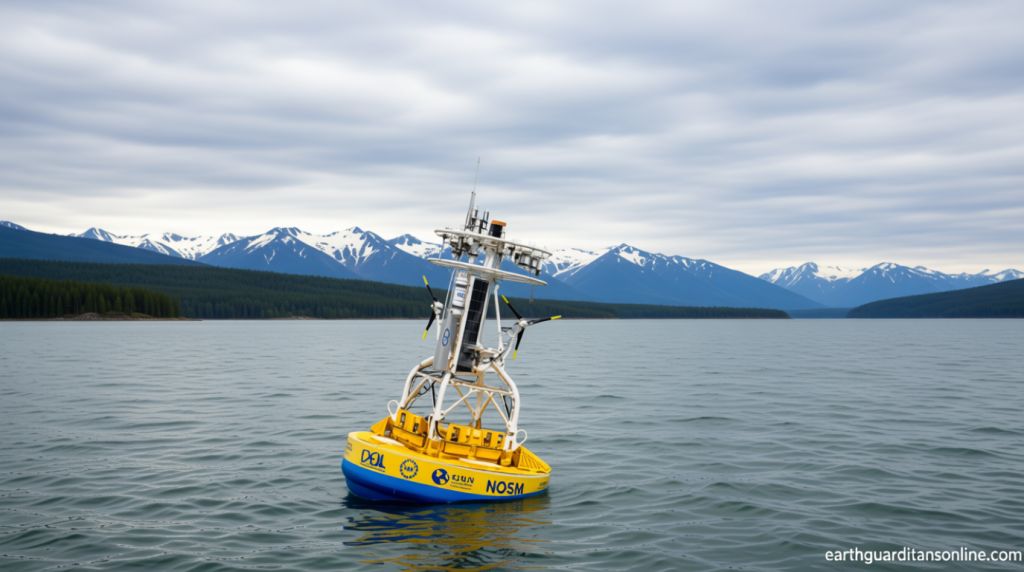
The OOI consists of nearly 900 specialized instruments deployed across the Pacific and Atlantic Oceans, designed to endure extreme underwater conditions. These devices, including moored sensors and autonomous gliders, continuously transmit real-time data, offering insights into oceanic health and the dynamics of deep-sea currents. By tracking shifts in water chemistry and the behavior of powerful currents, the system has been instrumental in predicting climate phenomena and safeguarding coastal communities from rising sea levels and extreme weather events.
Originally intended to operate for three decades, the OOI now faces a shortened lifespan. On May 21, the National Science Foundation (NSF), which oversees the project, revealed plans to “descoping” the network. This process involves removing in-water infrastructure from arrays near Alaska, Washington, Oregon, North Carolina, and southeast Greenland over the next 15 months. The NSF cited its broader strategy to streamline operations and allocate resources to newer technologies and evolving scientific priorities.
Scientific Alarm Over Dismantling a Vital System
Experts argue that the decision undermines long-term ocean science efforts at a critical juncture. The Trump administration’s broader approach of rolling back climate regulations and cutting funding for climate research has been criticized for prioritizing short-term economic gains over environmental vigilance. As the U.S. pushes to extract minerals from the deep sea, the loss of this monitoring system could leave scientists blind to the cascading effects of climate change.
“Eliminating OOI is like closing our eyes during a storm,” remarked Rick Spinrad, an oceanographer who led the National Oceanic and Atmospheric Administration (NOAA) under the Biden administration. “This system has provided invaluable data for fisheries management, weather forecasting, and coastal flood protection. Without it, we’re trading immediate savings for long-term risks.” Spinrad emphasized that taxpayer-funded equipment, already installed and operational, is being dismantled without a comprehensive evaluation of its economic value.
Mike England, the NSF’s media affairs head, defended the move, stating that it aligns with the organization’s goal of “smart lifecycle management.” He noted that the initiative’s restructuring allows for a more agile response to emerging scientific challenges. However, critics see this as a step backward, warning that the removal of infrastructure could hinder the ability to monitor the AMOC—a key driver of global climate patterns.
AMOC: A Fragile Lifeline
The AMOC, a network of Atlantic currents, plays a pivotal role in regulating Earth’s climate. Its weakening, linked to rising ocean temperatures and increased freshwater input from melting ice caps, has raised alarms about its potential collapse. Scientists have relied on the OOI to track subtle changes in this system, which could lead to dramatic consequences: accelerated sea level rise along the U.S. East Coast, harsh winters in Europe, and prolonged droughts in parts of Africa.
“The AMOC is like a giant engine powering our climate system,” said Stefan Rahmstorf, a professor at Potsdam University in Germany. “If it fails, the repercussions are global. We need continuous data to anticipate these shifts and prepare for them.” The OOI’s role in mapping the AMOC’s behavior has been crucial, yet its dismantling may delay critical research. With the system’s decline, the ability to detect early warning signs of a collapse could be compromised, leaving nations unprepared for sudden climate disruptions.
In the Gulf of Alaska, another array set for removal—the Ocean Station Papa—has been monitoring ocean health, including acidity levels that threaten marine ecosystems. This site, vital for the region’s fishing industry, has provided data on how carbon dioxide absorption is altering seawater chemistry. “Ocean acidification is already pushing ecosystems into a dangerous zone,” explained Helen Findlay, a biological oceanographer at the Plymouth Marine Laboratory in the UK. “Without long-term observations, we’re flying blind in a rapidly changing environment.”
Global Impacts of a Fragmented Monitoring Network
The OOI’s shutdown is not just a U.S. issue but a global one. By cutting ties with this system, the Trump administration risks weakening international collaboration on oceanic research. The loss of data from the OOI could create gaps in understanding how the oceans absorb heat, release carbon dioxide, and influence weather systems. This, in turn, may impact the accuracy of climate models used to forecast future scenarios.
Findlay highlighted that the ocean is already on a “dangerous tipping course,” with large regions crossing into a “zone of risk” for ecosystem collapse. “These instruments are more than tools—they are lifelines,” she said. “They help us see the invisible forces shaping our planet’s future.” The decision to dismantle them, she argued, is a short-sighted move that sacrifices scientific leadership for political expediency.
The Trump administration’s strategy to prioritize economic interests over environmental monitoring has drawn criticism for its narrow focus. While the decision to reduce climate protections is part of a broader agenda, the specific targeting of the OOI underscores a growing disconnect between policy and scientific consensus. “This isn’t just about funding,” noted Rahmstorf. “It’s about whether we’re willing to invest in the tools that keep us informed about the most pressing challenges of our time.”
As the oceans continue to warm, the need for sustained monitoring becomes more urgent. The AMOC’s potential collapse, coupled with rising sea levels and intensified hurricanes, could trigger a chain reaction of environmental crises. Without the OOI’s data, scientists may struggle to predict the timing and scale of these events, potentially leaving communities vulnerable to unforeseen consequences.
The controversy over the OOI’s fate reflects a larger debate about the role of government in funding climate research. While the NSF claims the descoping will make the system more efficient, opponents argue it diverts resources from long-term studies that are essential for understanding complex ocean processes. “We’re dismantling a system that has already proven its value,” Spinrad said. “The question is, what will we be missing when we stop listening to the oceans?”
In the absence of comprehensive monitoring, the world may be forced to confront climate disruptions with limited foresight. The OOI’s removal could signal a shift in priorities, with the U.S. taking a step back from its role as a global leader in ocean science. For now, the system’s data remains vital, but its future depends on whether policymakers recognize the cost of neglecting the oceans’ silent but powerful warnings.
