Trump admin pick to oversee a conspiracy investigation into president’s foes resigns

Daftar Isi
Joe DiGenova Leaves Justice Department Role Overseeing Broad Conspiracy Inquiry
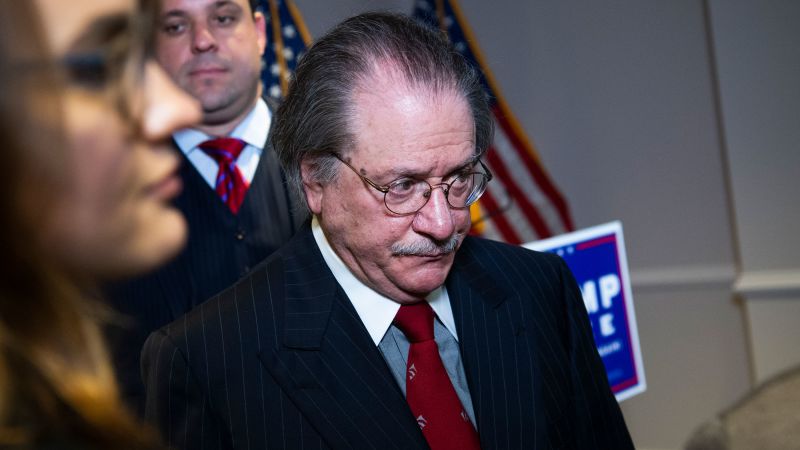
Earthguardiansonline.com – Joe DiGenova has resigned from the Justice Department assignment in which he was overseeing a wide-ranging conspiracy investigation focused on political opponents of President Donald Trump, following pressure from senior department officials.
His exit comes after internal disagreements about how quickly the south Florida-based inquiry should move toward possible criminal charges. People briefed on the situation said DiGenova had clashed with top Justice Department leaders over the pace and direction of the investigation, which was expected to examine potential cases involving a range of prominent Trump adversaries.
DiGenova’s departure adds another disruption to an already unsettled investigation. He assumed responsibility for the matter in April after the removal of Maria Meditis Long, an experienced career prosecutor who had previously led the work.
Dispute Over Timing
When DiGenova took control of the inquiry, he pledged that charges could be brought within 30 days. That timetable became a central point of tension inside the department, as officials differed over how rapidly the investigation should proceed and whether the available work supported such quick action.
Meditis Long had resisted moving ahead with charges on an accelerated schedule before she was ousted from the role. Her reluctance reflected concerns about the pace of the prosecutorial process, which generally requires investigators and prosecutors to assess evidence, legal standards, witnesses, and potential defenses before deciding whether to file a case.
The investigation itself has been described as a broad conspiracy probe based in south Florida. Its purpose was to pursue possible charges involving individuals viewed as political foes of the president. The scope and political sensitivity of such an effort placed unusual attention on the leadership overseeing it and on the Justice Department’s handling of the case.
One recent confrontation involved a Justice Department official who told DiGenova that he no longer had the confidence of his superiors, a person familiar with the discussions said. That episode followed several earlier disputes with senior officials and preceded his resignation.
“It was an honor and privilege to serve the president and the department,” DiGenova said.
A Further Shake-Up in a High-Profile Matter
The leadership changes underscore the instability surrounding the investigation. In a matter involving potential criminal allegations against politically prominent figures, decisions about timing and evidence can carry consequences far beyond the immediate personnel dispute. Prosecutors must determine whether an investigation has developed enough factual support to justify charges, while department leadership must decide how the work should be supervised.
DiGenova’s resignation leaves open questions about who will direct the inquiry next and whether its timeline will change. No immediate public announcement was included regarding a successor, the status of any charging decisions, or whether the investigation’s underlying priorities would be revised.
The department’s internal debate also highlights the difference between launching an investigation and reaching the point where prosecutors can bring a criminal case. Public attention may focus on promises of quick results, but charging decisions ordinarily depend on evidence that can meet legal requirements and withstand challenge in court. A change in leadership can affect management and strategy, even when the broader inquiry continues.
For the administration, the resignation represents another personnel challenge in an investigation that had already changed hands once in a matter of months. Meditis Long’s removal in April brought DiGenova into the role with an expectation of faster progress. His departure now creates another transition at a time when the investigation remains under close scrutiny.
What Remains Unclear
Several key details have not been made public. It is not known whether prosecutors had reached any final conclusions about potential charges, which individuals may have been the focus of investigative activity, or whether the disagreement centered on particular cases, broader strategy, or both.
It is also unclear how the Justice Department will characterize the next phase of the inquiry. The immediate issue described by people familiar with the matter was not the end of the investigation itself, but the dispute over its management and the timing of potential enforcement action.
DiGenova’s brief statement emphasized his service to the president and the department, without addressing the reported conflicts or explaining his decision in detail. Justice Department officials’ concerns, meanwhile, centered on confidence in his leadership after repeated clashes over the investigation’s pace.
As the matter develops, the central questions will be whether a new supervisor is appointed quickly, whether the inquiry continues on the same course, and whether prosecutors determine that the evidence supports any charges. For now, DiGenova’s resignation marks the latest major change in a politically sensitive Justice Department investigation whose future remains unresolved.
Related Reading
Frequently Asked Questions
What is Trump admin pick to oversee a conspiracy?
Trump admin pick to oversee a conspiracy is the main topic of this guide. The article explains the context, practical details, and next steps readers should understand.
Why does Trump admin pick to oversee a conspiracy matter?
Trump admin pick to oversee a conspiracy matters because readers are looking for a useful answer, not just a short summary. Good content should match search intent and help them decide what to do next.