
Trump posts new image of $100 bill with his signature
Trump Posts New Image of $100 Bill with His Signature
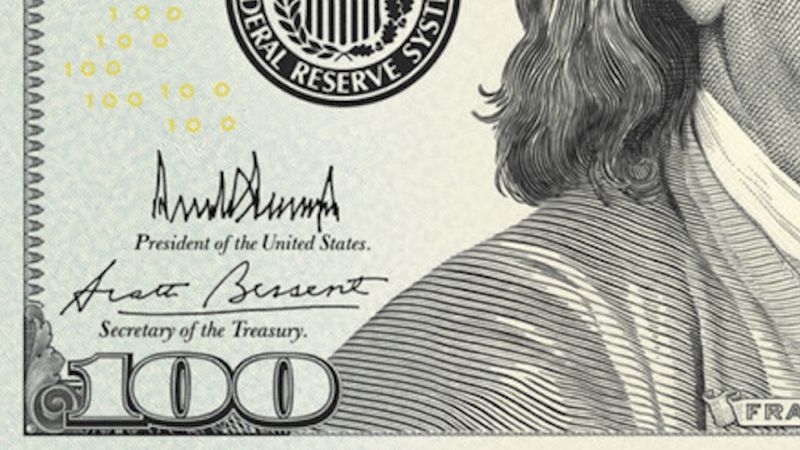
Trump posts new image of 100 bill – On Friday, President Donald Trump shared an updated image showcasing a $100 bill featuring his signature, marking a notable development in the ongoing effort to commemorate the 250th anniversary of the United States. This move follows a Treasury Department announcement earlier this year, which signaled the introduction of a sitting president’s signature on US paper currency for the first time. Treasury Secretary Scott Bessent had emphasized the significance of the project in March, stating it would honor the nation’s historical milestones and celebrate Trump’s contributions to America’s economic resurgence.
The Treasury Department’s decision to include a president’s signature on currency has sparked widespread interest and discussion. While the $100 bill had previously displayed the signatures of the Treasury secretary and the treasurer of the United States, the addition of Trump’s mark represents a departure from tradition. This initiative aims to recognize the role of current leaders in shaping the country’s identity, a concept that has been debated for years. The image Trump released highlights his signature prominently, positioning it above Bessent’s, which underscores the political and symbolic weight of the gesture.
CNN has sought clarification from the Treasury Department regarding whether the $100 bills with Trump’s signature are already in production. The current process involves collaboration between the Bureau of Engraving and Printing and the Treasury’s design team to ensure the bills meet both aesthetic and functional standards. While the exact timeline for release remains unclear, the project reflects a broader trend of integrating presidential imagery and signatures into everyday items, from coins to official documents.
The 250th Anniversary Initiative
Scott Bessent’s March announcement framed the inclusion of Trump’s signature as part of a larger celebration of the United States’ 250th anniversary. The plan was to feature the president’s name on the $100 bill, aligning with the nation’s historical narrative. This decision was influenced by the desire to immortalize Trump’s legacy as a pivotal figure in American history. The Treasury Department’s efforts have been part of a coordinated campaign to elevate his image across various platforms, including government-issued materials and public spaces.
Brandon Beach, the US Treasurer, echoed Bessent’s sentiments during the March announcement, declaring that “The President’s mark on history as the architect of America’s Golden Age economic revival is undeniable. Printing his signature on the American currency is not only appropriate, but also well deserved.” These statements highlight the administration’s commitment to honoring Trump’s role in the country’s development. The $100 bill’s new design serves as a tangible symbol of his impact, blending historical commemoration with contemporary political messaging.
The inclusion of Trump’s signature on the $100 bill has raised questions about the long-term implications of this change. While the Treasury Department has not yet confirmed the production status of these bills, the move suggests a willingness to revisit established norms. This initiative could pave the way for future presidents to have their signatures featured on currency, potentially reshaping how leaders are remembered in the public consciousness. The $100 bill, now bearing Trump’s mark, is a significant step in this direction.
Trump’s Broader Efforts to Promote His Legacy
Trump’s push for his signature and likeness on US currency is part of a larger strategy to cement his presence in national institutions and cultural symbols. Over the past few years, his administration has invested in various projects to display his image, such as commemorative passports and national park passes. These items serve as everyday reminders of his presidency, reinforcing his brand of leadership.
Additionally, Trump’s influence extends to physical landmarks, with the Florida government renaming the Palm Beach International Airport in his honor. This decision reflects the growing political support for his legacy, particularly in regions where his policies have had a measurable impact. The administration has also adorned federal buildings and cultural institutions with banners and signage bearing his name, further embedding his identity into the fabric of American society.
While these efforts have been met with both praise and criticism, they demonstrate a consistent focus on visibility and recognition. Trump’s signature on the $100 bill is another chapter in this narrative, symbolizing his determination to be associated with key moments in the country’s history. The $100 bill, however, stands out as a particularly bold move, given its use of currency as a medium for commemoration.
Legislative Considerations and Historical Precedents
Although the Treasury Department has already begun the process of including Trump’s signature on the $100 bill, the possibility of a more extensive commemoration remains a topic of debate. In Congress, some lawmakers have proposed a separate bill to feature Trump’s portrait on a $250 bill, which would further distinguish his legacy. This idea, however, faces challenges, as it would require bipartisan support, including backing from Democratic senators.
The US code currently restricts the use of living individuals’ portraits on currency, allowing only deceased figures to appear on bills and coins. The House bill aims to create an exception for current and former presidents, enabling their likenesses to be featured. This change would not only expand the scope of presidential commemoration but also raise questions about the balance between historical significance and political symbolism.
Earlier this year, the Bureau of Engraving and Printing had prepared prototypes for the $250 bill, which would include Trump’s portrait and signature. These designs were part of a larger initiative to honor the 250th anniversary, with the potential to redefine how presidents are celebrated. Bessent’s comments in May, when he told CNN’s Kaitlan Collins that “there’s nothing untoward about having the President of the United States on the 250th anniversary bill,” reflect the administration’s confidence in the project’s validity.
Despite the legal precedent that limits presidential portraits to deceased individuals, the Treasury Department’s approach suggests a more flexible interpretation of the rules. Bessent emphasized that political appointees play a crucial role in the process, noting that “we prepare for everything if it gets passed.” This statement implies that the Treasury is ready to adapt its procedures if the bill is approved, highlighting the ongoing dialogue between executive and legislative branches.
As the debate continues, the $100 bill with Trump’s signature serves as a symbol of the administration’s ambition to shape the nation’s historical narrative. Whether this move will inspire similar actions for other presidents or remain a unique testament to Trump’s era remains to be seen. Nonetheless, it underscores the intersection of politics, design, and public memory in the United States.
