Trump’s $300 billion problem on the Iran agreement

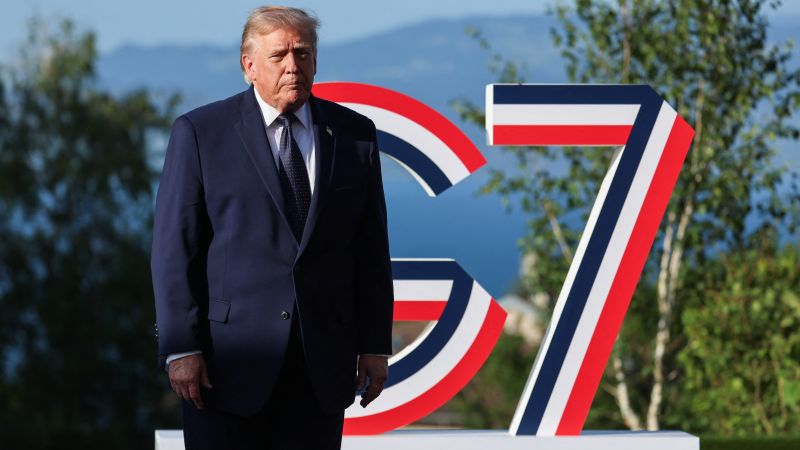
Trump’s $300 Billion Problem on the Iran Agreement
Trump s 300 billion problem – As President Donald Trump’s new agreement with Iran gains momentum, it faces mounting scrutiny from within his own political base. While the deal’s broader terms remain under debate, one particular concern has emerged as a central point of contention: the financial concessions outlined in the proposal. At the heart of the controversy is the allocation of potentially $300 billion to Iran, a figure that has sparked fierce criticism from conservatives who argue it represents a significant risk to U.S. interests. This issue has become a focal point in recent discussions, highlighting a recurring theme in Trump’s approach to foreign policy: the emphasis on financial incentives and their perceived drawbacks.
Vice President Vance’s Clarification and the Role of Gulf Nations
In a Monday morning interview with CBS News, Vice President JD Vance hinted at the financial structure of the Iran deal, suggesting that the country would gain access to a reconstruction fund. This statement, while not explicitly naming the fund, aligned with the administration’s broader narrative that Iran would receive support from other Gulf nations rather than directly from U.S. taxpayers. The White House quickly sought to clarify this, emphasizing that the funds would be contingent on Iran’s compliance with the peace deal. This approach, however, has not quelled the criticism, as many Republicans have pointed to the potential for Iran to use the money to further its ambitions in the region.
“We would invite other countries — not us, but other countries — to invest in Iran,” Vance said on Fox News later in the week. “The United Arab Emirates, for example, wouldn’t be allowed to invest in Iran unless the Iranians change their behavior.”
This clarification came after initial reports had raised alarms about the scale of the financial commitment. Trump’s team has stressed that the $300 billion would not come from American taxpayers but would instead be sourced from allies in the Gulf, such as Saudi Arabia and the UAE. The logic is that these nations, which have been critical of Iran’s actions, would contribute funds as a way to encourage Iran to adhere to the agreement’s terms. However, this nuance has been overshadowed by the broader debate over whether such a financial arrangement is prudent.
The Nuance of Funding Sources: A Historical Contrast
The financial aspects of the current deal bear similarities to the 2015 Iran nuclear agreement, which was signed under President Barack Obama. That deal, which remains a point of contention for Trump, involved lifting sanctions on Iran in exchange for restrictions on its nuclear program. At the time, the agreement was said to grant Iran access to approximately $50 billion in unfrozen assets, which had been held in foreign banks since the 1979 Islamic Revolution. While this sum was substantial, it pales in comparison to the $300 billion proposed in the new agreement.
Trump, however, has consistently portrayed the Obama deal as a costly mistake, even claiming it provided Iran with a “financial windfall” in cash. His rhetoric often conflates the total amount of money involved with the immediate cash flow, despite the fact that the funds were released over time and not all were in cash. This misrepresentation has fueled his argument that the deal was a sign of American weakness, a claim he repeated in multiple public appearances and op-eds throughout his presidency.
“Iran receives a windfall of $150 billion, which will no doubt fund terrorism around the world,” Trump wrote in a September 2015 op-ed for USA Today. “They paid all of that money in cash.”
This statement, which exaggerates the scale of the financial concession, became a recurring refrain in Trump’s speeches. During the 2016 presidential campaign, he criticized the deal as one of the “dumbest” agreements ever made, arguing that it allowed Iran to access billions of dollars that could be used to fund its terrorist activities. His comments, while simplifying the complex financial mechanisms at play, resonated with his base and helped solidify his image as a strong leader willing to take bold action against Iran.
The Debate Over Fungibility: A Persistent Criticism
Republicans, including Trump, have long argued that the money Iran receives under such deals is “fungible” — meaning it can be used to replace funds that might otherwise be allocated to terrorist operations. This concept was central to the criticism of the 2015 nuclear deal, where opponents claimed that Iran could use the freed-up assets to support groups like Hezbollah and Hamas. Trump, in particular, seized on this idea, framing the agreement as a betrayal of American values and a reward for Iran’s hostile actions.
Despite these arguments, the current deal’s structure offers a different approach. Instead of relying solely on Iran’s own assets, it introduces the possibility of international investment, with the condition that Iran must demonstrate compliance. This shift could be seen as a strategic move to distribute the financial burden among allies while maintaining U.S. leverage. However, it also raises concerns about the potential for Iran to exploit these funds for its own purposes, especially in a context where the country has been accused of supporting various global conflicts.
Trump’s Rhetoric and Its Impact on Public Perception
Even as the details of the new agreement evolved, Trump’s rhetoric remained consistent. During his 2019 White House event, he reiterated his claims about the financial concessions, stating, “So they paid $150 billion — 150, think of that.” This figure, though slightly adjusted from the original $50 billion, became a symbolic representation of what he viewed as a major concession to Iran. His repeated emphasis on the number, even when the actual amount differed, underscored his focus on financial accountability and his belief that such deals undermine American interests.
Trump’s criticism of the Obama-era deal has continued into his second term, with his administration frequently revisiting the issue. In January 2020, after ordering the assassination of Iranian commander Qasem Soleimani, he accused the previous administration of enabling Iran’s expansion, citing the $150 billion as evidence. He added, “They gave Iran $150 billion, including $1.7 billion in hard, cold cash. Can you imagine?” While the $1.7 billion referred to a separate settlement over Iranian funds frozen in 1979, the broader figure of $150 billion became a rallying point for his campaign against the deal.
During the 2020 election, Trump repeatedly warned that a Biden victory would lead to similar financial agreements, even predicting that Iran would receive another $150 billion. “If Biden ever got in, they’d give them another $150 billion, like they did,” he said in August 2020 in Arizona. This fear of future concessions has shaped his approach to negotiations, as he seeks to position himself as the only leader capable of securing favorable terms for the U.S.
While the current deal’s financial terms may differ from the 2015 agreement, the underlying debate remains the same: how much should the U.S. be willing to invest in securing peace with Iran? The $300 billion figure, though larger than the previous deal, has become a flashpoint for critics who argue that it could lead to further Iranian influence in the region. As the negotiations continue, the issue of money will likely remain a key point of contention, shaping the political landscape for years to come.