
Trump’s acting chief of national intelligence fires 6 political appointees, removes dozens of career officials, sources say
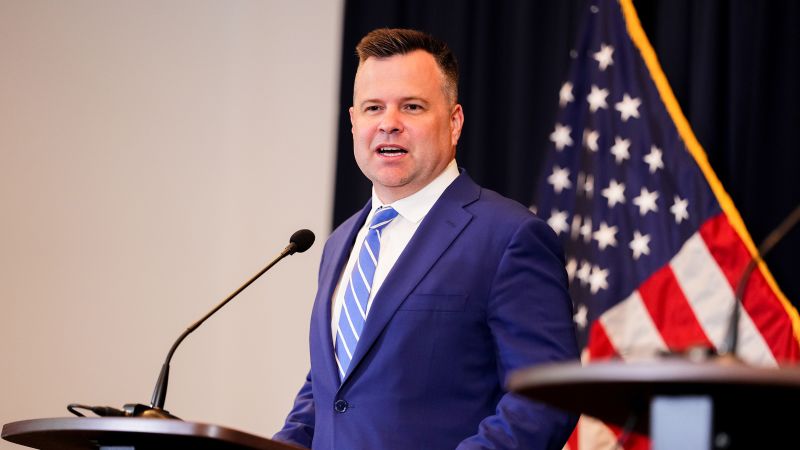
Trump’s Acting Chief of National Intelligence Firms Political Appointees, Reduces Career Staff
Trump s acting chief of national – According to four individuals who have close ties to the intelligence agency, Bill Pulte, the current acting director of national intelligence, has initiated a series of personnel changes. These include the dismissal of six political appointees who were previously appointed by former director Tulsi Gabbard, as well as the reassignment of over 40 career intelligence officials from their positions within the Office of the Director of National Intelligence (ODNI). The move marks a significant shift in the agency’s leadership structure, reflecting a broader strategy to streamline operations and reduce overhead under President Trump’s directive.
Targeting Political Appointees and Career Staff
The decision to remove the six political appointees, who were brought in during Gabbard’s tenure, appears to be part of Pulte’s effort to consolidate control and align the agency more closely with the administration’s priorities. In addition, the 45 career officials involved in joint duty assignments—meaning they were temporarily stationed at the ODNI but officially affiliated with other agencies—have been sent back to their home offices. These officials were reportedly part of a group that had been working under the current leadership, and their reassignment is seen as a way to shrink the agency’s workforce.
Despite these cuts, the National Counterterrorism Center (NCTC), a critical component of the ODNI, has not been targeted. One source close to the situation noted that the NCTC remains a key operational unit, and its team has been praised by Pulte for their dedication to national security. “Today, I spent time with the NCTC team, who is doing an incredible job protecting our Country under President Trump’s leadership,” Pulte stated in a recent post on X. “The room was filled with true professionals and American patriots. It is a privilege to work beside them.”
Political Motivations and Strategic Plans
While Pulte’s actions have been met with mixed reactions, some Republicans have expressed cautious optimism. A Senate intelligence staffer explained, “Senators were surprised at the Pulte pick for sure, but since Trump announced him, Pulte put together a detailed strategic plan to implement Trump’s reform agenda at DNI. He’s working closely with the Senate Intelligence Committee and executing great.” This individual suggested that Pulte’s willingness to make bold decisions—such as sending personnel back to their agencies—has been viewed as a strength by his allies.
However, the potential for further reductions has raised concerns. Another source indicated that as many as two dozen additional firings could occur in the coming weeks. These cuts, they noted, are being coordinated with career intelligence officials, who are being consulted on the process. The removals represent the first major step in Pulte’s mission to significantly cut the ODNI’s size, which had already been reduced by Gabbard’s administration in 2025.
The ODNI, which serves as the central hub for coordinating the U.S. intelligence community’s 18 agencies, has long been a focal point for critics on the right. Some MAGA-aligned figures accuse the agency of being part of a “deep state” that undermines presidential authority. Pulte’s mandate, as outlined by Trump in a Truth Social post, is to “execute the immediate and needed downsizing of the office,” a task that has seen rapid progress under his tenure.
Historical Context and Institutional Challenges
The ODNI was established with the goal of preventing intelligence silos that contributed to the 9/11 attacks. Its creation aimed to ensure a unified approach to analysis and decision-making across the intelligence community. Yet, the agency has struggled to maintain its authority and relevance, particularly in comparison to the CIA, which historically led the intelligence community before the ODNI’s formation. This dynamic has led to bipartisan criticism over the years, with some arguing that the ODNI is inefficient and overly bureaucratic.
Now, as Pulte continues his restructuring efforts, the agency’s already low morale appears to be worsening. A source familiar with the internal state of the ODNI described the office spaces as “more than half unoccupied and disheveled,” adding that staff members are “numb and unhappy.” The reduction in personnel has not only created a sense of instability but has also made it harder to attract top talent. This situation has further weakened an office that was once a coveted position in the federal government.
Top Democrats on both the Senate and House Intelligence Committees have voiced alarm over the potential for mass layoffs. In a letter sent to Pulte on Monday, Senators Mark Warner and Representatives Jim Himes warned that “reports of plans to fire or place on leave hundreds of ODNI officers as soon as this week” could jeopardize the agency’s mission. They emphasized that while some workforce reductions are acceptable, large-scale cuts might undermine the ODNI’s ability to fulfill its core role of safeguarding national security, especially in an era where intelligence coordination is more critical than ever.
Implications for National Security
Analysts have highlighted the risks associated with Pulte’s restructuring. The ODNI’s primary function is to produce interagency assessments that inform presidential decisions, including the President’s Daily Brief—a classified summary of intelligence findings. With the current cuts, the agency’s capacity to deliver timely and accurate intelligence may be compromised. “Any large cuts would follow on a substantial downsizing that has already occurred in 2025,” the lawmakers wrote, “and risk jeopardizing the mission of an organization explicitly created after 9/11 to prevent future terrorist attacks.”
Despite these concerns, Pulte’s actions have been framed as necessary by some political allies. They argue that the ODNI’s bloated structure has made it difficult to respond effectively to emerging threats. The removal of political appointees, in particular, is seen as a way to eliminate what critics call “partisan influence” and refocus the agency on operational efficiency. However, opponents worry that this approach could lead to the loss of institutional knowledge and expertise.
Trump’s decision to install Pulte as acting director has also been a point of discussion. While Pulte initially raised eyebrows for lacking national security experience, his close collaboration with Senate leaders has helped ease some of these concerns. The acting director’s strategic plan has been praised for its clarity and alignment with Trump’s vision for the intelligence community, which emphasizes centralized control and cost-cutting measures.
As the ODNI continues to implement these changes, the question remains: will the agency’s reforms strengthen its effectiveness, or will they exacerbate its existing challenges? With morale low and staffing issues mounting, the coming weeks will be crucial in determining the long-term impact of Pulte’s leadership. Meanwhile, the broader intelligence community watches closely, hoping to see how these adjustments will affect their ability to protect the nation from emerging threats.
CNN has reached out to the ODNI for comment on the recent personnel changes, but as of now, no official response has been provided. The agency’s future, however, is already being shaped by the decisions of its acting director, who is navigating a complex political and operational landscape. Whether these moves will solidify the ODNI’s role as a lean, effective institution or further erode its capabilities will depend on the balance between efficiency and expertise that Pulte is able to maintain.
Conclusion: A Test of Leadership
Bill Pulte’s tenure as acting director of national intelligence has been marked by a decisive effort to reshape the agency. While his actions have been supported by some on the right for their boldness, they have also drawn criticism from those concerned about the potential consequences for national security. The ODNI, a body tasked with coordinating intelligence efforts since 9/11, now faces a pivotal moment as it transitions under new leadership. The next steps will determine whether these changes are a necessary evolution or a setback for the intelligence community’s mission.
