US launches deadly strike on alleged drug boat, believed to be the first in two months

Daftar Isi
US Military Resumes Lethal Strikes Against Suspected Drug Vessels After Two-Month Silence
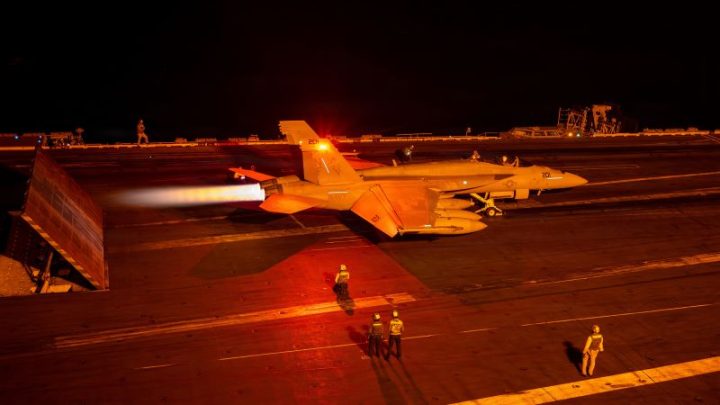
Earthguardiansonline.com – A US warship or aircraft unit fired on a small, low-profile vessel in the eastern Pacific on Sunday, killing two people aboard and ending a roughly two-month lull in what had become one of the most contested military operations of the current administration. US Southern Command (SOUTHCOM) confirmed the action early Monday, identifying the target as a boat operating along well-known narco-trafficking corridors in the region.
The operation, carried out by Joint Task Force Western Hemisphere, represented the first publicly acknowledged kinetic strike since June 21. No official explanation has been offered for why the campaign went quiet for more than sixty days, leaving analysts and lawmakers to speculate about whether the pause reflected a reassessment of strategy, a shift in political priorities, or simply a gap in target availability.
Operation Southern Spear: Scale and Toll
The broader campaign, designated Operation Southern Spear, launched in September 2025 and quickly escalated into a sustained campaign of interdiction across the Caribbean and eastern Pacific. Before the recent pause, official tallies and independent analyses of search-and-rescue records indicated that US forces had destroyed at least 67 vessels and killed at least 221 people. Those figures place the operation among the most lethal peacetime naval campaigns in recent American history, though the precise mission parameters remain classified, as confirmed by a May 20 report from the Pentagon’s inspector general office.
The administration has framed the campaign within a legal architecture that few previous presidents employed. Washington has told Congress that the United States is engaged in an “armed conflict” against drug cartels, a designation that allows the military to label those killed aboard targeted boats as “unlawful combatants.” Under a classified finding issued by the Justice Department, the administration claims authority to carry out lethal strikes without prior judicial review, effectively bypassing the traditional prosecutorial pathway that governed US drug interdiction for decades before President Donald Trump took office.
Legal and Political Pushback
That legal posture has drawn sustained criticism. Several members of Congress, along with a coalition of human rights organizations, have challenged the Justice Department finding, arguing that suspected traffickers should be brought before courts rather than killed at sea. Law-enforcement veterans and regional-policy experts have voiced skepticism about whether the strategy produces durable disruption of cartel logistics or merely generates a steady stream of bodies without altering the economics of the trade.
Sen. Tim Kaine, a Virginia Democrat who serves on the Senate Armed Services Committee, pressed the White House earlier this month after reviewing classified briefings. He told the administration that the strikes have likely killed, unlawfully, “individuals who are not involved in narcotrafficking.” Kaine urged the president to scrutinize the circumstances surrounding each engagement and to halt what he described as an “illegal, costly and ineffective” operation.
SOUTHCOM’s Response
In a statement posted to X on Monday, SOUTHCOM Commander Gen. Francis L. Donovan defended the resumed campaign in forceful terms, framing the strike as part of a broader effort to pressure cartel networks across the hemisphere.
“We are committed to imposing total systemic friction on narco-terrorists – disrupting their operations, dismantling their leadership, andeliminating cartel terror across the region.”
Donovan added that the engagement demonstrated what he called the service’s precision and resolve.
“This operation is a powerful demonstration of our lethal precision, overwhelming capability, and absolute resolve to protect the U.S. homeland.”
What the Pause May Signal
The two-month gap between strikes raises questions that the administration has not publicly addressed. If the pause reflected an internal review prompted by congressional pressure or by questions over the legal basis for extrajudicial killings at sea, its abrupt end without any announced policy shift suggests the operation simply resumed under its original parameters. Alternatively, the lull could have been operational: a period in which intelligence assets failed to identify suitable targets, or in which political considerations made further strikes diplomatically inconvenient.
For the families of those killed aboard the two vessels struck since September 2025, the distinction matters less than the outcome. Two more names have been added to a growing list of men who died in the water, their fates sealed by a decision made thousands of miles away in a command center, under a legal theory that most Americans have never been asked to evaluate.
Whether the resumed strikes will draw renewed congressional scrutiny, or whether they will fade back into the classified record alongside the dozens of earlier engagements, remains to be seen. What is clear is that the eastern Pacific has once again become a theater of American lethal force, and that the questions surrounding its legality have not gone away with the silence.
Related Reading
Frequently Asked Questions
What is US launches deadly strike on alleged?
US launches deadly strike on alleged is the main topic of this guide. The article explains the context, practical details, and next steps readers should understand.
Why does US launches deadly strike on alleged matter?
US launches deadly strike on alleged matters because readers are looking for a useful answer, not just a short summary. Good content should match search intent and help them decide what to do next.