USPS whistleblower describes new plans for voting by mail hidden from the public

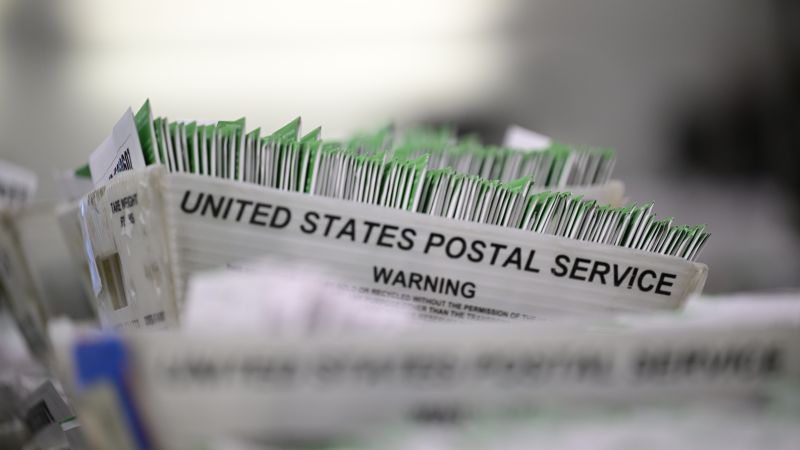
USPS Whistleblower Exposes Hidden Mail-Ballot Plans
Earthguardiansonline.com – A newly released whistleblower document reveals that the Postal Service rushed a federal verification system for mail-in ballots with shifting specifications, minimal testing, and procedures kept largely out of public view. The report, assembled by attorneys for the unnamed insider and made public Tuesday by Connecticut Senator Richard Blumenthal, details internal confusion during the final stretch of development. The timing is acute: North Carolina begins mailing ballots this week, additional states follow later in the month, and the agency had targeted a September 1 go-live date for the portal.
How the Verification System Works — and Why States Object
Under the plan, every state would be required to transmit its roster of registered mail-in voters to the Postal Service before the agency would agree to deliver those ballots. Once envelopes pass through USPS scanning equipment, the system cross-references the printed voter information against the uploaded list. Any mismatch, however minor, triggers a refusal to deliver. The mechanism rests on an executive order signed by President Donald Trump in March, which granted the Postal Service an unprecedented screening role over state-run mail ballot programs.
Election administrators across the country have voiced alarm over being compelled to feed data into a platform that has not undergone the extensive testing and training cycles normally expected of election infrastructure. The constitutional question is straightforward: the Constitution assigns election administration to the states, not to a federal postal agency. Yet the order effectively conditions ballot delivery on compliance, giving the agency leverage over every state that relies on it to move election mail.
Internal Chaos: Changing Specs and a One-Week Test Window
The whistleblower’s account paints a picture of development that lacked stable requirements. IT staff were shown system plans that were, in the report’s words, “constantly changing” from the outset. Development specifications were never clearly committed to writing, and leadership reportedly insisted the requirements were self-evident and that there was simply no time to document them. Concerns raised by engineers were dismissed rather than addressed.
Compounding the problem, the compressed electoral calendar left IT teams with fewer than seven days to validate the finished system before states began mailing ballots. The report characterizes the testing effort as haphazard, with components probed piecemeal as they were completed rather than through a coherent end-to-end validation cycle.
“USPS leadership, it appears, has discarded all best practices as they speed the project to be ready for a September 1 implementation — raising questions about whether catastrophic failure would be a feature rather than a bug.”
That language comes from the report itself, which Blumenthal’s office distributed to the public on Tuesday. The senator’s release of the document places the whistleblower’s allegations squarely in the political and judicial spotlight at a moment when courts are already weighing the legality of the underlying mandates.
Courts Freeze the Mandate; DOJ Appeals
Last week, a federal judge issued a ruling that froze the requirement for states to use the verification system as a condition of ballot delivery. The court did allow the Postal Service to continue offering the portal on a voluntary basis to any state that wishes to upload its mail-voter data. The Justice Department has filed an appeal of that decision, meaning the legal fight over whether states can be compelled to participate is far from settled.
Multiple other courts are simultaneously considering challenges to the proposal, so the regulatory landscape surrounding the portal remains fluid. Until those questions are resolved, states face a practical dilemma: comply with a system whose legality is contested, or risk losing delivery capacity for election mail during a period when postal reliability is already under strain.
A Postal Service spokesperson issued a statement later Tuesday acknowledging the whistleblower’s concerns and Blumenthal’s release of the report. The agency said it was “carefully reviewing” the allegations and that its work remained “consistent with court orders.”
Frequently Asked Questions
When did the whistleblower report become public? The document was released to the public on Tuesday by the office of Senator Richard Blumenthal of Connecticut, who is representing the unnamed whistleblower through retained attorneys.
What exactly does the verification portal require of states? States must upload a complete roster of registered mail-in voters before the Postal Service will deliver those ballots. Scanning equipment then matches printed voter data against the list; any discrepancy results in a delivery refusal.
Is the system currently mandatory? A federal judge froze the mandatory requirement last week, though the agency may still offer the portal voluntarily. The Justice Department has appealed, so the question remains in litigation.
Which states are affected right now? North Carolina begins mailing ballots this week, with additional states scheduled to follow later in the month. The agency had originally targeted September 1 as the go-live date for the portal.
What did USPS say in response? A spokesperson acknowledged the allegations and stated the agency was “carefully reviewing” the report while continuing operations consistent with existing court orders.