
What’s in the ‘SAVE America Act’ and why is it so important to Donald Trump?
What’s in the ‘SAVE America Act’ and why is it so important to Donald Trump?
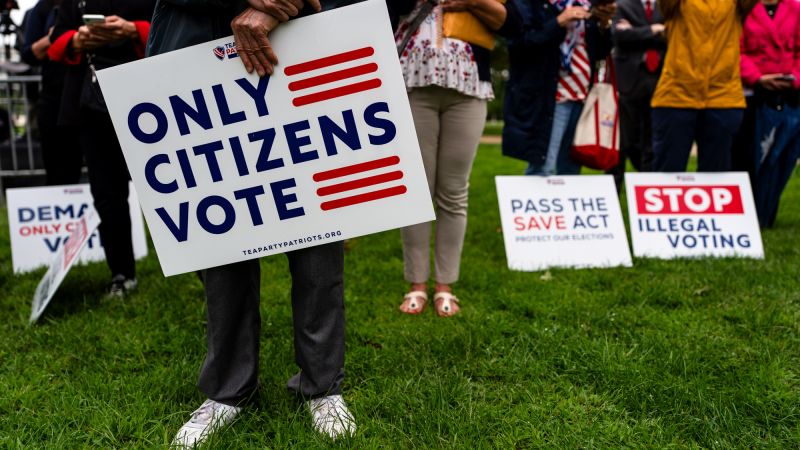
What s in the SAVE America – President Donald Trump’s push for a sweeping federal election reform bill, the “SAVE America Act,” has intensified as he seeks to reshape voting procedures to align with his vision of securing electoral outcomes. The legislation, which passed the House in February, centers on implementing stricter voter identification and citizenship verification measures. However, its chances of advancing in the Senate have dimmed due to partisan divides, with Republicans struggling to secure enough support to override the filibuster—a tool that has allowed Democrats to block the measure. Despite these hurdles, Trump continues to rally his party around the bill, demanding the inclusion of additional provisions that could further polarize the political landscape.
The Senate’s Stalemate and Partisan Obstacles
While the House version of the bill focuses on federal-level changes, it faces a significant roadblock in the Senate. The Democratic minority, leveraging the filibuster, has positioned itself as a critical barrier to passage. Republicans, though divided, are being urged to adopt the bill in its current form or expand it with more controversial elements. Trump’s strategy hinges on framing the legislation as a non-negotiable step to combat voter fraud, a narrative that has driven much of his political agenda. Yet, the Senate’s procedural challenges—particularly the need to eliminate the filibuster—have created a bottleneck that threatens to stall progress.
Republican lawmakers are now being asked to add provisions that go beyond the original scope of the bill. These include measures to end no-excuse mail voting, a practice that has drawn both support and criticism, and targeting policies related to transgender rights. Critics argue these additions are unrelated to the core issue of election integrity, using them as a way to stoke cultural tensions within the GOP. The result is a bill that not only seeks to reform voting processes but also doubles as a political statement, reflecting Trump’s broader strategy to consolidate power and influence.
Key Provisions of the SAVE America Act
At its core, the SAVE America Act introduces a series of changes aimed at tightening voter eligibility. One of its primary measures requires voters to provide proof of citizenship when registering to vote. This could take the form of documents such as birth certificates, US passports, or naturalization certificates. The legislation also mandates in-person verification for those using mail or online registration methods, effectively limiting the convenience of these processes. For voters whose names on birth certificates differ from their current names—such as those who have married or undergone legal name changes—additional documentation is permitted to resolve discrepancies.
The bill’s requirements for proof of citizenship have sparked debate. While proponents claim these measures are necessary to prevent fraudulent voting, opponents argue they impose undue burdens on eligible voters. According to a survey by the Brennan Center for Justice, a left-leaning think tank, over 21 million Americans lack easy access to the required documents. This raises concerns about the potential disenfranchisement of vulnerable populations, including low-income individuals and elderly voters. Despite these challenges, supporters of the bill argue that existing systems, like REAL ID cards, could serve as adequate alternatives. However, critics note that only a handful of states issue REAL IDs that explicitly verify citizenship, leaving most voters without a suitable option.
Impact on Midterm Elections
If enacted, the SAVE America Act could significantly alter the dynamics of this year’s midterm elections. The immediate implementation of its provisions, as amended in the House, means that voters will need to comply with new requirements before the polls open. This could lead to a reduction in voter turnout, particularly among demographics that face greater difficulty in obtaining the necessary documents. Election experts warn that while documented cases of voter fraud are rare, the perception of fraud could sway public opinion and influence election results.
According to the Heritage Foundation, a conservative research group, there have been fewer than 100 confirmed instances of non-citizens voting fraudulently between 2000 and 2025. These cases are cited by proponents as evidence of the need for stricter rules. However, opponents counter that the vast majority of voters are law-abiding and that the bill’s measures are disproportionately applied. They argue that the focus on preventing minor instances of fraud overlooks the broader impact on accessibility and participation. The bill’s emphasis on photo ID, for example, could exclude those without convenient access to such documents, particularly in rural or underserved areas.
Changes to Voter Registration Processes
The SAVE America Act also seeks to modify how voters register, requiring in-person verification for all methods except for in-person registration. This means that individuals who prefer to register by mail or online would still need to visit their local election office to confirm their citizenship. Jason Snead, a leader of the Honest Elections Project, a group advocating for the bill, contends that this shift is justified because “an overwhelming majority of people register to vote in person through the DMV already.” He suggests that the additional step would not significantly inconvenience voters.
“The current system allows for ease of access, but the SAVE America Act ensures that every voter is fully verified before casting their ballot,” said Snead. “This is a necessary step to protect the integrity of our elections.”
Nevertheless, opponents argue that the requirement for in-person verification could disrupt traditional voter registration drives, particularly those organized by community groups in low-income neighborhoods. These drives often rely on mail-in or online methods to reach voters who may not have the time or resources to visit election offices. By complicating these processes, the bill risks marginalizing certain groups and reducing overall participation.
Photo ID Requirements and Their Controversies
Another key component of the SAVE America Act is the mandate for valid photo identification at the polls. Acceptable forms include state-issued driver’s licenses, US passports, and IDs issued to military and tribal members. However, the bill excludes student-issued identification cards, a decision that has drawn criticism from advocates who argue it disproportionately affects younger voters. They point out that many college students rely on campus IDs for daily transactions and may not have access to other forms of identification.
Voters requesting absentee ballots would need to submit copies of their ID documents at both the application and voting stages. This requirement, while straightforward for some, could create logistical challenges for others. Critics highlight that the burden of providing ID documentation may deter voters, especially in states with limited resources for ID assistance programs. The legislation’s focus on photo ID has become a focal point for debates about voting rights and accessibility, with opponents suggesting it could be used to suppress turnout in key demographics.
As the SAVE America Act moves through Congress, its potential impact on the 2026 midterms remains a central concern. While Trump insists it is essential for ensuring fair elections, the bill’s provisions have raised questions about its effectiveness and fairness. Whether it becomes law or not, the legislation reflects a broader strategy to influence the electoral process and shape public perception of voting integrity. The fight over the bill underscores the tension between securing elections and preserving voter access, a debate that will likely continue as the political landscape evolves.
