
Argentina survives tiny Cape Verde’s spirited challenge and everything else to know from Friday’s World Cup matches
World Cup Round of 32: Thrilling Matches and Underdog Triumphs
Argentina survives tiny Cape Verde s spirited – The final day of the Round of 32 in the 2026 FIFA World Cup delivered a mix of drama, resilience, and historic moments that will be remembered for years. From Argentina’s narrow escape against Cape Verde to Colombia’s victory over Ghana and Egypt’s unprecedented achievement, the knockout stage was packed with unforgettable action. As the tournament progressed, these matches showcased the unpredictable nature of football, where even the smallest underdogs can create waves in the global spotlight.
Americas’ Big Night: Argentina’s Narrow Victory
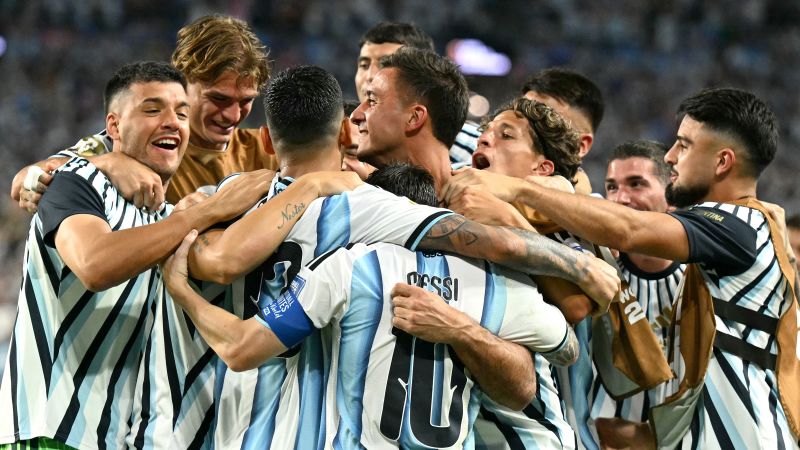
Argentina’s 3-2 win over Cape Verde in Miami Gardens was the standout moment of the day. The world champions faced a daunting challenge from the tiny African island nation, which had never played in a World Cup before. Despite the overwhelming disparity in resources and experience, Cape Verde’s tenacity kept the match tightly contested until the final whistle. The game’s intensity was palpable, with fans in the stadium and around the world glued to every moment.
“Argentina held firm against a formidable challenge from Cape Verde.”
While Argentina dominated possession in the early stages, Cape Verde’s defense held its ground, frustrating the South American giants. The breakthrough came in the 29th minute when Lionel Messi, the tournament’s undisputed star, showcased his brilliance. With a single touch, he controlled a long diagonal pass, flicked it over the head of a charging defender, and sent the ball soaring into the top corner. The goal, a testament to Messi’s composure, extended his record for World Cup goals to 20 and marked his seventh in the 2026 tournament. More importantly, it set the tone for a game that would test the limits of both teams.
However, Cape Verde refused to back down. The 59th minute brought a shock equalizer as Ryan Mendes executed a clever pass through an Argentine defender’s legs, setting up Deroy Duarte. The forward calmly took a touch and fired a low shot past Emiliano Martínez, sending the stadium into a frenzy. The equalizer was a moment of pure magic, as a nation with a population roughly equivalent to Sacramento, California, stunned the reigning champions. The game shifted dramatically, with Argentina now under pressure to find a decisive goal.
“What an equalizer from Deroy Duarte after the Ryan Mendes nutmeg!”
As the final minutes ticked down, Messi was left with a golden opportunity to restore Argentina’s lead. He raced onto a through ball, but Cape Verde’s goalkeeper, Pico Lopes, made a crucial intervention, saving the shot with a deft reflex. The decision not to award a penalty, despite the ball striking Lopes’ arm, sparked debate among fans and analysts. The game entered extra time, with both teams battling for supremacy in a high-stakes encounter.
The tension in Hard Rock Stadium reached its peak as the clock neared zero. Argentina’s defense, which had struggled to contain Cape Verde’s attacking flair, was pushed to its limits. A last-minute free kick by Messi was blocked by Vozinha, who denied the ball with a stunning save. The result was a nail-biting 120 minutes, with Cape Verde forcing the world champions into a shootout. The South Florida crowd, which had initially celebrated Argentina’s early dominance, now erupted with chants for their tiny rivals.
Other Standouts: Colombia’s Triumph and Egypt’s First
While the Argentina-Cape Verde clash captured headlines, other matches on the same day added to the tournament’s allure. Colombia secured a hard-fought victory against Ghana, demonstrating their tactical discipline and attacking flair. The African team, despite their efforts, fell short as Colombia’s defenders and midfielders executed precise set-pieces and counterattacks to claim the win.
Meanwhile, Egypt made history with a remarkable performance that had never been seen in this World Cup. Their ability to adapt and outmaneuver opponents showcased a new era of African football, blending resilience with innovative play. The result was a display of grit and strategy that highlighted the tournament’s competitive depth.
These matches, though less dramatic than the Argentina-Cape Verde showdown, underscored the unpredictable nature of the Round of 32. In a tournament where anything can happen, teams like Cape Verde and Egypt proved that underdog stories are not just possible—they can become defining moments of the competition.
Lessons from the Match: Resilience and Tactical Adjustments
The Argentina-Cape Verde game was more than a test of skill; it was a study in resilience. Cape Verde, despite their lack of resources, executed a well-structured plan that kept Argentina on edge. Their defenders, working in unison, disrupted Argentina’s rhythm, while their midfielders created dangerous opportunities in the final third. The team’s ability to withstand Argentina’s pressure and capitalize on moments of weakness was a masterclass in tactical football.
Argentina, on the other hand, faced challenges that tested their composure. The late goal from Cape Verde forced the South Americans to adjust their approach, shifting focus from a comfortable lead to a desperate need for a winner. Messi’s presence was a key factor, but even his brilliance could not shield his team from the mounting pressure. The match highlighted how even the most dominant teams must remain vigilant, as the smallest errors can lead to monumental consequences.
Looking ahead, the victory will be a crucial confidence booster for Argentina. Their ability to overcome Cape Verde’s spirited challenge sets the stage for a potential deep run in the tournament. For Cape Verde, the draw is a historic achievement that cements their place in World Cup folklore. The island nation’s journey from near-unknown to a team that nearly toppled the world champions is a story of perseverance and passion.
The Round of 32 also featured other compelling narratives. For instance, the contrasting styles between teams reflected the global diversity of football. While Argentina’s attack was relentless, Cape Verde’s defense was unyielding. This balance of strengths and weaknesses made the matches not just competitive but also entertaining for fans. The unpredictability of the knockout stage ensures that every game is a rollercoaster of emotions, with moments of brilliance and heartbreak alike.
Looking to the Future: What This Means for the World Cup
As the tournament moves forward, the performances in the Round of 32 will shape the narrative of the 2026 World Cup. Argentina’s victory, though hard-earned, sets them on a path to defend their title. However, the presence of teams like Cape Verde reminds fans that the World Cup is a stage where even the smallest nations can make a statement. Their fight against the reigning champions will be a topic of discussion for years to come.
Meanwhile, the other matches demonstrated how teams from different regions can challenge the status quo. Colombia’s win over Ghana highlighted the growing strength of South American football, while Egypt’s historic performance underscored Africa’s rising influence in the global game. These results indicate that the World Cup is not just a showcase for traditional powerhouses but also a platform for emerging talent and underdogs to shine.
The Round of 32 proved that football is a sport where anything is possible. The drama of Argentina’s near-upset, the resilience of Cape Verde, and the tactical battles across the field all contributed to a day that will be remembered for its intensity and surprises. As the tournament progresses, fans can expect more thrilling moments that will define the next chapter of this historic competition.
