
Heavy metal vs. an orchestra: What to expect from the World Cup final
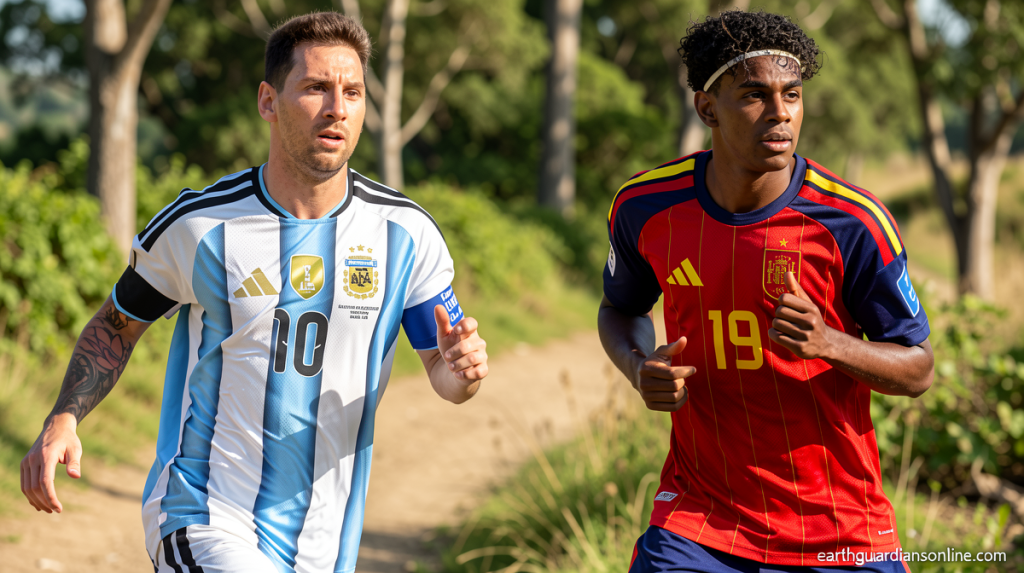
The Ultimate Showdown: Argentina and Spain Set for World Cup Glory
Heavy metal vs an orchestra – After an incredible journey spanning 103 matches and 38 days of non-stop football, the 2026 World Cup has reached its climactic moment. From an initial field of 46 competing nations, only two powerhouses remain standing. The world’s top-ranked side, Argentina, faces off against second-placed Spain in what promises to be an unforgettable contest. Remarkably, these two footballing giants last crossed paths on the World Cup stage way back in 1966, making this encounter a rare occurrence in international football history.
The stage is set at MetLife Stadium in New Jersey, where fans will witness the final at 3 p.m. ET on Sunday. Beyond the football itself, numerous compelling narratives surround this championship match, including elaborate half-time entertainment and the confirmed attendance of President Donald Trump. Let us examine what makes this final so special.
A Battle of Contrasting Philosophies
To borrow terminology from former Liverpool manager Jurgen Klopp, this final represents a collision between heavy metal music and a refined orchestra. Argentina embodies raw energy and physical dominance. They excel at the unglamorous aspects of the game, often prioritizing intensity over pure technical brilliance. From the opening whistle, they throw everything forward with relentless determination, hurtling toward the opponent’s goal like a runaway train.
This controlled chaos creates the perfect environment for Lionel Messi to perform his trademark magic. Throughout this tournament, his teammates have functioned more like protective bodyguards than traditional midfielders, handling the physical battles while Messi concentrates on dismantling defenses with his extraordinary ability. This approach has proven highly effective, with numerous late goals and dramatic comebacks demonstrating that opponents struggle to maintain their composure against Argentina’s relentless pressure for the full duration of ninety minutes.
Spain, conversely, represents patience and precision. La Roja prefers to dominate possession and systematically pass their adversaries into submission, capitalizing on any momentary lapse in concentration. Their philosophy remains elegantly simple: maintain possession, and the opposition cannot score. This method has brought Spain considerable success in recent years.
Historical Context and Tactical Evolution
Spain captured their last World Cup trophy in 2010 through a possession-based approach known as “tiki-taka,” a style that defined an entire era of football before physicality began to dominate the modern game. Even when Spain claimed the European Championship in 2022, they achieved victory through the pace and directness of their wingers rather than pure possession. However, following several injuries to key squad members this summer, manager Luis de la Fuente has returned to Spain’s traditional identity, positioning them as slight favorites for the championship.
Argentina’s objective remains straightforward: disrupt Spain’s rhythm and impose their physicality. Spanish midfielder Rodri will undoubtedly carry a target on his ankles. The thirty-year-old serves as the metronome of Spain’s midfield, orchestrating play with exceptional precision. No player in this tournament has completed more passes than Rodri, with an impressive total of 694—surpassing every other competitor by over one hundred. Neutralizing him would strip Spain of their greatest advantage.
Given that Argentina has committed more fouls than any other team in the tournament, expect numerous tackles and heated exchanges both on and off the pitch. Spain must maintain composure and resist provocation to execute their game plan effectively, though this proves easier in theory than practice. Referee Slavko Vinčić faces a demanding task from the opening whistle.
“I think Sunday’s match will be quite different, as it will be a more physical one and we must be prepared,” Rodri told reporters in the days ahead of the final, expressing confidence that his team can compete against any style of play.
“We know how to play different games based on the moment. So, we can adapt to having to defend, counterattacking, to attacking. We are a very complete team, and that is why we are here.”
Messi vs. Yamal: A Generational Clash
Beyond the tactical battle, perhaps the most compelling subplot involves Lionel Messi facing Lamine Yamal. While Messi’s legendary status requires no introduction—having been recognized as the world’s finest player for nearly two decades—Yamal possesses the potential to rival or surpass the Argentine’s accomplishments.
Though described as a man, the Spanish sensation remains essentially a teenager, having celebrated his nineteenth birthday just days ago. His achievements already eclipse what most players accomplish across entire careers. Yamal has secured three La Liga titles with Barcelona, won the European Championship with Spain, and now stands merely one match away from adding a World Cup to his collection during his tournament debut.
His former Barcelona youth team coach noted that “Lamine Yamal had what other kids didn’t,” highlighting the extraordinary talent that has propelled him to such heights. This final promises not only a championship decider but also a meeting of footballing generations that could define the sport for years to come.
