
Somali referee denied entry to US for 2026 World Cup over ‘vetting concerns’
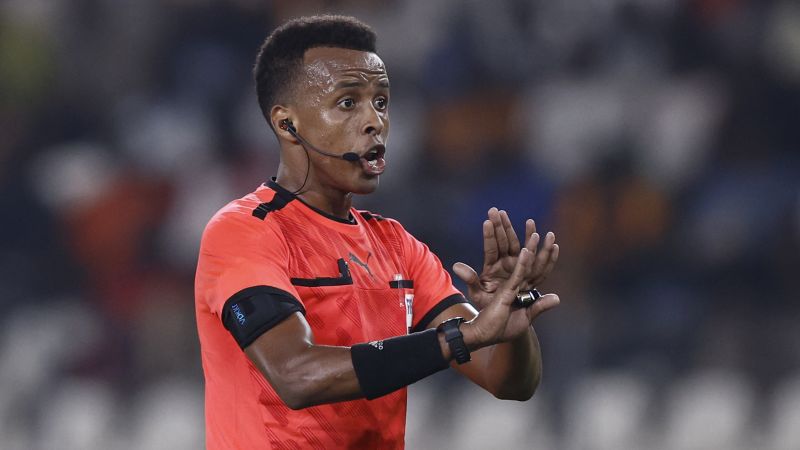
Somali Referee Denied Entry to U.S. for 2026 World Cup Over Vetting Concerns
Official Confirmation of Omar Artan’s Exclusion
Somali referee denied entry to US – FIFA has confirmed that Somali referee Omar Abdulkadir Artan will not be part of the 2026 World Cup, following his denial of entry into the United States. The decision, made by U.S. Customs and Border Protection (CBP), came after Artan arrived in Miami from Istanbul. According to a CBP spokesperson, the traveler was subjected to an extra layer of scrutiny during the inspection process, which is standard when officials require further verification of a person’s eligibility.
“During processing, the traveler underwent additional inspection, a routine part of CBP’s inspection process when officers need to verify information or determine admissibility,” the spokesperson stated. “Following inspection, the traveler, a referee for the FIFA World Cup, was determined to be inadmissible due to vetting concerns and was denied entry.”
This incident highlights the ongoing challenges faced by international athletes and officials under the U.S. immigration policies. Somalia, which has been designated as one of 39 nations under the Trump administration’s travel ban, continues to be a focal point for heightened scrutiny. While the CBP did not specify the exact reason for Artan’s exclusion, officials emphasized that individuals from countries listed in the travel ban are routinely checked for potential risks.
Artan’s Achievements and Selection for the World Cup
Omar Abdulkadir Artan, who was named Africa’s top male referee in 2025, had been selected by the Confederation of African Football (CAF) to officiate at the 2026 World Cup. His inclusion was a significant milestone, reflecting his reputation as a skilled and respected official on the continent. However, the U.S. entry denial has cast a shadow over his participation in the global event. Artan’s case underscores the tension between international sporting collaboration and national security protocols.
A FIFA spokesperson clarified that the organization is not directly involved in the host country’s immigration decisions. “FIFA is not involved in host country immigration processes, including visa adjudications, and has been informed by authorities that Mr. Artan’s status will not be changed at present,” the statement read. “In line with previous FIFA events, a host government ultimately determines who receives a visa and who is admitted into their country.” This highlights the broader implications of the U.S. policy on the World Cup’s global nature, as it requires participants to navigate additional bureaucratic hurdles.
Broader Implications of the Travel Ban on the World Cup
The exclusion of Artan is part of a pattern affecting other nations as well. Countries like Iran have also encountered difficulties in securing entry for their teams and officials, raising concerns about the impact of the Trump administration’s strict immigration measures on international sports. In a recent development, Iran’s football federation president, Mehdi Taj, stated that the country’s soccer team had been granted permission to enter the United States for the tournament. However, the timing of the approval—just one day before the match—has sparked debates over whether the process was fair or expedited.
Taj’s comments, relayed by semi-official Iranian media, suggest that the team’s access was secured at the last minute, which some critics argue could be seen as a special case. Meanwhile, Iran’s head coach, Amir Ghalenoei, noted that additional staff members, media representatives, and an executive director were still awaiting entry clearance. This situation has fueled accusations of unequal treatment, with some suggesting that the policies disproportionately affect certain nationalities while allowing others to participate without significant delays.
The 2026 World Cup, set to take place in North America, is expected to bring together 32 teams from around the globe. The tournament’s proximity to the United States has raised questions about how the country’s immigration policies might influence the event’s logistics and atmosphere. While the U.S. authorities have maintained that the vetting process is essential for national security, the denial of Artan’s entry has sparked discussions about its potential impact on the quality of officiating and the inclusivity of the competition.
Contextualizing the Travel Ban’s Effect on Global Participation
The Trump-era travel ban, which targeted 39 countries, including Somalia, was designed to limit the entry of individuals from regions deemed high-risk for terrorism. While the policy has been revised under subsequent administrations, its legacy continues to influence immigration decisions. For the 2026 World Cup, this means that officials and participants from certain nations must undergo additional checks, potentially causing delays or complications.
Artan’s case exemplifies the intersection of sports and geopolitics. His exclusion, while not definitive, raises questions about the criteria used to assess admissibility. Are the concerns related to his personal background, or do they stem from broader anxieties about the movement of people across borders? The CBP spokesperson’s remarks suggest that the decision was based on standard procedures, but the lack of transparency has left room for speculation. This situation also prompts a reflection on the importance of diverse representation in international sports events, particularly as they serve as platforms for cross-cultural exchange.
As the World Cup approaches, organizers and stakeholders are working to mitigate the effects of such restrictions. The tournament’s logistics team has reportedly been in communication with U.S. authorities to streamline the entry process for key personnel. Despite these efforts, the incident with Artan serves as a reminder of the challenges faced by global sports events in navigating complex immigration frameworks. The decision to deny entry to a top referee could have implications beyond the match itself, potentially affecting the overall integrity and excitement of the competition.
With the tournament just three days away, the focus has shifted to the potential consequences of these policies. The U.S. has been a central host nation for the event, and its ability to accommodate international participants will be crucial to its success. While the denial of Artan’s entry is a setback, it also highlights the broader issue of how immigration processes can influence the global reach of sporting events. As the world watches the opening matches, the question remains: will these hurdles impact the spirit of the game or simply be a logistical challenge overcome by the teams and officials involved?
