The USA dares to dream the impossible World Cup dream


The USA dares to dream the impossible World Cup dream
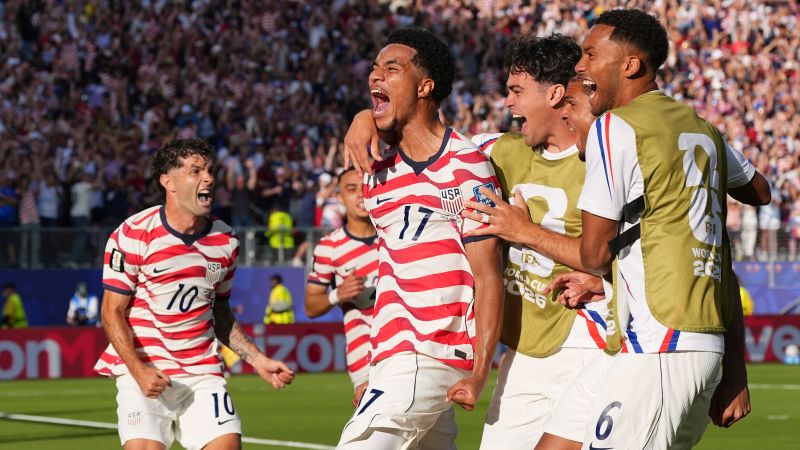
The USA dares to dream the impossible – This morning, the soccer world is grappling with a question that hasn’t surfaced in years: Is the U.S. team truly competitive? After securing a 2-0 victory over Australia, the Americans have firmly established their place in the knockout stages, a feat that hasn’t been achieved since the inaugural World Cup in 1930. Meanwhile, Paraguay’s 1-0 win against Turkey ensures the U.S. will finish first in Group D, a position that has seemed elusive for much of the tournament’s history. These two victories mark a pivotal moment for American soccer, reigniting hopes of a breakthrough that had long felt out of reach.
For decades, the U.S. has been seen as a nation of potential rather than performance. In the realm of men’s soccer, it’s rare to find a team that consistently challenges the world’s elite. Yet, this World Cup has been different. The Americans have defied expectations, taking on teams with storied legacies and proving they can hold their own. It’s a rare combination of skill, strategy, and resilience that has brought them to this juncture.
As the weekend unfolds, the role of the supervising editor shifts. Kyle Feldscher, stepping into Ben’s usual writer spot, begins by reflecting on Friday’s action. The weekend has always been a time for fans to gather, but this year’s games have taken on a new significance. The U.S. team’s progress has sparked a unique blend of excitement and skepticism among supporters, a dynamic that Feldscher captures with a metaphor drawn from the “Lord of the Rings” saga.
“We are all familiar with World Cup fever, but for longtime American soccer fans, there’s a different strain of that passion. Let’s call it the Sméagol-Gollum Dynamic, where the team is both humble and ambitious, forever caught between the reality of its position and the dream of glory.”
This duality defines the American experience in global soccer. While the U.S. excels in other sports, men’s soccer has often been a source of frustration. Fans spend their mornings watching European leagues, their afternoons following the Champions League, and their evenings cheering for the national team. Though few Americans play at the highest level, they remain deeply invested, recognizing the structural and cultural barriers that have kept the U.S. in a secondary role for so long.
But the recent results have flipped a switch. Two wins in the group stage—against Australia and now the pending match against Sweden—have ignited a sense of possibility. The Gollum side of the personality, driven by ambition, is now whispering that the U.S. could do more than just qualify. It’s a shift from the Sméagol side, which acknowledges the challenges: a history of underachievement, a lack of depth in talent, and the pressure of competing against teams that have long dominated the sport.
The contrast between these two perspectives is stark. The Sméagol side knows the U.S. faces an uphill battle. Countries like Brazil, Argentina, and France have decades of tradition, with players who grew up believing in their nation’s destiny. For American fans, it’s like watching college football blue-bloods take trophies for granted. Yet, the Gollum side insists that history is not destiny. The U.S. has already proven its ability to challenge, and there’s a growing belief that it can go further than ever before.
This mindset is evident in the way fans and analysts are now framing the tournament. Concerns about the leaky back line or the inevitability of facing European giants are met with defiance: “Must have… the precious.” The phrase, borrowed from the saga, encapsulates the determination to believe in something greater. Even as the U.S. is aware of its limitations, there’s a renewed urgency to push past them.
Elsewhere on the pitch, the Netherlands’ 1-1 draw with Japan has left them with a mix of relief and regret. The Dutch squad, widely expected to make a deep run, now faces a tough test against Sweden. The Blågult, having dominated their opener with a 5-1 rout of Tunisia, have shown they are a force to be reckoned with. Their forward line, led by Alexander Isak and Viktor Gyökeres, has capitalized on defensive lapses, creating a narrative that could threaten the Oranje’s ambitions.
Germany, meanwhile, has set the tone with a commanding 7-1 victory over Curaçao. The European giants’ display in the first round has been a statement of intent, showcasing their ability to crush opponents with sheer dominance. Yet, even as they march forward, the U.S. remains a focal point of discussion. Their two wins have not only secured a top spot in their group but have also rekindled a conversation about the nation’s potential to rise beyond its historical role.
The next phase of the tournament is critical for the U.S. They will face Sweden in Houston Stadium at 1 p.m. ET, a match that could either solidify their momentum or expose vulnerabilities. The date and location are more than just logistical details—they are a reminder of the journey ahead. For the Dutch, their clash with Sweden in Toronto at 4 p.m. ET offers a chance to recover from their first-game setback. Meanwhile, Germany’s next match will test their ability to maintain the high level of performance that defined their opening round.
David Close’s analysis from Lumen Field after the U.S. victory over Australia provides a deeper insight into the team’s progress. His words capture the blend of caution and optimism that now defines American soccer. “Two wins in a row are a sign that the team is finally finding its rhythm,” he writes. “But the real test will come when they face the world’s best.” This sentiment is shared by fans, who are now caught between the Sméagol-Gollum Dynamic and the growing belief that the U.S. is capable of more than just survival.
As the World Cup continues, the U.S. team’s performance will be scrutinized through the lens of both reality and ambition. The Sméagol side remains grounded in the knowledge that the road to glory is long and filled with obstacles. But the Gollum side, now emboldened by recent success, is dreaming of something impossible: a deep run in the tournament, a final showdown with the top seeds, and the chance to prove that the U.S. is not just a contender but a force that can shape the future of the game.
The question remains: Will this moment be a turning point or a fleeting spark? The answer will depend on how the Americans handle the next challenges. For now, though, the world is watching—and the U.S. is daring to dream.