New premium airplane seats have a big problem — and it could be getting worse

Daftar Isi
The Paradox of Premium: Why Modern Airline Seats Are Too Fancy to Fly
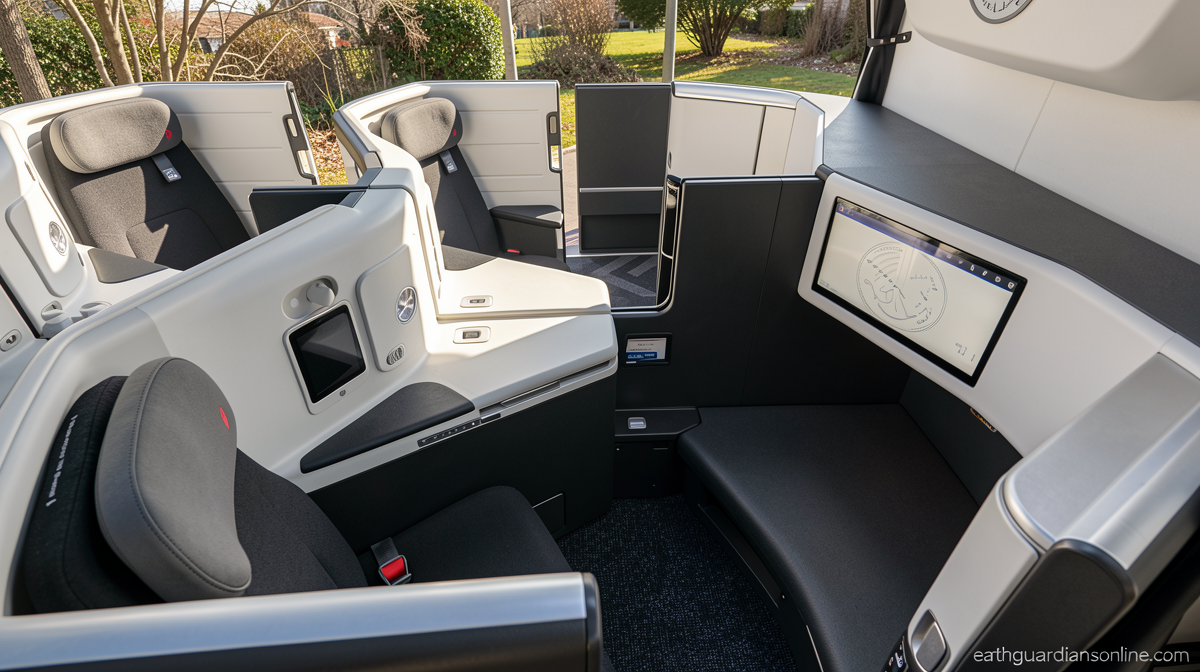
Earthguardiansonline.com – Passengers booking flights on some of the world’s most prestigious carriers may soon encounter an unusual sight: rows of gleaming, state-of-the-art business-class suites sitting completely empty at cruising altitude. These luxurious pods, equipped with lie-flat beds and sliding privacy doors, could remain unoccupied despite strong passenger demand—a phenomenon that is becoming increasingly common across global aviation.
KLM’s upcoming Amsterdam-Toronto service this fall exemplifies this growing challenge. The airline’s new Airbus A350 features 34 of the most opulent business-class suites available today, yet regulatory hurdles may prevent passengers from using them on departure day. This isn’t an isolated incident. Airlines worldwide are experiencing similar delays as they attempt to introduce premium offerings that address rising passenger expectations for privacy, advanced connectivity, and sophisticated inflight entertainment systems.
A Historical Perspective on Cabin Evolution
The roots of this modern dilemma stretch back several decades. During the era depicted in the 1990 film “Home Alone,” when the McCallister family rushed to catch their flight to Paris, first-class passengers enjoyed what amounted to comfortable, oversized recliners. The industry underwent a significant transformation in 2000 when British Airways unveiled the world’s first lie-flat seat, fundamentally changing the long-haul travel experience.
Since then, front-row real estate has evolved into high-tech mini-apartments. Lufthansa’s Allegris suites and Swiss’ Senses represent comprehensive overhauls of their long-haul cabins, incorporating seat heating, seat cooling, and personal climate controls. While these amenities enhance passenger comfort, each additional feature introduces new regulatory requirements that can delay deployment by years.
The Certification Bottleneck
Experts estimate that certifying a new premium seat today requires at least six months more than it did before the pandemic, when average lead times ranged from one to two years. This extended timeline creates significant challenges for airlines eager to introduce innovative cabin designs.
By the time you imagine it, design it, test it, get it certified, get it built — it is a lengthy three-year process, Ben Minicucci, the CEO of Alaska Airlines, said in May on bringing the airline’s first-ever business-class suites to market. We approved this design on a new product last year and now it’s getting the seat manufacturers aligned.
Adding complexity to the situation is the industry’s resistance to standardization. Rather than adopting uniform solutions that could accelerate deployment, airlines are pursuing custom designs to differentiate themselves in a competitive market.
Another industry that is in a booming ramp-up phase, you want to scale it — you would go for standardization, said Mark Hiller, the CEO of seat manufacturer Recaro. Instead, airlines are insisting on custom designs to stand out. The interest and need for differentiation … are driving the demand and really lead to bottlenecks in the industry.
Regulatory Scrutiny Intensifies
Federal regulators have adopted a more stringent approach to evaluating custom cabin configurations. FAA Administrator Bryan Bedford highlighted this shift in May, noting that the agency has encountered premium seats that fail to meet human factors tests for impact scenarios.
The growing emphasis on privacy represents another significant factor complicating certification. United Airlines’ chief commercial officer Andrew Nocella observed this trend clearly: If you went back 10 years ago, there were very few walls in the business-class cabin and today there are a lot. I do think that the evolution of the cabins has made [certification] very complicated.
United has managed to navigate these challenges relatively successfully, launching its updated Polaris suites with privacy doors on Boeing 787s less than a year after unveiling them in 2025. The company achieved this by maintaining close collaboration with safety inspectors and seat manufacturers throughout the development process.
Implications for the Future of Air Travel
Modern premium suites have transcended their origins as simply larger chairs. They now function as elaborate architectural installations containing complex, heavy inflight entertainment screens and specialized seat textiles that fill cabins more densely than ever before. This increased complexity means that every additional wall, higher door, and technological component adds another layer of testing and documentation requirements.
Flagship carriers including American Airlines, Lufthansa, Riyadh Air, and Singapore Airlines are all currently working through lengthy, multi-year approval processes for their bespoke cabin designs. The production bottleneck affecting these airlines suggests that passengers should expect continued delays in accessing the latest premium seating innovations in the near future.
For travelers, this means that while the promise of cutting-edge cabin experiences is real, the journey from design approval to actual passenger use remains longer and more complex than ever before. The irony of empty luxury seats at 35,000 feet may become a familiar sight until the industry finds ways to streamline certification without compromising safety or innovation.
Related Reading
Frequently Asked Questions
What is New premium airplane seats have a big?
New premium airplane seats have a big is the main topic of this guide. The article explains the context, practical details, and next steps readers should understand.
Why does New premium airplane seats have a big matter?
New premium airplane seats have a big matters because readers are looking for a useful answer, not just a short summary. Good content should match search intent and help them decide what to do next.