
The American city where almost everyone seems to be writing a book
The American City Where Everyone Seems to Be Writing a Book
The American city where almost everyone – Nestled in the heart of Iowa, the city has become a surprising haven for literary creation. With its cobblestone streets and small-town charm, Iowa City (IC) harbors a unique energy that sets it apart from other cities in the U.S. While it may appear unassuming at first glance, its cultural landscape is alive with the sounds of stories being crafted and shared. The atmosphere is one of constant intellectual exchange, where even the most mundane moments can spark a narrative.
A Bookstore That Fuels the Imagination
In the upstairs space of Prairie Lights Books, tables and shelves are relocated to create room for the gathering. A row of plastic chairs is filled by young readers, their eyes darting between the pages and the speaker. The PA system plays “Lucky” by Britney Spears, a quirky choice that adds an unexpected twist to the evening’s literary event. As the track ends, the emcee announces that it’s the first time an author has been introduced by a DJ—a nod to the city’s eclectic culture. Then, with a stage set, Candice Wuehle takes the mic. Her novel, “Ultranatural,” weaves a dark tale of a pop star’s meteoric rise and fall, capturing the essence of fame with visceral detail. Descriptions of “nerves and teen sweat” during talent auditions draw the audience into the protagonist’s world, a descent into the glittering depths of show business that feels both intimate and epic.
After a brief Q&A session with fellow writer Camila Urioste, the event shifts into a more personal space. The questions that follow reveal a deeper curiosity about the craft of writing, as if the audience is not just passive listeners but active participants in the creative process. These interactions are not confined to the bookstore’s walls. They ripple through the city, where ideas are as common as the Iowa cornfields that surround it.
The Legacy of a Literary Institution
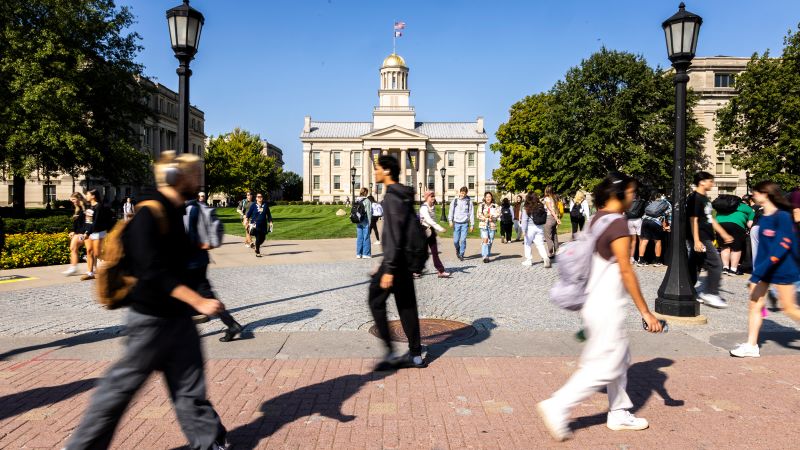
At the core of Iowa City’s literary identity lies the University of Iowa, a cornerstone of the community that celebrates its 90th anniversary this year. In 1936, the university pioneered the first creative writing degree in the United States, laying the foundation for a tradition that continues to thrive. Today, the Iowa Writers’ Workshop is synonymous with literary excellence, its alumni and faculty spanning a who’s who of American letters. Names like Kurt Vonnegut, Curtis Sittenfeld, and Flannery O’Connor echo through the city, a testament to the program’s enduring influence.
The workshop’s reputation has only grown over the decades, with its graduates consistently winning prestigious awards such as the Pulitzer Prize and National Book Awards. In 2008, the city was awarded UNESCO’s designation as a City of Literature, a recognition that highlights its role as a global hub for storytelling. This honor is not accidental—it reflects a cultural ecosystem that nurtures creativity from its core.
A City of Contrasts and Creativity
Despite its literary prominence, Iowa City is far from the bustling centers of publishing. Its location, surrounded by agricultural land and traditional Amish communities, creates a backdrop that feels worlds apart from the fast-paced media capitals of the East Coast. Yet, this very contrast seems to fuel the city’s creative spirit. The laid-back Midwestern vibe coexists with a progressive energy, making it a unique blend of tradition and innovation.
For many, the city’s charm lies in its community-driven ethos. Jordan Sellergen, who now runs Little Village—a monthly magazine that captures the city’s essence—remembers her early days in Cedar Rapids, where she was drawn to Iowa City for its laid-back atmosphere. “We came here to hang out, to smoke and buy hippy clothes, and watch gigs at Gabe’s,” she says. The venue, still a vibrant hub, has hosted legends like Nirvana before their rise to fame. Today, Little Village distills the city’s easygoing spirit into print, spreading its influence far beyond the region.
Even the city’s layout contributes to its creative vibe. The Ped Mall, a grid of walking streets at the center, often feels like an extension of the university campus. Students fill the streets, bringing with them a restless energy that shapes the city’s cultural fabric. This youthful dynamism is palpable, as is the community’s shared passion for storytelling. “There is this vibrant community here that punches up,” Sellergen adds. “The way we present ourselves can seem conservative in a way—there’s something about the small-town culture, we’re very polite—but we’re also very progressive.”
Stories in Every Corner
Walking through Iowa City, one might encounter a taxi driver with ink-stained fingers, a sign of the city’s deep literary roots. The Haunted Bookshop, run by Nialle Sylvan, is another example of this culture. Though its name suggests a supernatural element, the shop is a treasure trove of second-hand volumes, its shelves filled with stories waiting to be discovered. “You can feel the way people get excited about books here,” Sylvan says. “Pretty much everyone in this town is working on a book of some sort or other, and you can feel it.”
The city’s dedication to writing is not limited to its institutions. Its streets, parks, and coffee shops are filled with aspiring authors who see the town as a launching pad for their dreams. The atmosphere is one of shared purpose, where the pursuit of art is as much a part of daily life as the local farmers’ market. Even the smallest conversations seem to orbit around the theme of storytelling, a phenomenon that has made Iowa City a magnet for writers across the nation.
While the university is the heart of this literary engine, the city itself is a living classroom. The combination of academic rigor and grassroots creativity creates an environment where ideas flourish. It’s a place where the past and present coexist, where the legacy of pioneers like Vonnegut and O’Connor continues to inspire new voices. And as the city celebrates its 90th anniversary, its role as a cradle of American literature is more relevant than ever.
