
A fire at a cold-storage warehouse in Los Angeles has been burning for days. Here’s what we know
A Week-Long Inferno in Los Angeles: What’s Known About the Cold-Storage Warehouse Fire
A fire at a cold storage – For nearly a week, a thick plume of smoke has loomed over Los Angeles, casting an ominous shadow on the city’s skyline. The fire, which started at a cold-storage warehouse, has become a persistent sight, with officials expressing uncertainty about when it might finally subside. The blaze, fueled by the massive refrigeration systems within the facility, has disrupted daily life and raised concerns about air quality and safety.
Origin of the Fire and Initial Response
The fire was first reported at approximately 2:35 p.m. on June 17, sparking a rapid emergency response. According to the Los Angeles Fire Department (LAFD), crews initially focused on containing the flames that erupted from the roof. However, just 15 minutes into the operation, a suspected ammonia leak forced them to shift tactics. “The fire originated on the roof while subcontractors were maintaining the solar array,” explained Lineage, the company that manages the warehouse. This detail emerged as part of their ongoing investigation into the incident.
“We believe the fire originated on the roof on Wednesday while the company’s subcontractors were servicing the solar array,” said Lineage.
Ammonia, a common refrigerant, was cited as a contributing factor to the fire’s intensity. Despite this, Lineage confirmed that no harmful levels of the gas have been detected in the surrounding community since the incident began. “We took proactive measures to extract the ammonia and transport it away, eliminating any risk to residents,” the company added. This step was critical in preventing further contamination of the air.
Challenges in Fighting the Blaze
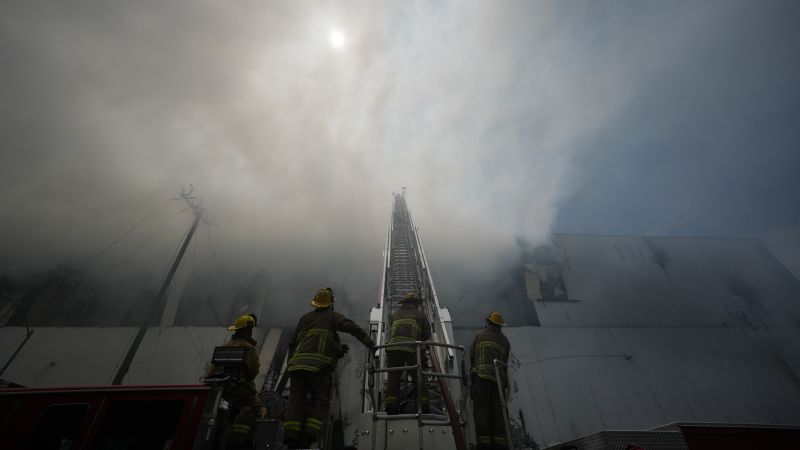
Fighting the fire proved complicated due to the structure’s immense size and unstable conditions. “The sheer scale of the building largely prevented effective ground access,” the LAFD noted. To combat the flames, the department resorted to an unconventional method—deploying helicopters for water drops. Typically used in wildfires, this approach was necessary to tackle the fire’s spread in the dense urban area.
Structural instability compounded the challenges. As firefighters applied large volumes of water to extinguish the flames, parts of the building’s walls began to weaken. “There are areas of wall instability due to the significant water usage,” the LAFD said. This led to a cautious, methodical approach in navigating the interior of the facility. The lack of visibility inside further hindered efforts, with fire chief Jaime Moore describing the situation as “complex and long-duration.”
“We have 85 million pounds of frozen food inside of this facility, and the way the building has been laid out, it’s very difficult for us to get in there because there’s zero visibility inside,” said Los Angeles Fire Chief Jaime Moore.
Despite these obstacles, crews managed to make progress by removing sections of the exterior wall. This action improved access to the interior and allowed for more aggressive firefighting. “Smoke conditions have improved significantly and are expected to continue improving as firefighters make progress,” the LAFD noted on Sunday. Yet, they warned that intermittent smoke increases might occur as they uncover hidden fire pockets.
Community Impact and Lineage’s Efforts
The fire’s proximity to residential areas forced many to take precautions, such as turning off air conditioners to avoid inhaling smoke. The Los Angeles Fire Department urged residents to limit exposure, emphasizing the pervasive nature of the plumes. Lineage, which leases the warehouse, has since acknowledged the distress caused to nearby communities, particularly in Boyle Heights. The company operates a significant portion of the neighborhood’s warehouse space, with over 491,000 square feet of storage.
Lineage has committed to supporting those affected by the blaze. “We know many people living near our facility in Boyle Heights are deeply distraught about the fire that began on June 17, and rightfully so,” the company stated. In response, they allocated $2 million to the California Community Foundation (CCF) to aid impacted residents. Additionally, Lineage is collaborating with local authorities to provide air purifiers, food supplies, and other resources to the community.
“Lineage has contributed $2 million to the California Community Foundation (CCF) that will be distributed to support community members who have been impacted by the fire,” said Lineage.
Unresolved Questions and Ongoing Efforts
While the fire is now under control, its cause remains unclear. The LAFD has not yet released an official report, leaving questions about the initial spark. Lineage clarified that they do not own the building or the rooftop solar array, which was leased to a third-party company. “We are the tenant-operator of the warehouse building and lease the roof to a third-party solar company, which is responsible for operating and maintaining the array,” the company said. This distinction is important as the solar array’s condition may play a role in the fire’s origin.
Employees of the warehouse were safely evacuated without any reported injuries, but the incident has disrupted operations. Lineage is working to relocate workers to other facilities, ensuring continued service to the community. The company also highlighted the scale of the loss, with 85 million pounds of frozen food stored inside the facility. This volume underscores the economic and logistical challenges of recovery.
Historical Context and Future Implications
The current fire is not the first major incident involving Lineage’s facilities. In 2024, a similar blaze at a warehouse in Washington state smoldered for two months before being fully extinguished. This past event has prompted discussions about safety protocols and the use of ammonia in refrigeration systems. Lineage has since emphasized their commitment to improving safety measures, though the exact cause of the June 2026 fire is still under review.
LA Mayor Karen Bass declared a state of emergency to secure additional resources for firefighting efforts. The declaration highlights the scale of the incident and the need for coordinated action. As the situation evolves, the focus remains on restoring the warehouse, protecting public health, and ensuring the community receives necessary support. The LAFD continues to monitor the site, with officials stating that the incident requires sustained operations.
Residents and businesses in the affected area have been impacted in various ways. The smoke has lingered for days, affecting air quality and forcing some to close windows or rely on air filters. For the community, the fire serves as a reminder of the risks associated with large-scale refrigeration systems and the importance of proactive safety measures. Lineage’s response has been praised for its transparency and commitment to recovery, but questions linger about how such a large fire could occur in a facility with advanced infrastructure.
As the weeks pass, the fire’s legacy becomes clearer. It has tested the resilience of both the fire department and the company, revealing vulnerabilities in the system. While the flames have subsided, the work of rebuilding and restoring trust is just beginning. The incident underscores the interconnectedness of urban infrastructure, environmental conditions, and human effort in managing crises. For now, the city watches as the smoke clears and the rebuilding process takes shape.
