
A gender reveal mishap sparked a deadly wildfire. Who’s being held accountable is unusual
A Gender Reveal Mishap Sparked a Deadly Wildfire. Who’s Being Held Accountable Is Unusual
The Unintended Consequences of the Pyrotechnic Mishap
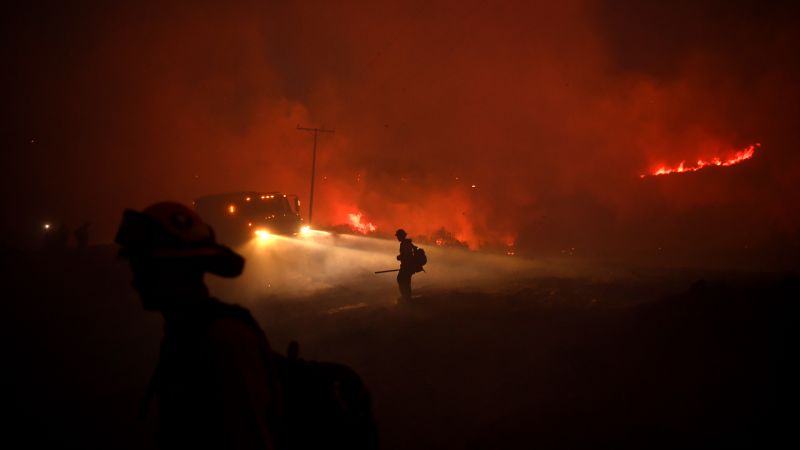
A gender reveal mishap sparked a deadly – In the early days of June 2026, a family gathering at El Dorado Ranch Park in Yucaipa, California, took a tragic turn when a pyrotechnic device used for a gender reveal celebration inadvertently ignited a wildfire. The event, intended to be a joyous occasion, involved a couple and their children who walked into the grassy area of the park, where wild vegetation turns golden in the fall. As part of the ceremony, a pyrotechnic device was activated, producing a burst of smoke in either blue or pink, depending on the baby’s gender. Surveillance footage captured the moment the device was lit, but the celebration quickly transformed into a disaster when flames began to spread uncontrollably.
Within minutes, the fire grew beyond the initial spark, consuming vast areas of land. Over the course of two months, the blaze raged through November 2020, scorching nearly 23,000 acres and leaving a path of destruction. One of the victims was firefighter Charles Morton, whose life was lost while battling the flames. The incident not only devastated the natural landscape but also disrupted the community of San Bernardino, where at least six agencies collaborated to contain and investigate the disaster.
Legal Accountability and the Role of Manufacturers
The couple responsible for the gender reveal event faced legal consequences in 2024. They were charged with criminal offenses related to the fire and the firefighter’s demise, according to prosecutors. Refugio Manuel Jimenez Jr., the father, pleaded guilty to involuntary manslaughter, while his wife, Angelina Renee Jimenez, admitted to three misdemeanors for recklessly causing fires. Jimenez Jr. received a two-year felony probation sentence, a year in county jail, and community service, while his wife was given one year of summary probation and additional community service.
However, the legal saga extended beyond the couple. In 2026, three companies linked to the pyrotechnic device settled a federal lawsuit filed by the government in 2023. These firms—Wholesale Fireworks Corp., its subsidiary American Fireworks Warehouse LLC, and Pink or Blue Gender Team Inc.—agreed to pay more than $4 million to cover the costs incurred by the U.S. Forest Service in extinguishing the fire and repairing federal land. The settlement marked a unique legal approach, as it was rare for manufacturers to be held directly accountable in this manner.
“Unlike utility companies, which are often sued for negligence or strict liability when they cause wildfires, businesses that sell products can argue they aren’t responsible for how third parties use them,” explained Adam Zimmerman, a professor at the University of Southern California Gould School of Law. “The key here is whether the manufacturers could have reasonably anticipated the risk of their device being misused in a way that leads to a wildfire.”
The Firefighter’s Tragic Death and the Couple’s Plea Deal
The incident left a lasting impact on the community, particularly on the family of firefighter Charles Morton, whose death during the fire was a focal point of the legal proceedings. San Bernardino County District Attorney Jason Anderson highlighted the severity of the event, noting that the fire’s devastation was not limited to the land—it affected the lives of many. “The El Dorado Fire had a tremendous impact on the community of San Bernardino,” Anderson stated when the couple was charged in July 2021. “Multiple agencies worked together to contain and investigate the blaze, which ultimately claimed the life of a dedicated public servant.”
The couple’s guilty pleas in 2024 signaled their acceptance of responsibility for the fire and its consequences. However, the case against the companies involved in the smoke bomb’s production and distribution was equally significant. Federal prosecutors argued that these firms failed to design, label, or warn consumers adequately about the fire risks associated with their product. Despite being aware of the potential dangers, the companies were accused of distributing the device into California, where it is illegal to sell certain pyrotechnics. This oversight contributed to the fire’s outbreak, and the settlement aimed to address that liability.
Settlement Agreements and Financial Implications
The settlement between the three companies and the federal government was a pivotal moment in the case. Wholesale Fireworks Corp. and its subsidiary agreed to pay $4 million, while Pink or Blue Gender Team Inc. contributed $50,000. These amounts were intended to compensate for the fire’s damages, including the costs of firefighting and the loss of federal land. The agreement underscored the growing scrutiny of product manufacturers in cases involving wildfire risks, even when the direct cause was a consumer’s action.
Legal experts emphasized that the case was unusual compared to the numerous lawsuits against utility companies for past wildfires. For example, Pacific Gas & Electric was held accountable for the 2018 Camp Fire, which burned over 180,000 acres and became the deadliest wildfire in California’s history. The utility company paid billions in damages due to its failure to maintain equipment, leading to sparks that ignited the blaze. In contrast, the recent case against the smoke bomb manufacturers focused on their role in enabling the fire through product design and labeling.
The Broader Implications for Product Liability
The El Dorado Fire case has sparked a broader discussion about product liability in the context of wildfires. While utility companies are typically held to strict standards due to their control over infrastructure, manufacturers face a different set of challenges. They can argue that the product’s use in hazardous conditions was the consumer’s responsibility, rather than a design flaw or oversight on their part.
Yet, the recent settlements suggest a shift in legal thinking. Prosecutors asserted that the smoke bombs should have been designed with stricter safety measures, especially given the likelihood of their use in dry, windy environments. The case also highlighted the importance of regulatory compliance, as the device was sold in California despite local laws prohibiting its distribution. This legal nuance has raised questions about how manufacturers can be held accountable when the fire’s origin lies in a combination of product characteristics and user behavior.
As the case concludes, it serves as a reminder of the far-reaching consequences of seemingly small actions. The gender reveal party, which was meant to celebrate a new life, instead became the catalyst for a wildfire that claimed a firefighter’s life and reshaped the legal landscape for product liability. While the couple and the companies have taken their share of responsibility, the incident underscores the complex interplay between human error, product design, and environmental risk. The outcome may influence future cases where similar events occur, setting a precedent for how accountability is assigned in cases that blur the lines between individual and corporate fault.
