
Bodies of two Italian divers recovered from sea cave in Maldives
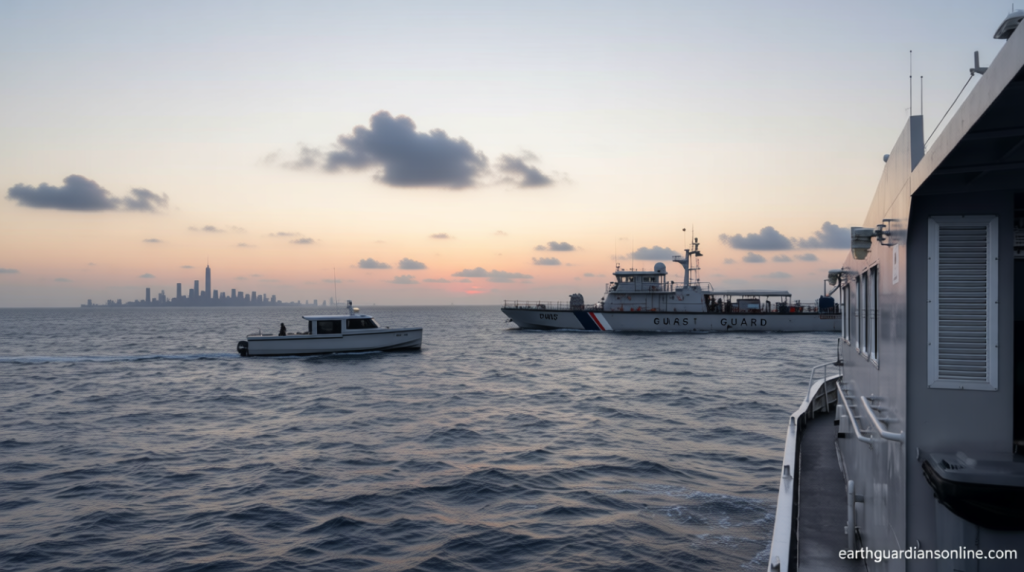
Bodies of Two Italian Divers Recovered from Sea Cave in Maldives
Bodies of two Italian divers recovered – Two of the four remaining Italians who perished in an underwater cave in the Maldives were retrieved by divers on Tuesday, according to a government official. The recovery came as a continuation of a multinational operation to locate and bring back the bodies of the other two individuals. Italy’s Foreign Ministry confirmed the retrieval of Monica Montefalcone, an ecology associate professor at the University of Genoa, and Federico Gualtieri, a marine biologist. Their remains were found in the third chamber of the cave and are being transported to a mortuary in the capital, Malé, by police.
“Two bodies—specifically one male and one female—were recovered today from the third chamber of the sea cave,” said Mohamed Hussain Shareef, the Maldives’ chief spokesperson for the government. “The next phase of the operation will focus on retrieving the final two remains.”
The incident involving five Italians occurred last week when they explored the Vaavu Atoll caves, which are known for their deep and complex terrain. The group, which included Montefalcone, Gualtieri, Gianluca Benedetti, Giorgia Sommacal, and Muriel Oddenino, faced severe challenges as they delved into the underwater environment. Efforts to locate their bodies were temporarily halted after a military diver, Sgt. Mohamed Mahudhee, died during a second recovery mission on Saturday. His death, attributed to decompression sickness, highlighted the perilous nature of the operation, which took place at depths exceeding 70 meters (230 feet) below the surface.
The Vaavu Atoll cave system, stretching over 200 meters in length, presents an extreme environment for divers. At its deepest point, the cave is as deep as a 20-story building, requiring specialized equipment and training to navigate. Authorities noted that the legal depth for recreational diving in the Maldives is 30 meters (100 feet), yet the search teams had to descend into waters far beyond that limit to find the missing divers. This unprecedented depth and the cave’s labyrinthine structure made the recovery operation particularly demanding, with divers facing risks such as limited visibility, strong currents, and the physical strain of prolonged submersion.
“A global scuba safety group, the Divers Alert Network (DAN), deployed specialists to assist in the retrieval process,” said a Maldivian state media representative. “These divers, from Finland, had prior experience in similar missions worldwide, ensuring a coordinated and efficient search.”
The initial search for the missing Italians resumed on Monday after a brief pause. Divers discovered the remains of the four individuals in the deepest section of the cave, though the retrieval of all five required further efforts. The recovery of Montefalcone and Gualtieri was part of a phased plan, with the Italian government coordinating the operation alongside local authorities. The bodies of Gianluca Benedetti, the diving instructor, and the other two divers—Sommacal and Oddenino—remain to be found, according to officials.
The tragedy underscores the dangers of deep-sea exploration, even for experienced divers. While the Italian team had been trained for such missions, the combination of the cave’s depth and the intense conditions may have contributed to the fatalities. Decompression sickness, a condition caused by the body’s inability to expel nitrogen gas properly during ascent, was cited as the likely cause of Sgt. Mahudhee’s death. This diagnosis has raised questions about the safety protocols followed during the expedition and the challenges of operating in such extreme environments.
Italy’s Foreign Ministry spokesperson, speaking to CNN, confirmed that the bodies of Montefalcone and Gualtieri had been successfully recovered. The spokesperson also emphasized the emotional toll on the families, who are now awaiting the retrieval of their loved ones’ remains. “The loss of these individuals is a profound tragedy, and we are working tirelessly to ensure their final journey is completed with dignity,” the spokesperson added.
The cave’s environment played a critical role in the unfolding disaster. Its deep, narrow passages and the presence of sediment and debris made visibility difficult, while the pressure at such depths could have led to equipment malfunctions or unexpected challenges. The Italian divers, who were exploring the cave as part of a scientific mission, were missing early Thursday afternoon. Their disappearance sparked immediate action, with search teams mobilizing to locate them in the waters of the Vaavu Atoll.
“Decompression sickness is a significant risk when diving beyond 30 meters, especially in confined spaces where breathing is restricted,” explained the spokesperson. “The team’s efforts to adapt to these conditions were commendable, but the outcome was tragically severe.”
As the search progresses, the remaining two bodies are expected to be recovered in the coming days. The Maldives National Defense Force has been working closely with international divers to ensure the operation remains effective despite the risks. The cave’s depths and the physical demands on the divers have tested their endurance, with multiple teams required to work in shifts. The Italian government’s decision to bring in specialized Finnish divers reflects the complexity of the task and the need for expertise in such hazardous conditions.
While the recovery of two bodies is a significant milestone, the search for the remaining remains continues. The emotional and logistical challenges of the operation have been immense, with families and officials expressing hope for the successful retrieval of all five victims. The incident has also prompted a review of safety measures for deep-sea diving expeditions, particularly in regions with unpredictable underwater conditions. The Maldivian authorities have reiterated their commitment to the search, emphasizing the importance of completing the operation to provide closure to the families.
Officials have stated that a sixth diver opted not to enter the cave, adding another layer of complexity to the mission. The combination of human error, environmental factors, and the physical toll of deep diving has been identified as key contributors to the tragedy. As the search teams continue their efforts, the focus remains on retrieving the final two bodies and ensuring that the victims’ stories are fully documented. The event has become a reminder of the risks involved in underwater exploration and the resilience of the teams working to recover the lost divers.
CNN’s Laura Sharman contributed to this report. The story has been updated to include additional details from the ongoing recovery efforts and the analysis of the incident’s causes. The Maldives’ government has praised the collaboration with international teams, acknowledging their role in the successful retrieval of the bodies. Meanwhile, the families of the deceased continue to await news, holding onto hope that the remaining remains will be found soon. This tragedy has deepened the connection between the Maldives and its international partners, as they work together to honor the victims and prevent future incidents.
