
From ‘ghost sharks’ to ‘death ball’ sponges: Scientists find more than 1,100 wild and unusual ocean species
From ‘ghost sharks’ to ‘death ball’ sponges: Scientists find more than 1,100 wild and unusual ocean species
From ghost sharks to death ball – Deep in the ocean, researchers have uncovered a remarkable array of life, including a worm that dwells within a structure resembling a “glass castle,” a mysterious “ghost shark” chimaera, and a carnivorous “death ball” sponge. These three examples represent just a fraction of the 1,121 previously unknown species identified in the world’s oceans over the past year, according to the Ocean Census. This international initiative, spearheaded by Japan’s Nippon Foundation and Nekton, a UK-based ocean exploration institute, has been working for three years to catalog marine life, and its latest findings have significantly expanded the known biodiversity of the deep sea.
Marine Biodiversity Surpasses Expectations
The Ocean Census, a coalition of over 1,000 scientists from 85 countries, has achieved a milestone in oceanic discovery, announcing a 54% surge in species identification compared to the previous year. This rapid pace of identification underscores the vast, uncharted depths of the marine world and the urgent need to document its inhabitants before they vanish due to environmental pressures. The deep sea, often considered one of the most enigmatic ecosystems on Earth, continues to surprise researchers with its capacity for harboring life in extreme conditions, challenging earlier assumptions about the limits of survival in the abyss.
Uncovering Life in the Depths
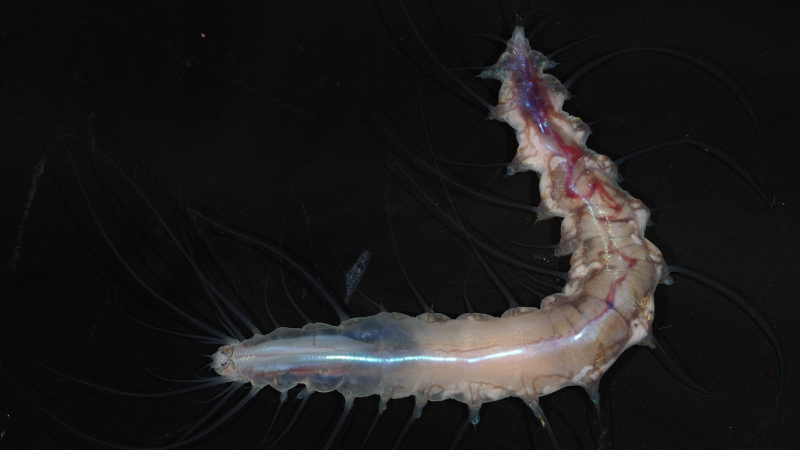
Among the newly discovered species is a bristle polychaete worm that resides within the hollow skeleton of a glass sponge, an organism known for its translucent, mesh-like structure. This unique habitat, dubbed a “glass castle” by researchers, provides the worm with shelter and a nutrient-rich environment. In return, the worm performs a vital role, cleaning the sponge’s surface of debris that could otherwise harm it. This symbiotic relationship highlights the intricate interdependencies that sustain deep-sea ecosystems.
Further discoveries were made off the coast of Japan, where a “ghost shark” chimaera was identified at depths of approximately 2,700 feet. These ancient fish, related to sharks and rays, have diverged from their closest relatives nearly 400 million years ago. Their existence in such depths challenges the notion that life is sparse in the ocean’s most remote regions. Meanwhile, in the waters surrounding Timor-Leste, a ribbon worm with striking orange stripes was found. The worm’s vibrant coloration signals its potent chemical defenses, a trait that has sparked interest in its potential applications for treating neurological disorders like Alzheimer’s and schizophrenia.
Climate Change and Human Threats
As the ocean continues to reveal its secrets, it also faces mounting threats from climate change and human activity. Rising sea temperatures are altering marine habitats, while pollution from industries and agricultural runoff is degrading water quality. Additionally, the push to exploit the ocean’s mineral resources, now closer to becoming a reality, poses a significant risk to deep-sea ecosystems. Scientists emphasize that these challenges are accelerating the rate at which species disappear, creating a race against time to document and protect them.
Michelle Taylor, head of science at Ocean Census, expressed concern over the fragility of marine life in the face of these threats. “With many species at risk of disappearing before they are even documented, we are in a race against time to understand and protect ocean life,” she stated. The expeditions conducted by Ocean Census over the past year have been pivotal in this effort, with teams venturing into some of the least explored regions of the world’s oceans. These journeys, often taking place in challenging environments, have led to the identification of species that were previously thought to be nonexistent.
Streamlining the Discovery Process
Traditionally, the time between the initial discovery of a species and its formal description in scientific literature averages 13.5 years. To address this delay, Ocean Census has introduced a new classification: “discovered.” This status allows scientists to immediately record species in an open-access database, enabling quicker dissemination of findings to the broader scientific community and policymakers. “This makes the species immediately visible to the scientific community and policymakers,” said a spokesperson for Ocean Census, explaining the initiative’s goal to accelerate the recognition of new marine life.
The expeditions, which spanned multiple locations, have yielded a wealth of data that underscores the ocean’s biodiversity. For instance, the North Trench of the South Sandwich Islands, a remote area in the south Atlantic, was home to a “death ball” sponge. This sponge, found at depths nearing 12,000 feet, is equipped with microscopic velcro-like hooks that trap floating crustaceans. Once ensnared, the sponge envelops and consumes its prey, showcasing the adaptability of deep-sea organisms. Each of these discoveries contributes to a growing body of evidence that the ocean is a dynamic and complex environment, teeming with life that remains poorly understood.
From Discovery to Recognition
While the expeditions have uncovered numerous species, the process of confirming their novelty is meticulous. Tammy Horton, a research scientist at the UK’s National Oceanography Centre, noted that not all newly identified species are entirely new to science. “Sometimes a species believed to be new turns out not to be after a detailed examination,” she explained. However, she emphasized that such occurrences are relatively rare, as the formal description process is essential for validating scientific findings.
“The formal description process carries out the actual work to confirm novelty and provides the ‘passport’ for that new species – its official record,” Horton told CNN. Without this step, a species lacks a formal name and, consequently, cannot be recognized by policymakers for protection. “Unnamed species cannot be protected,” she added, highlighting the importance of thorough documentation in safeguarding marine ecosystems.
Catalyzing Conservation Efforts
As the Ocean Census continues its mission, it aims to use these discoveries to drive global action for ocean conservation. The organization underscores the immense ecological, scientific, and economic value of marine life, advocating for increased investment in exploration and documentation. “We spend billions searching for new species,” the spokesperson noted, “but the urgency to act is only growing with each year’s findings.”
The latest report from Ocean Census not only expands our knowledge of marine biodiversity but also serves as a reminder of the ocean’s untapped potential. From the ghostly chimaera to the deadly sponge, these species exemplify the diversity of life in the deep sea. As scientists race to catalog the unknown, the findings offer hope for future conservation strategies and underscore the importance of continued research in protecting the ocean’s fragile ecosystems. With every new discovery, the need to preserve these species becomes more pressing, ensuring that the ocean’s hidden wonders are not lost to time and human impact.
