
China’s worst coal mining blast in over a decade kills 90
China’s Worst Coal Mining Blast in Over a Decade Claims 90 Lives
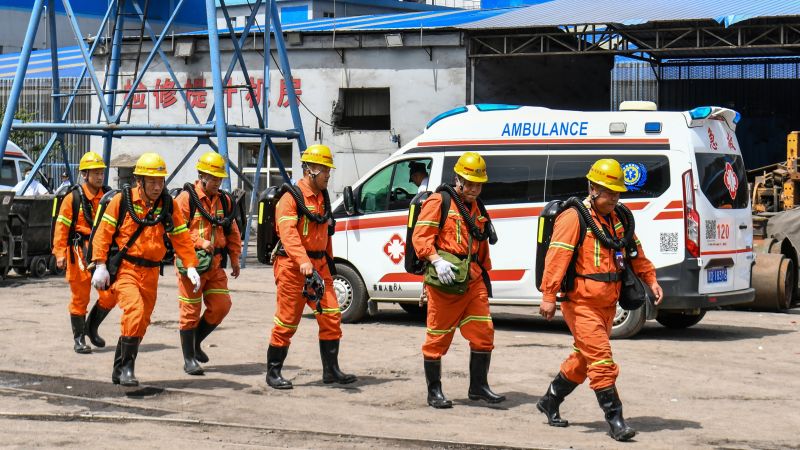
China s worst coal mining blast – A catastrophic gas explosion at a coal mine in northern China has resulted in the deaths of at least 90 individuals, marking the nation’s most severe mining incident in more than a decade. State-run media confirmed the tragedy, which occurred at the Liushenyu coal mine in Shanxi province, and highlighted the ongoing search for survivors. Nearly a day after the blast, rescue teams continued their efforts, descending into the site to locate trapped workers. However, the operation has faced complications due to discrepancies between the underground map shared by the mine’s operators and the actual conditions within the facility, as reported by Beijing News.
Challenges in the Rescue Efforts
The mine’s management provided a map to rescue personnel, but it did not align with the real-time layout of the tunnels. This mismatch has forced emergency responders to conduct a broad search rather than focusing on specific areas. According to the same report, some of the workers underground were equipped with personal GPS devices to aid navigation, yet several failed to retrieve their trackers during the explosion. This has further complicated efforts to pinpoint locations and retrieve those still missing.
The incident occurred on Friday evening, when more than 250 workers were present underground. By Saturday morning, at least 201 had been evacuated, and by the afternoon, 123 were receiving medical treatment. The exact number of remaining workers unaccounted for remains uncertain. Meanwhile, Chinese leader Xi Jinping emphasized the urgency of the situation, calling for an “all-out rescue” of the missing and demanding a “thorough investigation” and “accountability” for the disaster, as per Xinhua’s coverage.
Government Crackdown on Safety Violations
Authorities are prioritizing a crackdown on illegal mining practices, including falsified safety reports and concealed operations, following the incident. CCTV noted that such measures aim to address systemic issues contributing to mining accidents. The mine in question, operated by Shanxi Tongzhou Group Liushenyu Coal Industry, was contacted by CNN, but the person on the phone claimed unawareness of the situation and ended the call.
State media reported that the company’s responsible party had been taken “under control measures according to law,” a term often indicating detention. This step underscores the government’s commitment to holding entities accountable for safety lapses. The Liushenyu coal mine, located in Qinyuan county, had previously faced concerns over carbon monoxide levels exceeding safety limits, according to Xinhua. These levels, which could be lethal in confined spaces, were cited as a contributing factor to the disaster.
Testimonies from Survivors
“I realized something was wrong when I saw a burst of smoke and smelled sulfur, just like firecrackers,” said Wang Yong, an injured miner. “I told people to run, but while fleeing, I witnessed others being choked and knocked down by the smoke. Then I fainted too.”
Wang recounted how he regained consciousness after lying motionless for about an hour before helping to rouse nearby workers and exiting the mine together. His account provides a firsthand glimpse into the chaos of the event. Rescue teams have been working tirelessly to locate any remaining individuals, but the time elapsed since the explosion has increased the risk of further casualties.
Historical Context of Mining Disasters
This incident follows a series of devastating coal mining accidents in China. The deadliest among these was a 2009 explosion at a state-run mine in Heilongjiang province, which claimed 108 lives. In the early 2000s, the country experienced multiple disasters with over 100 fatalities each, prompting significant reforms in safety protocols and industry oversight. Despite these improvements, tragedies persist, often leading to heightened scrutiny from the central government.
For instance, in 2023, a mine collapse in Inner Mongolia resulted in 53 deaths, underscoring the ongoing challenges in the sector. The following year, Beijing introduced new regulations to enhance accountability, placing greater responsibility on mine operators to conduct routine inspections and on local officials to ensure stricter supervision. These measures reflect an effort to prevent future disasters, though their effectiveness is yet to be fully tested.
Coal’s Role in China’s Energy Strategy
Coal remains a cornerstone of China’s energy infrastructure, accounting for over half of the world’s second-largest economy’s energy consumption. Its importance extends beyond mere supply, playing a vital role in maintaining energy security. Despite Beijing’s push toward a greener transition, the country has continued to expand coal-related infrastructure, including facilities designed to stabilize the grid for renewable sources like wind and solar power.
Shanxi province, where the recent blast took place, is one of China’s leading coal producers, contributing over a quarter of the nation’s total output. The region’s reliance on coal mining highlights its economic significance, even as the industry faces increasing pressure to adopt safer and more sustainable practices. The latest disaster has reignited debates about the balance between energy production and safety standards, with calls for more rigorous monitoring and stricter enforcement.
Experts suggest that while regulatory improvements have reduced the frequency of major accidents, the complexity of coal mining operations and the scale of the industry mean that risks remain. The incident at Liushenyu has drawn attention to the need for continuous vigilance, particularly in older mines where safety protocols may be less stringent. As the investigation into the blast continues, the focus will likely shift to identifying root causes and implementing preventive measures to avoid similar tragedies in the future.
