
Hamas says it will dissolve Gaza government as US-brokered ceasefire plan stalls
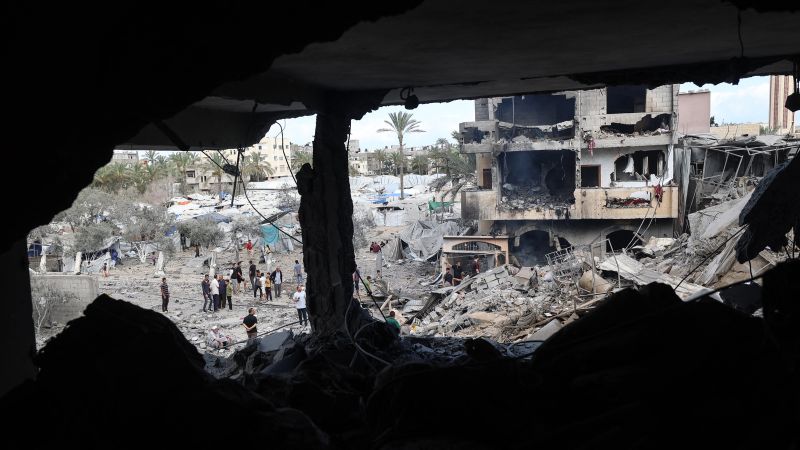
Hamas to Dissolve Gaza Government as Ceasefire Plan Stalls
Hamas says it will dissolve Gaza – Hamas has announced plans to dissolve the Gaza government, signaling a potential shift in the power dynamics of the region. This move, emphasized by the group’s Government Media Office, comes as the US-brokered ceasefire proposal faces delays. Analysts suggest that Hamas aims to realign the agreement’s focus toward Israel, complicating efforts to achieve a lasting peace. The decision underscores the ongoing tensions in the conflict, with key provisions of the ceasefire yet to materialize despite prolonged negotiations.
Strategic Move to Transition Power
According to Ismail al-Thwabta, head of Hamas’ Government Media Office, the group is prepared to hand over administrative control to a Palestinian technocratic committee. This committee, central to the ceasefire agreement, is expected to assume leadership in Gaza. However, Hamas has not included disarmament as part of its proposal, a critical element for the second phase of the deal. The group’s stance has raised questions about its commitment to the agreement, with experts noting that the decision may be a calculated maneuver.
“We call on all concerned and relevant parties to immediately accelerate the steps for the National Committee for the Administration of Gaza (NCAG) to enter quickly and assume its national and administrative duties, in order to strengthen the steadfastness of our noble Palestinian people and heal their wounds,” al-Thwabta stated during a press conference at Al-Aqsa Martyr’s Hospital in Gaza City.
Israel’s Response and Ceasefire Challenges
While Hamas’ dissolution of Gaza’s government holds symbolic significance, its practical impact remains limited. The group and its security forces continue to hold substantial control over the territory, even as they prepare to cede power. Analysts argue that the move is intended to pressure Israel into advancing the ceasefire plan, with President Donald Trump actively encouraging Prime Minister Benjamin Netanyahu to accept the terms.
The Board of Peace, overseeing the ceasefire, has responded cautiously. In a statement, the board stressed that “actions, not promises,” would be prioritized, urging Hamas to disband its armed forces. The core principle of the agreement remains one authority, one law, and one weapon. Yet, the committee’s entry into Gaza remains uncertain, with no clear timeline outlined for the transition. This ambiguity has kept the ceasefire in a state of flux, frustrating stakeholders seeking resolution.
Experts Analyze Hamas’ Intentions
Michael Milshtein, director of the Palestinian Studies Forum at Tel Aviv University, noted that Hamas’ declaration was not entirely unexpected. Instead, he framed it as a strategic attempt to reshape the ceasefire negotiations. “Hamas has clearly stated that the move was intended to pave the way for a breakthrough,” Milshtein told CNN. He suggested the group’s mediators are working to reframe the deal, positioning it as a step toward international recognition of a Palestinian administration.
Meanwhile, Muhammad Shehada, a Gaza expert at the European Council on Foreign Relations, described the announcement as a tactical maneuver. “The Israelis are saying that Hamas is refusing to leave government and particularly security, so what they tried to emphasize in this statement is that they’re willing to give up everything vis-à-vis governance from A to Z,” Shehada explained. He praised the committee as a “savvy move” but warned that the initiative might arrive too late to reverse the situation.
Implementing the Ceasefire Faces Uncertainty
The NCAG, initially envisioned in October as part of the US-brokered ceasefire, has yet to establish itself in Gaza. Despite readiness to take over, the committee remains in Cairo, unable to exercise authority within the enclave. Al-Thwabta claimed “full reassurance” that administrative and legal preparations were complete, allowing government employees to continue under the new structure. However, the absence of a concrete timeline for the transition has fueled concerns about the feasibility of the plan.
Recent meetings in Cyprus have been labeled “highly productive” by the Board of Peace, yet tangible progress remains elusive. The board stated it is “preparing for the NCAG to take over Gaza once the right conditions are met,” though those conditions remain undefined. This lack of clarity has left the ceasefire plan in a state of uncertainty, with Hamas’ dissolution of Gaza’s government potentially serving as a catalyst for further negotiations or a new round of hostilities.
