Illegal excavation reveals grand Roman villa with elaborate mosaics

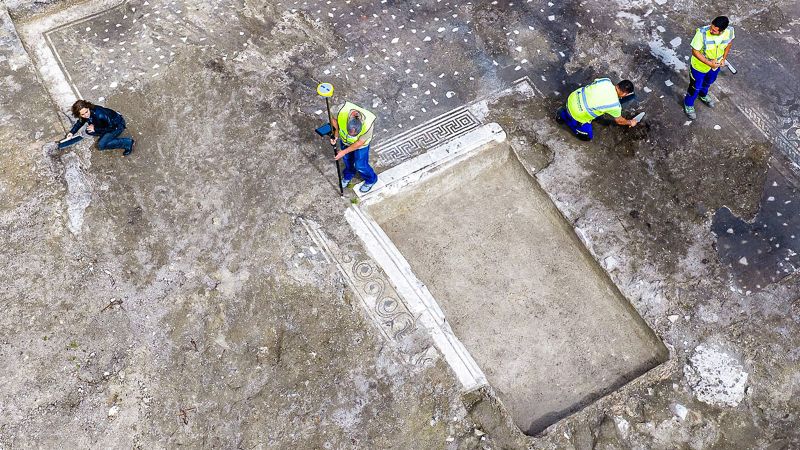
Unearthing a Hidden Gem: Roman Villa Reveals Artistic Masterpieces
Illegal excavation reveals grand Roman villa – During a covert excavation on government land near Rome, authorities uncovered a remarkable Roman villa adorned with intricate mosaics. This extraordinary find emerged after neighbors noticed suspicious activity at the site and reported it to the police in February. The villa, located in the village of Castel di Guido—approximately 12 miles from the Italian capital—was discovered during an operation that halted the illegal digging, preserving its treasures for further study.
Ancient Lorium: A Hub of Imperial Influence
Historians believe the site once served as part of Lorium, a hamlet of grand residential palaces during the height of the Roman Empire, spanning from 27 BC to the fifth century AD. The villa, now under investigation, is thought to have been a significant property in this region, frequented by notable emperors such as Hadrian, Antoninus Pius, and Marcus Aurelius. The Ministry of Culture highlighted this connection in a recent press release, emphasizing the villa’s historical importance.
When the Carabinieri military police arrived at the site, they quickly identified signs of illicit excavation. The trespassers had used tools like backhoes to dig into a concealed cavern beneath the property, which was surrounded by fences they had cut through. The operation revealed small mounds of disturbed earth and evidence of nighttime work, prompting authorities to act swiftly. Despite the perpetrators fleeing, the findings were nothing short of astonishing: a previously unknown villa with remarkably preserved artifacts.
Preserving the Past: Artifacts and Architectural Wonders
The excavation uncovered a grand entrance hall featuring an atrium and a sunken basin, known as an impluvium, framed by a mosaic floor. The design of the mosaic includes botanical motifs and geometric patterns in black and white, showcasing the sophistication of Roman craftsmanship. Among the discoveries was the remains of a statue believed to depict Silvanus, the Roman god of the countryside. The figure is depicted holding a small animal in one hand and a basket decorated with birds in the other, offering a glimpse into the religious and cultural practices of the era.
According to Alessia Contino, an archaeologist with the Special Superintendency of Rome, the villa’s decorations reflect its high status. “The exceptional quality of the artistic elements confirms that this residence was owned by influential figures of the Roman aristocracy, deeply connected to the Imperial court,” she stated during the unveiling of the site. The Ministry of Culture noted that while some parts of the structure were mildly damaged by the illegal dig, the overall condition of the artifacts remains impressive, with many still intact.
A Clandestine Operation: The Role of the Carabinieri
The Carabinieri Art Police, a specialized unit focused on safeguarding Italy’s historical heritage, played a critical role in uncovering the illicit activity. A spokesperson revealed that the operation was flagged due to subtle clues, such as unmarked excavation sites and tools used for nighttime digging. These signs led to the arrest of the group responsible, though they managed to escape before authorities could apprehend them.
“In just a few days, officials from the Ministry of Culture, in partnership with the Carabinieri, dismantled this clandestine project,” said Italian Minister of Culture Alessandro Giuli in a Monday statement. “The operation not only secured the site but also brought to light the remnants of an Imperial-era villa, a rare example of the luxury and architectural ingenuity found in the Roman countryside.”
Illegal Excavations: A Persistent Threat
For years, tomb raiders have targeted archaeological sites across Italy, looting them for profit and selling stolen artifacts on the black market. This practice has led to the disappearance of thousands of priceless items, many of which have found their way into global museums. Some of these artifacts, however, have been returned to Italy in recent decades, including several from American institutions.
“These illicit excavations not only threaten the integrity of historical sites but also deprive future generations of their cultural heritage,” Giuli added. The Ministry of Culture is now working to document the villa’s findings, with plans to open the site to the public for the first time on Saturday. Visitors will be invited by appointment, marking a significant step in sharing the discovery with the wider community.
Further excavations are expected to continue, revealing more about the villa’s layout and its role in the Imperial era. The site’s location near the residences of the Antonine dynasty suggests it may have been a hub of political and social activity. Archaeologists are particularly excited about the mosaics, which provide insight into the daily lives and artistic tastes of Roman elites. “The mosaics and marble work found here are of exceptional quality, indicating the villa was a place of great significance,” Contino said.
As the investigation progresses, the Ministry of Culture aims to identify any artifacts that may have been removed during the illegal dig. This will help determine the extent of the loss and guide efforts to recover stolen pieces. The case also underscores the importance of community vigilance in protecting historical sites. Neighbors’ reports were instrumental in stopping the excavation, highlighting how public awareness can aid in preserving the past.
The discovery has reignited interest in Roman history, with experts praising the villa’s preservation. Its condition offers a rare opportunity to study the architectural and artistic achievements of the Imperial period. As the site becomes more accessible to the public, it is hoped that this villa will serve as a bridge between ancient Rome and modern audiences, showcasing the enduring legacy of a civilization that shaped the world.
A Call for Protection: Securing Italy’s Heritage
Authorities are now implementing stricter measures to prevent future illicit excavations. The Carabinieri Art Police is expanding its efforts, working closely with local communities and museums to monitor high-risk areas. “This discovery is a reminder of the value of our historical treasures and the need to protect them from unauthorized hands,” Giuli emphasized.
With the villa’s findings now under study, researchers are optimistic about uncovering new details about its origins and purpose. The site’s potential to shed light on the lives of Roman aristocrats and their interactions with the Imperial court is immense. As the excavation continues, it is expected to provide further insights into the cultural and economic dynamics of the ancient world, ensuring that the villa’s story is told for generations to come.