
Japanese city closes nearly 100 schools after bear sightings as post-hibernation attacks rise
Japanese City Closes Nearly 100 Schools Amid Rising Bear Attacks
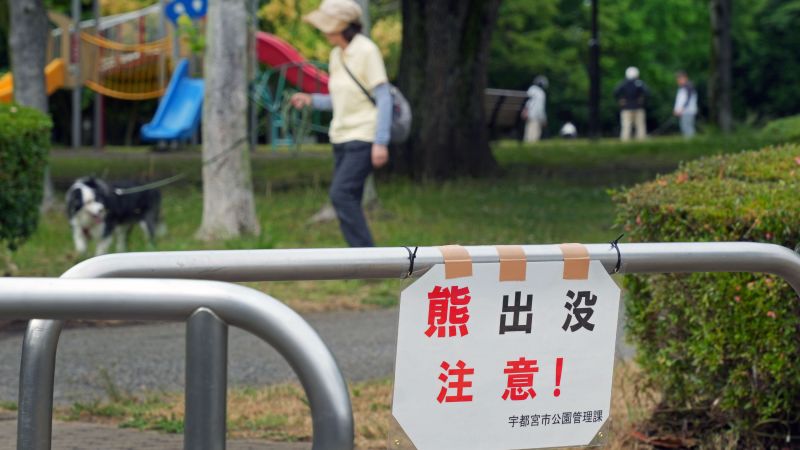
Japanese city closes nearly 100 schools – Utsunomiya City, a bustling urban center north of Tokyo, has taken drastic measures to ensure public safety following a string of bear sightings this week. Nearly 100 schools were shut down as authorities intensified their search for the elusive animals, with the situation escalating as bears return to active hunting after hibernation. The city’s Wildlife Management Group reported the first bear encounter of the season on Saturday, prompting heightened alerts and a series of precautionary actions by local officials.
Days after the initial sighting, the city’s junior high schools became focal points of concern. A bear was spotted roaming the grounds of one such institution, and security footage captured another in a downtown shopping district. These incidents, which occurred within a span of just two days, have raised alarms across the region. As of Monday, all public elementary and junior high schools were closed, with officials uncertain about the timeline for their reopening. The decision comes amid growing fears that bears might venture into populated areas, complicating daily life for residents.
Police and members of the local hunting association have been deployed to patrol the city, aiming to locate and capture the bears. The exact number of animals involved remains unclear, with some speculation that multiple bears could be at large. “We are treating this as an urgent priority,” said a city official, emphasizing the need for vigilance as the situation unfolds. Residents have been advised to secure their homes by locking doors and windows, while also avoiding leaving trash out overnight to minimize attractants.
Bears Return as a National Threat
The recent surge in bear-related incidents has brought Japan’s longstanding battle with the animals into sharp focus. Last fall, the country saw a record number of attacks, transforming the issue into a national emergency. Military personnel were even sent to affected regions to assist in containment efforts, while international governments issued travel advisories for certain areas. This year’s situation, however, has taken an unexpected turn, with bears increasingly targeting urban environments.
Viral videos of bears rummaging through supermarket aisles and wandering school grounds have captivated—and terrified—local communities. These incidents, combined with the recent closures, highlight the scale of the problem. According to NHK, a public broadcaster, at least 20 people were attacked by bears in nine different prefectures between April and June 2, with three fatalities reported. The most recent attack occurred on June 2 at a steel factory in Fukushima, 170 kilometers from Utsunomiya, injuring four individuals.
Experts suggest that the current wave of attacks is driven by a combination of environmental and behavioral factors. The bear population has surged due to reduced hunting pressure, while climate change has disrupted traditional food sources, pushing the animals to seek sustenance in human-populated zones. Additionally, the decline in rural populations has created easier access to urban areas, allowing bears to roam more freely. As summer sets in, the bears’ increased activity has forced authorities to rethink their strategies for coexistence.
Community Responses and Preventive Measures
Residents in Utsunomiya and surrounding areas have adapted to the new reality, implementing safety protocols in their homes and workplaces. Community leaders have encouraged people to store food securely and keep lights on during nighttime hours to deter bears from approaching. Schools have also taken steps to secure their premises, including deploying security personnel and installing barriers to prevent bears from entering classrooms.
Local wildlife officials are working closely with the city’s education board to assess the risk of further closures. They have also launched an outreach campaign to educate the public on how to respond if they encounter a bear. “It’s important to remain calm and avoid sudden movements,” advised a wildlife expert. “If a bear approaches, slowly back away and make yourself appear larger.” These tips are being distributed through posters, social media, and community meetings.
Meanwhile, the city’s hunting association has been actively involved in tracking and capturing bears. Their efforts include setting up traps in high-risk zones and organizing night patrols to monitor bear movements. A spokesperson for the group noted that the animals’ behavior has become more aggressive this season, possibly due to competition for resources. “We’re seeing more instances of bears attacking without warning,” they said. “This means we need to be prepared for anything.”
Broader Implications for Japan’s Wildlife Management
The crisis in Utsunomiya is part of a larger trend affecting Japan’s wildlife management strategies. With bears venturing closer to cities than ever before, officials are reconsidering long-term approaches to mitigate human-bear conflicts. Some experts argue that increased urbanization and habitat loss have forced bears to adapt their hunting patterns, leading to more frequent encounters with people.
As the summer season progresses, the city is bracing for more activity. The Wildlife Management Group has announced plans to deploy additional resources, including drones and thermal imaging cameras, to locate the bears more efficiently. These technologies will help track the animals in dense urban areas where traditional methods may fall short. The group also plans to collaborate with neighboring cities to create a coordinated response, ensuring that no area is left vulnerable.
The situation has sparked a broader conversation about the balance between development and conservation in Japan. While the government has long prioritized economic growth, the recent attacks have underscored the need for environmental policies that address the bears’ changing behavior. “We must find ways to protect both people and wildlife,” stated a policy analyst. “This isn’t just a local issue—it’s a national challenge that requires long-term solutions.”
Residents, though initially anxious, are showing resilience. Local businesses have taken steps to secure their premises, and schools have organized emergency drills to prepare for bear encounters. The city’s decision to close nearly 100 schools underscores the severity of the threat, but it also highlights the community’s determination to stay safe. As the sun sets over Utsunomiya, the city remains on high alert, with officials working tirelessly to ensure that the bears are contained before they can cause further disruption.
