
Why China’s Xi wants a ‘brighter’ future with North Korea
Why China’s Xi Wants a ‘Brighter’ Future with North Korea
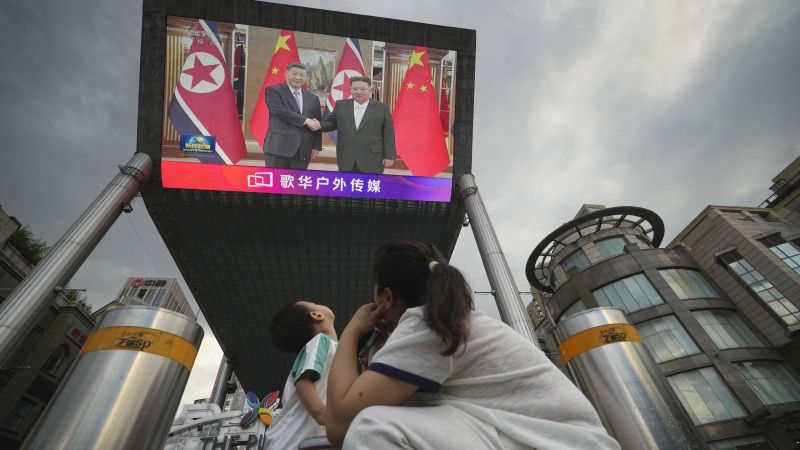
Why China s Xi wants a brighter – Xi Jinping’s recent trip to North Korea, his first in seven years, marks a pivotal moment in bilateral relations. The two-day state visit to Pyongyang was not merely a gesture of goodwill but a strategic opportunity for the Chinese leader to outline a new direction for the partnership between his nation and its closest ally. Unlike previous engagements, this visit emphasized concrete collaboration over abstract pledges, reflecting a shift in Beijing’s approach to its neighbor. During discussions with North Korean leader Kim Jong Un, Xi highlighted the potential for shared prosperity, framing the alliance as a cornerstone for regional stability amid shifting global dynamics.
A Strategic Shift in Diplomatic Tone
Xi’s remarks during the visit underscored a departure from past rhetoric. While previous meetings, such as the 2019 summit at the Kumsusan Guesthouse, had focused on North Korea’s nuclear ambitions, this time the Chinese leader omitted the phrase “denuclearization of the Korean Peninsula.” Instead, he called for expanded cooperation in trade, agriculture, construction, science, and healthcare, alongside enhanced strategic coordination across military, diplomatic, and law enforcement sectors. This emphasis on practical collaboration suggests Beijing is prioritizing economic and security ties over ideological debates, a move that could benefit Kim Jong Un’s regime.
“Amid global transformations that have reshaped the international order, both sides should open up a brighter prospect for the socialist cause of the two countries as well as regional peace and development,” Xi told Kim during their Monday talks.
Analysts note that this approach contrasts with earlier statements. In 2019, Beijing had framed denuclearization as a shared goal, aligning with U.S. efforts to curb North Korea’s nuclear program. However, the absence of that phrase this time signals a more pragmatic stance. North Korea has continued to expand its nuclear capabilities despite UN sanctions, and in 2023, it even enshrined its nuclear policy in its constitution. By sidelining denuclearization, China may be signaling that it sees the issue as less urgent than fostering mutual economic and security interests.
Geopolitical Rivalries and Global Influence
Xi’s visit comes at a critical juncture for China’s international standing. The country’s influence is growing as it navigates a complex web of global alliances, with the U.S. and Russia locked in strategic competition. Pyongyang’s recent strengthening of ties with Moscow has further positioned North Korea as a key player in this geopolitical tug-of-war. By deepening its relationship with a regime that resists Western pressure, China aims to reinforce its role as a leader in the global south and a counterweight to U.S. dominance.
The visit coincided with a period of heightened global attention on China. This year, a series of high-profile state visits to Beijing included leaders from around the world, such as the U.S. and Russian presidents, who stayed for extended periods. Xi’s ability to host both nations in a single week demonstrated his diplomatic versatility and China’s growing prominence in international affairs. Meanwhile, Trump’s recent military interventions in Venezuela and economic campaigns against Iran have bolstered Beijing’s confidence in promoting its vision of a multipolar world.
“China is the responsible global power with the right vision for how the world should be run,” a statement attributed to Beijing’s messaging in recent months.
North Korea’s alignment with Moscow and its continued nuclear advancements have created new opportunities for China. By strengthening its ties with Pyongyang, Beijing can leverage its strategic position to counter Western influence. “This allows China to demonstrate its ability to engage a diverse range of leaders,” said Lim Eul-chul, a professor at Kyungnam University in South Korea. “From the president of the world’s most powerful democracy to an autocrat with a sanctions-defying weapons regime, Xi is positioning China as a mediator and architect of global partnerships.”
The Role of Economic and Security Blocs
Experts suggest that Xi’s focus on expanded exchanges may be part of a broader strategy to integrate North Korea into a China-led economic and security framework. By deepening diplomatic and military ties, Beijing aims to solidify Pyongyang’s role as a strategic asset within this bloc. “This is likely a signal that Beijing wants North Korea to play a more active part in its vision for regional order,” noted Leif-Eric Easley, a professor at Ewha University in Seoul. The emphasis on collaboration could also serve to offset U.S. pressure on North Korea, offering Beijing a foothold in the region’s power dynamics.
China’s economic relationship with North Korea remains vital. As Pyongyang’s principal trade partner and financial backer, Beijing has long provided the regime with essential resources. This visit, however, may be a step toward formalizing that partnership. Kim Jong Un praised the trip, calling it “the highest demonstration of the importance China attaches to North Korea–China friendship,” according to the North Korean state media outlet Rodong Sinmun. Such rhetoric reinforces the mutual dependence between the two nations, with China’s support crucial to North Korea’s survival and growth.
Amid Tensions with the U.S.
The timing of the visit also reflects ongoing tensions between the U.S. and China. Trump’s attempts to pressure North Korea into denuclearization during his first term had faltered, and his recent military actions in Venezuela and economic strategies against Iran have emboldened Beijing. This has given China more confidence to project its own geopolitical agenda. “Kim now sees more risk in engaging with Trump than in following a Cold War 2.0 playbook,” said Easley. “Xi, in turn, believes that pressuring North Korea may be more perilous than enabling its ambitions.”
Xi’s visit to Pyongyang was also notable as his first overseas trip of the year. This detail was not lost on Kim, who used it to emphasize the significance of the gesture. The trip underscores China’s commitment to maintaining a strong foothold in the Korean Peninsula, even as it contends with U.S. efforts to isolate North Korea. By reinforcing its bond with the regime, Beijing aims to ensure that Pyongyang remains a reliable ally in a world increasingly divided by ideological and strategic lines.
The collaboration between China and North Korea has deep historical roots. The two nations view their alliance as a product of shared struggles, particularly their joint victories in the Korean War. This legacy of “forged-in-blood” ties now faces new challenges, as both countries navigate modern geopolitics. For China, the partnership offers a strategic buffer against U.S. pressure, while for North Korea, it provides a lifeline in the face of international sanctions.
As the world watches Beijing’s growing influence, the China-North Korea relationship serves as a microcosm of the broader power dynamics at play. Xi’s visit to Pyongyang is not just about strengthening ties—it’s about redefining the region’s future in a way that aligns with China’s long-term vision. Whether this signals a new era of cooperation or a calculated move to assert dominance, the implications for the Korean Peninsula and global politics are clear: China is positioning itself as a central player in shaping the next chapter of international relations.
