
Jury to return Friday for further instruction after reaching a standstill in Palisades Fire arson trial
Palisades Fire Trial Enters a Critical Stalemate
Jury to return Friday for further – Following 14 hours of intense jury deliberation in a downtown Los Angeles courtroom, the panel tasked with determining the fate of Jonathan Rinderknecht, the man accused of igniting the Palisades Fire, delivered a pivotal message: “We cannot reach a unanimous verdict.” The emphasis on the word “cannot” was underscored by US District Judge Anne Hwang, who noted the significance of the note during the proceedings. The jurors, who had previously indicated they had reached a verdict, later sent a revised message stating they were “at a standstill,” with the phrase “dead set” and “unwavering” highlighting the firm positions of the opposing factions. This development has prompted the court to reconvene on Friday morning to address the deadlock.
The Fire That Changed a Neighborhood
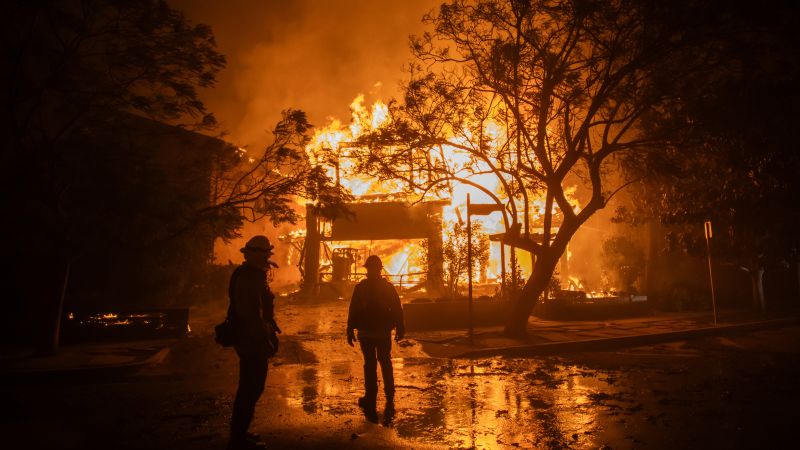
The Palisades Fire, which erupted in the early hours of New Year’s Day 2025, left a devastating mark on the Pacific Palisades community. The blaze, which initially began as the Lachman Fire, scorched thousands of homes and businesses, claiming the lives of a dozen residents. Firefighters managed to suppress the initial flames quickly, but the fire resurged on January 7 due to heavy winds, escalating into a catastrophic event. The incident not only disrupted daily life but also sparked widespread scrutiny into its origins, leading to the federal arson trial against Rinderknecht.
Prosecutors’ Case: A Vengeful Mind
Prosecutors have presented a compelling narrative that links Rinderknecht to the fire’s ignition. Over six days of testimony, they called more than 30 witnesses, painting a picture of a man driven by anger and a desire for revenge. Rinderknecht, 30, was described as someone who harbored resentment toward society, particularly the wealthy elite, and was deeply upset by his inability to connect with others on New Year’s Eve. His actions, according to the prosecution, were motivated by these feelings, leading him to start a fire that would later engulf the Palisades neighborhood.
“He was alone in a clearing on a Palisades hillside when the fire began,” prosecutors argued. “That night, he ranted about capitalism and fixated on Luigi Mangione, the man who sparked the incident.”
Their case hinges on the claim that Rinderknecht’s rage was the catalyst for the fire. Testimony from arson investigators revealed that the initial flames smoldered underground before being reignited by wind conditions, suggesting a deliberate act. Prosecutors also emphasized the role of Rinderknecht’s Uber driving duties, as his passengers were present during the events leading up to the fire.
Defense’s Counterarguments: Doubts and Evidence
Rinderknecht’s legal team, however, has pushed back against the prosecution’s claims. Defense attorneys have argued that the evidence presented does not conclusively prove his guilt, asserting that he was merely a bystander caught in the chaos. One of the defense’s key points is that no one directly observed Rinderknecht lighting the fire, and he called 911 multiple times, though the calls were initially disconnected. This, they claim, undermines the prosecution’s assertion of his intent.
“There is no direct evidence showing our client set the fire,” said defense attorney Steve Haney. “He was made a scapegoat, and the most obvious cause was fireworks.”
Supporting this stance, the defense called nine witnesses over three days, including a former arson investigator and a consultant who testified that the available evidence does not establish a clear motive or method for arson. They also highlighted eyewitness accounts of New Year’s revelers setting off fireworks in the area, suggesting that the fire could have been accidental rather than intentional.
The Jurors’ Dilemma: A Standoff in the Courtroom
The jury’s inability to reach a unanimous verdict has created a tense standoff between the prosecution and defense. After the initial note indicating they had reached a verdict, the panel sent a second message, describing a situation where “people on both sides are dead set and unwavering,” leading to a standstill. This has forced the court to consider whether to grant the jury additional time for deliberation or to move toward a mistrial.
US District Judge Anne Hwang stated during Thursday’s session that the jury’s latest note “is a pretty clear indication as to where they are.” The judge has now instructed the jury to reconvene on Friday at 9 a.m. PT, with the expectation that they will be given further guidance on how to proceed. The court’s response to the note included a directive to provide the jurors with more time to evaluate the evidence and reach a resolution.
Impact of a Hung Jury
A hung jury, or jury deadlock, has significant implications for the trial. If the jurors remain divided, the judge may declare a mistrial, effectively ending the proceedings without a verdict. This outcome would require the prosecution to potentially retry the case, possibly with a new jury. The current stalemate, however, has left the court in a delicate position, balancing the need for a fair verdict against the risk of prolonging the trial.
Defense attorney Haney noted that Rinderknecht is “feeling a lot of anxiety” but remains “hanging in there.” The emotional toll on the defendant has been evident, with his attorneys working to alleviate his stress. Meanwhile, prosecutors have remained silent after court, focusing their efforts on preparing for the next phase of the trial. Their strategy involves either strengthening their arguments or securing additional time for the jury to deliberate.
Testimony: Uncovering the Truth
Key testimonies from the trial have shed light on the events of New Year’s Day 2025. Rinderknecht’s Uber passengers described his erratic behavior, with one witness noting that he expressed frustration over capitalism and fixated on Luigi Mangione. These accounts, while critical, have been challenged by the defense, who argue that such statements do not equate to criminal intent. Additionally, the prosecution’s claim that the fire was intentionally set has been countered by evidence pointing to spontaneous combustion or accidental ignition.
The trial has become a battleground for competing interpretations of the evidence. While the prosecution insists that Rinderknecht’s actions were premeditated, the defense has focused on the lack of conclusive proof, emphasizing that the fire could have been a result of environmental factors or human error. The jury’s continued inability to agree underscores the complexity of the case, as they weigh the motivations of the accused against the physical evidence of the fire’s spread.
Next Steps and Uncertain Outcomes
As the court prepares for Friday’s reconvening, the legal team is strategizing on how to address the jury’s impasse. The prosecution has suggested providing more arguments to clarify the evidence, while the defense has advocated for extended deliberation. Both sides agree that a unanimous verdict is essential for the case to conclude successfully. The trial’s outcome will not only determine Rinderknecht’s fate but also set a precedent for how arson cases are handled in the federal system.
With the jury’s note highlighting their divided opinions, the path forward remains uncertain. The judge will now decide whether to send the jurors back for further discussion or to take other measures. This decision could reshape the trial’s direction, potentially leading to a retrial or a definitive verdict. As the legal process unfolds, the community of Pacific Palisades watches closely, hoping for clarity on the events that left a lasting mark on their neighborhood.
