
Man with Tibetan flag dies after setting himself on fire in front of UN’s New York headquarters
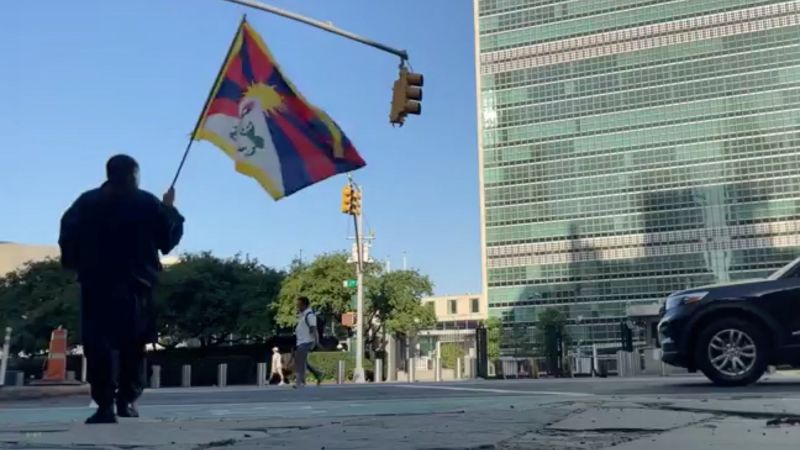
Man with Tibetan Flag Dies After Self-Immolation at UN Headquarters
Man with Tibetan flag dies after – A Tibetan activist, identified as Lobga Rangzen, tragically lost his life after setting himself ablaze in front of the United Nations’ New York headquarters on Thursday as a demonstration against China’s control over Tibet. The act, which occurred on the streets of Manhattan, has sparked international attention and renewed discussions about the cultural and political tensions surrounding Tibet. Law enforcement was called to the scene around 6:30 p.m., where they found the 52-year-old man suffering from severe burns across his body, according to a spokesperson from the New York City Police Department. Despite efforts to save him, he was later pronounced dead at the hospital.
Symbolic Protest and Global Reaction
The incident took place near First Avenue, opposite the UN building, where the man was seen holding a Tibetan flag before igniting himself. A live video stream shared on Facebook by his account captured the moment, showing him standing calmly with the flag, then catching fire as he collapsed to the ground. Two bystanders used fire extinguishers to put out the flames, but the damage was irreversible. Another video from the same account, released shortly after, featured the man calling for unity among Tibetans to secure their independence and preserve their heritage. He condemned the Chinese government’s policies, which he claimed were “aimed at destroying the Tibetan identity, culture, and language.”
Context of the Ethnic Unity Law
This self-immolation comes just days after China introduced a sweeping ethnic unity law, which mandates the use of the Chinese language in schools and government institutions within minority regions and promotes “Sinicization” of religious practices. The law has drawn criticism from Tibetan and human rights advocates, who argue it accelerates the erosion of their cultural traditions. They fear it will further marginalize Tibetans in China, forcing them to assimilate into Han Chinese culture. Beijing, however, asserts that the law ensures the rights of all ethnic groups, emphasizing its role in fostering national cohesion.
Since the Communist Party assumed control of Tibet in 1951, the region has been a focal point of debates over cultural preservation and autonomy. The Tibetan flag, a powerful symbol of independence, is banned in China, yet it continues to be used by activists abroad. Lobga Rangzen’s act in New York underscores the persistence of Tibetan nationalism, even outside the country’s borders. According to the Tibetan government-in-exile, dozens of self-immolations have been linked to protests against Chinese rule in recent decades, though such incidents are rare in the United States.
Leadership Response and Advocacy
Penpa Tsering, head of the Tibetan government-in-exile, expressed deep sorrow over the incident in a statement released Friday. He urged Tibetans to “cherish” their lives, acknowledging the sacrifice of the deceased while emphasizing the importance of preserving human life for the long-term struggle for independence. “While we honor his devotion, human life is precious and must be preserved to serve the long-term struggle for Tibet,” Tsering said. The statement also highlighted the “severe crisis” faced by Tibetans under the new ethnic unity law, calling on governments and rights groups to “speak out at this critical moment.”
Meanwhile, the United Nations confirmed that the self-immolation occurred after all scheduled meetings for the day had concluded, with no disruption to UN operations. A spokesperson noted that the event took place during a quiet hour, yet it drew a crowd of supporters and protestors who gathered outside the building. Social media footage shared by Tibetan activist groups depicted the scene, with one video featuring prominent writer Jamyang Norbu identifying Lobga Rangzen as a community leader and independence activist. Norbu described the man as someone who had lived in exile since the 1980s and worked as a cab driver in New York, blending his life with both advocacy and daily labor.
Historical and Political Implications
The Tibetan flag, which symbolizes aspirations for autonomy, has long been a target of Chinese authorities. Its ban within China has not deterred its use by activists overseas, where it serves as a rallying emblem. Lobga Rangzen’s act, while dramatic, reflects a broader pattern of resistance. Over the years, self-immolations have become a striking form of protest, with advocates viewing them as acts of courage against perceived oppression. However, the occurrence of such an event in the U.S. highlights the global reach of Tibetan activism and the emotional toll of the struggle.
China’s stance on Tibet remains firm, with the Ministry of Foreign Affairs reaffirming that the region has been an integral part of Chinese territory for centuries. During a routine press briefing on Friday, a spokesperson reiterated this position, dismissing accusations of cultural erasure. “Xizang has always been an unalienable part of China’s territory since ancient times,” the official stated, framing the law as a step toward unity rather than suppression. Yet, critics argue that the law’s provisions, such as compulsory Mandarin instruction in schools and the promotion of Han Chinese customs, risk diluting Tibetan traditions.
Legacy of Resistance and International Solidarity
Lobga Rangzen’s sacrifice has resonated with many, particularly those who see his act as a testament to unwavering commitment. His presence in New York, a city known for its cultural diversity, adds a layer of significance to the protest. Activists like Norbu have long emphasized the importance of international support for Tibetan causes, noting that exile communities abroad play a vital role in keeping the issue in global focus. “This moment reminds us of the enduring spirit of Tibetans, even in the face of adversity,” Norbu remarked, linking the incident to historical struggles for self-determination.
The incident also raises questions about the effectiveness of protests in the U.S. as a platform for Tibetan advocacy. While self-immolations have historically occurred in Tibet, the choice of New York as the location underscores the intersection of political expression and diaspora communities. The UN, often a symbol of global diplomacy, now stands as a witness to this act of defiance. As the world continues to grapple with the implications of the ethnic unity law, Lobga Rangzen’s death serves as a poignant reminder of the challenges Tibetans face in safeguarding their identity.
“We honor his devotion, but human life is precious and must be preserved to serve the long-term struggle for Tibet.” – Penpa Tsering, Tibetan government-in-exile leader
“Xizang has always been an unalienable part of China’s territory since ancient times.” – China’s Ministry of Foreign Affairs spokesperson
As discussions continue, the incident has reignited debates about cultural preservation, political freedom, and the role of international institutions in supporting minority rights. The Tibetan flag, once again, becomes a focal point of global solidarity, as the community mourns and reflects on the sacrifices made in pursuit of autonomy. For many, Lobga Rangzen’s act is not just a moment of tragedy, but a symbol of enduring resistance against cultural assimilation.
With the ethnic unity law in effect, tensions between China and Tibetan activists are expected to persist. The U.S., as a hub for diaspora communities, remains a key battleground for advocacy efforts. As the world watches, the legacy of Lobga Rangzen’s self-immolation will likely influence future conversations about Tibet’s place in the global political landscape.
