Race against time to find workers missing in Nepal’s hydropower tunnels. Here’s what we know

Daftar Isi
Nepal’s Flood-Stricken Tunnels: A Desperate Search for Hundreds of Buried Workers
Earthguardiansonline.com – Thick rivers of mud and debris swallowed entire sections of Nepal’s mountain infrastructure last week, and in their wake came a number that has stunned the nation: at least 933 workers remain unaccounted for across hydropower installations threading the Trishuli river basin. The country’s disaster management agency confirmed the figure as rescue operations entered their most critical phase, with foreign specialists from India and China already on the ground alongside Nepali military and police units.
The Trishuli, one of the Ganges’ principal tributaries, carves through some of the most isolated and vertically dramatic terrain in the Himalayan foothills. Dozens of hydroelectric schemes have been built along its course over the past two decades, driven by a national strategy to convert the country’s torrential waterways into exportable electricity. Nepal, along with neighboring China and India, has poured billions into Himalayan hydropower infrastructure, betting that the region’s immense hydraulic head could power both domestic grids and regional energy markets. That ambition now faces its most brutal test.
What the Numbers Show
A tally assembled by the Independent Power Producers’ Association (IPPAN) on Saturday placed roughly 900 workers missing across eleven separate hydro projects struck by the flooding. Each facility presents a distinct geometric and engineering puzzle for the teams attempting to reach trapped personnel. Some tunnels extend several kilometers beneath the mountainside, meaning a worker caught inside could be separated from the nearest portal by a vast stretch of reinforced concrete and steel.
Whether any of those workers are still alive remains unknown. Air supply inside sealed sections is the central variable. Rooms within the tunnels may contain stored food and basic resources that could sustain a small group for days or even weeks, but oxygen depletion in enclosed spaces could shorten that window dramatically. Poor weather, collapsed roads, and destroyed bridges have compounded every logistical challenge, slowing the arrival of heavy equipment and limiting helicopter access to many sites.
Trishuli 3A: Digging Toward the Unknown
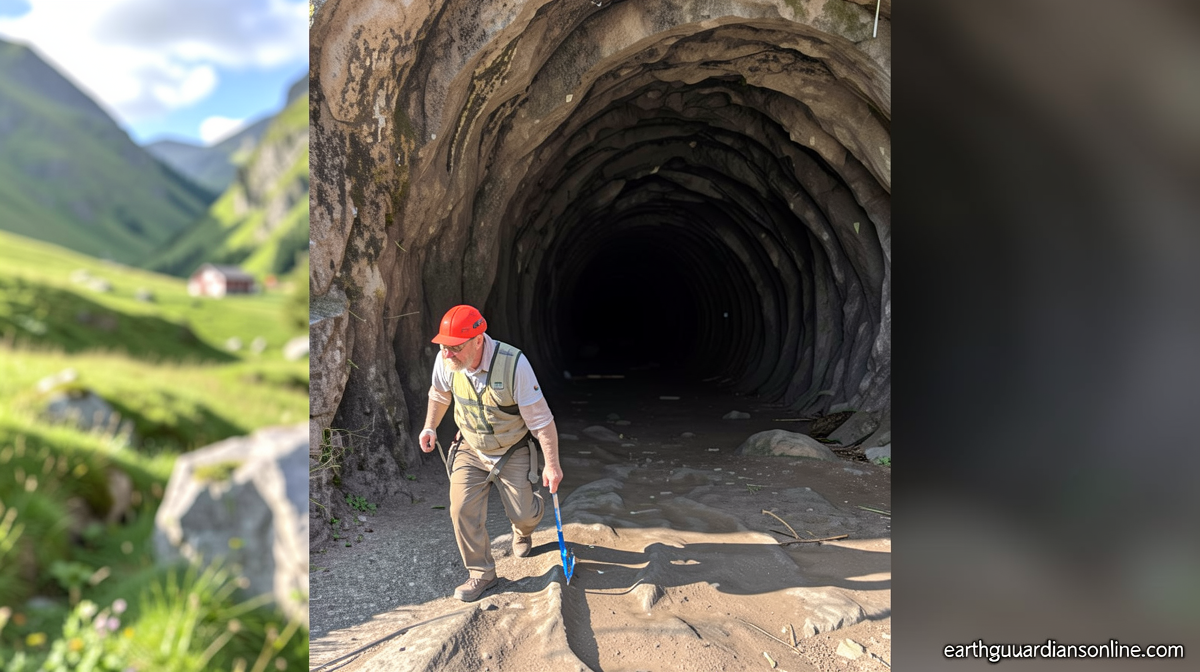
The Trishuli 3A hydropower plant, where 42 workers were listed as missing, has become the focal point of the largest single-site rescue operation. The tunnel connecting the surface portal to the underground powerhouse — where dozens of personnel were on shift when the flood struck — stretches more than four kilometers (2.5 miles) into the mountain. Arnold Dix, an Australian geologist advising the rescue team at the site, explained the uncertainty facing crews attempting to bore through from above:
“So, we might only have to dig 10 meters, or we might have to dig 100 meters.”
Dix noted additional hazards beyond the simple question of depth. If the plant’s emergency shutdown systems failed during the flood surge, the turbine room itself could have filled with water, drowning anyone inside. Moreover, the act of drilling through the reinforced ceiling could release that stored water onto the rescue crews below, creating a secondary drowning risk for the very people attempting the save.
On the day of reporting, rescuers at Trishuli 3A had managed to cut an opening large enough to rappel into the tunnel using ropes and harnesses. They called out into the darkness. No answer came. In earlier attempts, teams pumped fresh air into the tunnel and threaded food supplies through the breach. Officials said the next phase would involve sending personnel inside carrying oxygen tanks, medical kits, two-way communication gear, and cameras to locate survivors visually.
“We need special equipment to get through the steel and everything that’s surrounding the turbine room. So, it’s layer upon layer of technical difficulties,” Dix said.
Chilime: Chest-Deep Mud and a 130-Meter Standstill
At the Chilime Hydropower Plant, six workers are believed trapped. Jenjen Lama, a mountain guide participating in the search-and-rescue effort, described the layout: a 250-meter (820-foot) tunnel descending before it joins a larger complex housing a service bay, control room, and the main transformer.
Teams that entered on Sunday found the passage “completely blocked by deep, muddy sediment and sludge,” Lama reported, with the debris reaching chest height. They advanced only 130 meters before conditions forced a halt. Damaged approach infrastructure also prevented helicopters from landing nearby, limiting the ability to rotate personnel or airlift equipment.
“There is the kitchen, there is some food … but I don’t know about the oxygen,” Lama said, describing what the trapped workers might have access to inside the sealed section.
Scale of Destruction and the Rescue Response
Dix estimated that as many as 27 hydropower plants sustained damage in the flood event, with approximately twelve rendered essentially inoperable. The scale of infrastructure loss means that even workers who survived the initial inundation face a landscape of collapsed access roads, severed power lines, and impassable terrain.
Nepal Army engineers and police search-and-rescue units were reinforced over the weekend by specialist teams dispatched by India and China. Drone units fitted with thermal imaging cameras have been deployed to scan for heat signatures above tunnel entrances and along cleared mud channels. Simultaneously, crews have been drilling through the reinforced concrete and steel linings of the tunnels from above, attempting to create vertical access points where the horizontal portals remain buried.
At least 279 hydropower workers have been recovered or have managed to walk themselves out of the silt-choked passages. Each survivor carries a harrowing account of hours or days spent in darkness, wading through debris, or waiting for air. Their testimonies are now being used to refine search priorities at the remaining sites, guiding teams toward sections where trapped workers are most likely to still be breathing.
The coming days will determine whether the combination of foreign technical expertise, Nepali military logistics, and sheer human determination can outpace the clock inside tunnels where every hour of sealed air narrows the margin between rescue and tragedy.
Related Reading
Frequently Asked Questions
What is Race against time to find workers?
Race against time to find workers is the main topic of this guide. The article explains the context, practical details, and next steps readers should understand.
Why does Race against time to find workers matter?
Race against time to find workers matters because readers are looking for a useful answer, not just a short summary. Good content should match search intent and help them decide what to do next.