
These Gen Zers are into a new kind of clubbing and it’s more prayer than party
Gen Z Embraces a Spiritual Twist on Clubbing: Bhajan Clubbing Gains Momentum
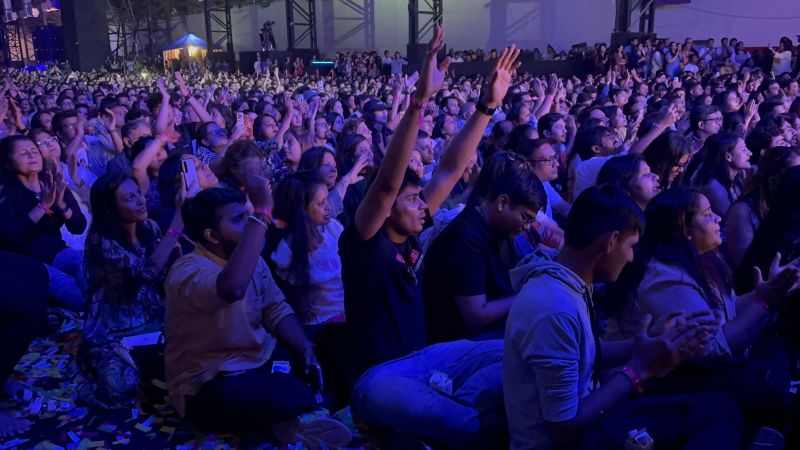
These Gen Zers are into a new – In the heart of Mumbai’s bustling urban landscape, a new kind of gathering is redefining the boundaries between music, spirituality, and socializing. The venue—a vast aircraft hangar transformed into a cultural hub—buzzes with an eager crowd of young professionals and teens. As the evening progresses, event organizers swiftly scan QR codes, distributing wristbands to attendees. Meanwhile, friends capture candid moments with their phones, their laughter mingling with the anticipation of the night ahead. When the lights dim and the music begins, the atmosphere shifts dramatically, leaving behind the conventional clubbing scene for a deeply devotional experience.
Contrary to the typical thumping beats of electronic music, the sounds that fill the room are centuries-old Hindu devotional hymns. These bhajans, once reserved for temples and religious processions, now echo through the venue as if summoned by a modern-day call to transcendence. The crowd, nearly 5,000 strong, rises in unison, clapping, chanting, and dancing with a fervor that mirrors the energy of a midnight rave. Yet, unlike traditional clubbing, there is no haze of smoke or buzz of alcohol. Instead, attendees sip buttermilk, a humble yet symbolic substitute for the usual intoxicants. This conscious choice to embrace sobriety has sparked a wave of enthusiasm among the younger generation, who are redefining what it means to enjoy a night out.
The trend, dubbed “Bhajan clubbing,” has emerged as a powerful cultural phenomenon, blending the communal spirit of spiritual gatherings with the vibrant aesthetics of contemporary music events. Attendees like Jill Veera, a 25-year-old who attended her first such concert, describe the experience as transformative. “This concert brought me closer to God,” she told CNN. “It was like a spiritual awakening, not just entertainment.” Her words resonate with others who find meaning in the fusion of tradition and innovation. “In most concerts, people indulge in smoking or drinking, but here, the buttermilk feels like a sacred ritual,” she added, highlighting the shift in priorities.
Reviving Ancient Devotion in a Modern Setting
Bhajans, a form of devotional singing, have long been a staple of India’s spiritual life. Sung in Sanskrit or regional languages, these hymns often narrate stories of deities, virtues, and moral lessons, performed in temples, processions, and community halls. What makes Bhajan clubbing unique is its setting: large, ticketed venues equipped with cutting-edge technology, including smoke machines, LED displays, and immersive sound systems. The production value mirrors that of mainstream clubbing, yet the core of the event remains rooted in spiritual practice.
For many young participants, the combination of theatrics and devotion is a revelation. Dhwani Paradia, 26, and her 23-year-old sister Fiyoni Paradia, who attended a recent gathering, noted that the visual spectacle resonated with Gen Z’s love for high-energy performances. “The smoke, fire effects, and rhythmic beats are things our generation connects with,” Dhwani said. “Even the backdrop felt like a techno concert, but with a soul.” Fiyoni agreed, adding that the format’s familiarity with electronic music festivals made it appealing. “It’s like a cross between a temple ceremony and a club night,” she observed, capturing the essence of the movement.
At the forefront of this cultural shift are Backstage Siblings, a duo who have transformed ancient bhajans into a modern art form. Raghav Agarwal and his sister Prachi Agarwal, who began performing together as children, have skillfully adapted these traditional songs to resonate with contemporary audiences. “Clubbing is about joy, but bhajans add a deeper layer of connection,” Raghav explained. Prachi echoed this sentiment, emphasizing that the events cater to diverse groups: “Whether you come with your grandparents, friends, or even dates, there’s a space for everyone here.” Their mission is to bridge the gap between spiritual practices and the fast-paced lifestyle of the younger generation.
The popularity of Bhajan clubbing has not gone unnoticed by the entertainment industry. Saregama, a historic Indian music label, has endorsed the trend, recognizing its potential to reach a new demographic. Online, the phenomenon has exploded, with videos of chanting crowds, emotional outbursts, and barefoot dancing amassing millions of views. These digital interactions have amplified the trend’s visibility, drawing attention from both admirers and skeptics. Supporters argue that the events democratize spirituality, offering a flexible and accessible way to engage with faith without rigid rituals. “It’s like a modern temple,” one attendee remarked, “where the music is the bridge between the divine and the everyday.”
However, the movement is not without its critics. Some social media users question whether Bhajan clubbing risks commodifying spirituality, reducing it to a spectacle. “It’s more about trends than true devotion,” one comment suggested, while another praised the blend of tradition and innovation. Despite these debates, the trend continues to grow, reflecting a broader cultural shift. India’s religious economy, valued at over $58 billion in 2025, is increasingly influenced by such hybrid events. As Gen Zers seek authenticity in their leisure activities, Bhajan clubbing offers a compelling alternative to the fast-paced, hedonistic culture of traditional clubbing.
Politically, the movement aligns with a growing emphasis on Hindu identity in India. Leaders of the Bharatiya Janata Party (BJP), including Prime Minister Narendra Modi, have publicly endorsed the trend, framing it as a celebration of cultural heritage. Modi’s comments on the gatherings highlighted their role in fostering a sense of national pride among young people. “It’s heartening to see Gen Z embrace our spiritual traditions,” he said, expressing confidence in their ability to carry forward India’s cultural legacy. This endorsement underscores the movement’s significance beyond entertainment, positioning it as a symbol of the country’s evolving religious landscape.
Bhajan clubbing’s rise is emblematic of a global Gen Z trend that favors mindful engagement over mindless indulgence. The “sober curious” movement, which gained traction in Europe and America, has found a home in India’s vibrant music scene. By integrating spiritual elements into a format that resonates with youth culture, these events challenge the notion that spirituality must be reserved for sacred spaces. Instead, they offer a dynamic, inclusive environment where faith and fun coexist. As the trend gains momentum, it may redefine how future generations experience both music and spirituality.
